'Everything will be remembered': Cong posts videos of Rahul, Priyanka manhandled by cops
Source Entity
ROHITASHWA RANJAN
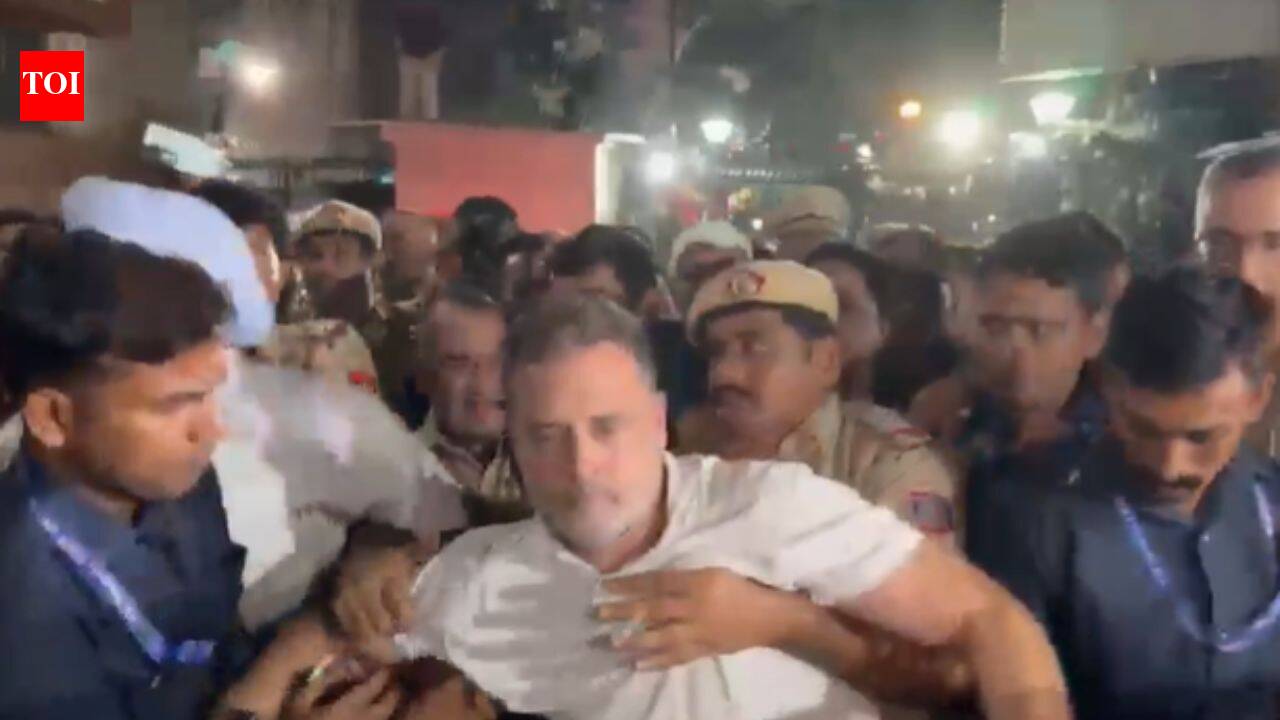
INDIA bloc MPs, led by Rahul and Priyanka Gandhi, marched to the Election Commission to protest the Special Intensive Revision exercise. The demonstration included a sit-in and demands for the CEC's resignation before police detained the participants.
Tensions Escalate: INDIA Bloc Marches on the Election Commission
On a significant Tuesday in New Delhi, the political landscape witnessed a sharp escalation as members of the INDIA bloc, including prominent leaders like Mallikarjun Kharge and Rahul Gandhi, organized a march from the Parliament House complex toward the Election Commission of India (ECI) headquarters. The protest was centered around deep-seated grievances regarding the Special Intensive Revision (SIR) exercise, with opposition members questioning the integrity and transparency of current electoral processes.
Security Measures and Confrontation
In anticipation of the demonstration, authorities had implemented heavy security protocols, including extensive barricading in the vicinity of Parliament and the ECI. The marchers were ultimately halted near the NITI Aayog office, situated on the route between NITI Aayog and Akashvani Bhavan. Faced with this blockade, the opposition MPs initiated a dharna (sit-in) directly on the road, utilizing visual props and slogans to voice their demand for the resignation of Chief Election Commissioner Gyanesh Kumar, whom they accused of partisan bias.
The 'Akashvani' Maneuver
While the protest was characterized by standard political agitation, it took a surprising turn when Rahul Gandhi and Priyanka Gandhi Vadra executed an impromptu maneuver. As police began detaining MPs and moving them toward buses, the siblings bypassed security personnel and entered the Akashvani Bhavan premises. This unexpected deviation from the protest script left security forces momentarily uncertain, illustrating the high-stakes, unpredictable nature of the standoff between the opposition leadership and state machinery.
Core Grievances and Political Rhetoric
The rhetoric employed during the protest was pointed and aggressive, with demonstrators carrying cutouts depicting the CEC in an RSS uniform and chanting slogans such as “BJP hai CEC hai” and “Democracy not for sale.” These accusations reflect a broader, ongoing narrative within the opposition regarding the independence of constitutional bodies. By targeting the ECI’s handling of the SIR, the INDIA bloc is seeking to frame electoral administration as a central pillar of their political platform, aiming to mobilize public sentiment against the current electoral oversight mechanisms.
Broader Implications for Indian Democracy
This event underscores the deepening fissure between the ruling establishment and the opposition. The demand for the resignation of a constitutional official is a significant escalation that signals a lack of trust in the institutional neutrality of the Election Commission. Historically, while protests against the ECI are not unprecedented, the direct confrontation and the specific targeting of individual commissioners reflect a trend where administrative procedures are increasingly becoming the focal point of intense partisan conflict.
Future Trends and Outlook
Moving forward, the confrontation suggests that the ECI will remain a primary battleground for the INDIA bloc. As the opposition continues to scrutinize the SIR and other administrative exercises, the likelihood of further institutional friction remains high. The events in Delhi serve as a precursor to a potentially volatile period in Indian politics, where the legitimacy of electoral processes will be heavily contested, forcing both the government and the Election Commission to navigate an increasingly polarized environment.
Multiple Citing Sources