‘China in illegal occupation of Indian territories since 1963’: MEA on India's stance on sovereignty question
Source Entity
Latest News: Todays Latest News Headlines from India & World | Hindustan Times | Hindustan Times
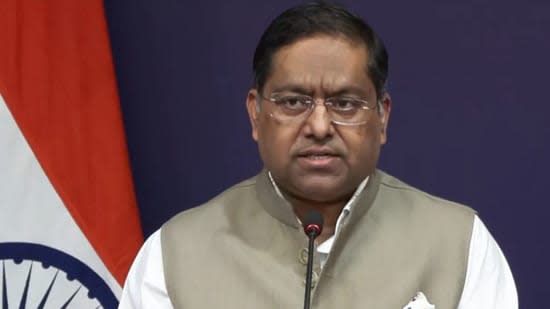
The Indian Ministry of External Affairs has formally accused China of illegal occupation in J&K and Ladakh since 1963, citing unauthorized infrastructure projects. Simultaneously, India dismissed Pakistani allegations regarding the Chenab river, reaffirming its commitment to sharing humanitarian flood data.
India Reasserts Sovereignty Amid Regional Diplomatic Tensions
Territorial Disputes and Sovereignty Concerns
The Indian Ministry of External Affairs (MEA) has issued a firm statement asserting that China is in "illegal occupation" of Indian territories within Jammu and Kashmir and Ladakh. According to MEA spokesperson Randhir Jaiswal, this occupation has persisted since 1963. The core of the current dispute lies in China’s development of infrastructure projects on these contested lands, which India maintains are its sovereign territory. The MEA has emphasized that India’s rights to these regions are historically established and even acknowledged by China in past contexts.
The Diplomatic Paradox
This escalation comes in the wake of high-level diplomatic engagements, including a recent meeting between Indian External Affairs Minister S. Jaishankar and his Chinese counterpart, Wang Yi, in Manila. While Chinese officials have publicly highlighted "positive developments" and a mutual desire for peaceful coexistence between the two major powers, the MEA’s recent comments suggest a significant disconnect between diplomatic rhetoric and the reality on the ground. India remains consistent in its stance that it does not violate Chinese sovereignty, placing the burden of territorial controversy squarely on Beijing.
Transboundary Water Management and Pakistan
Parallel to its challenges with China, India has addressed accusations from Pakistan regarding the management of the Chenab river. Pakistan’s media alleged that India was deliberately inducing flood-like conditions in the Punjab province by manipulating water flow. The MEA has categorically rejected these claims as "baseless," noting that the water levels observed were consistent with seasonal monsoon patterns—a fact corroborated by Pakistan’s own flood forecasting authorities.
Commitment to Humanitarian Cooperation
Despite the friction, India has reaffirmed its commitment to the Indus Waters Treaty (IWT) framework regarding data sharing. The MEA clarified that the non-operational status of certain aspects of the treaty has not hindered functional cooperation. India continues to share "high-flood data" with Pakistan on humanitarian grounds, having provided such information at least 23 times throughout 2025. This underscores India’s attempt to decouple technical, humanitarian data sharing from broader geopolitical hostilities.
Broader Geopolitical Implications
These developments highlight the complex balancing act India faces on its northern and western borders. By simultaneously challenging Chinese infrastructure projects and refuting Pakistani allegations on water management, New Delhi is signaling a policy of strict sovereignty protection while maintaining functional communication channels. The tension between the stated desire for "peaceful coexistence" with neighbors and the reality of territorial disputes remains the defining characteristic of India’s current regional foreign policy.
Future Outlook
As India continues to demand accountability regarding its borders, the future of its bilateral relations with China will likely depend on whether Beijing addresses the concerns over illegal infrastructure projects. Simultaneously, the continued sharing of flood data suggests that India intends to maintain a high degree of transparency in its water management, effectively neutralizing attempts to politicize natural hydrological events. The coming months will test whether these diplomatic friction points can be managed through dialogue or if they will require more robust policy shifts.
Multiple Citing Sources
Verification Required?