Premium petrol to remain ethanol-free; no plan to blend beyond 20%: Govt to Parliament
Source Entity
TOI BUSINESS DESK
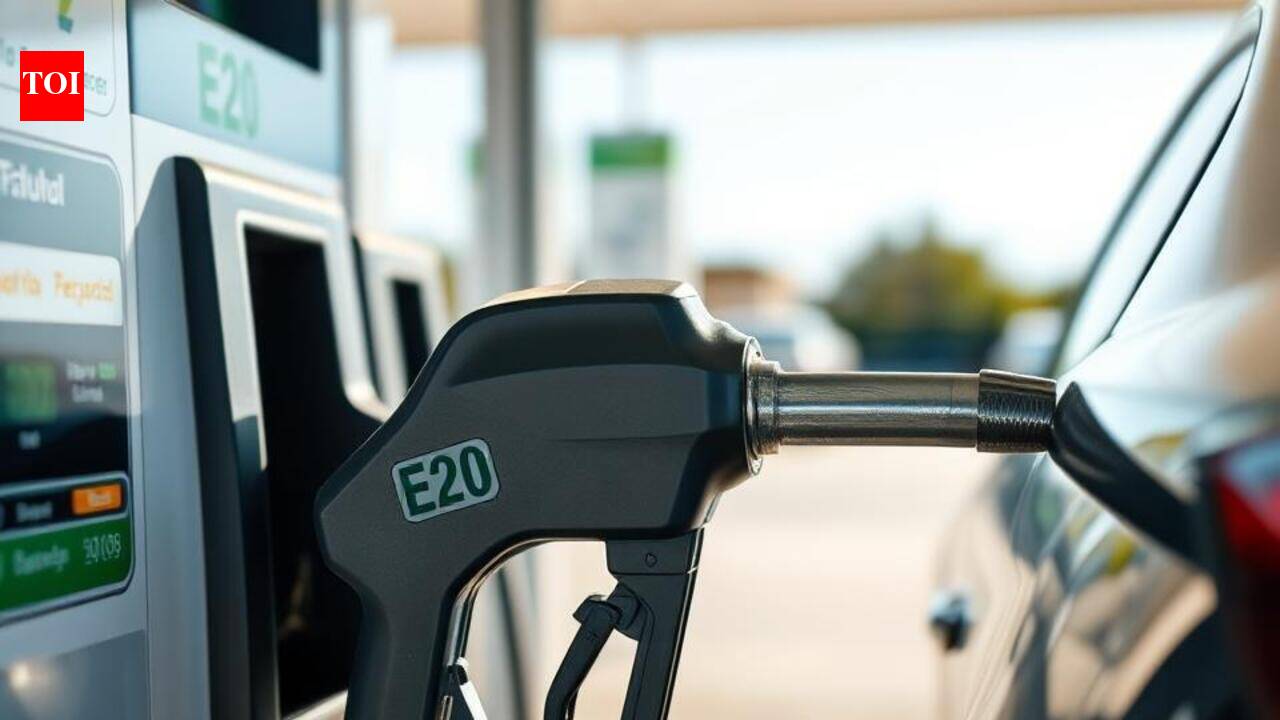
The Indian government confirmed that premium petrol will remain ethanol-free, while regular fuel will stick to a 20% ethanol blend. Having met its E20 targets five years early, the state is prioritizing stability over further immediate blending increases.
India's Ethanol Strategy: Balancing Innovation and Engine Integrity
The Dual-Track Fuel Policy
The Indian government has recently clarified its long-term stance on fuel composition, confirming to Parliament that premium grades of petrol will remain strictly ethanol-free. This decision provides a critical distinction between standard fuel and premium offerings, ensuring that consumers who require or prefer unblended fuel for specific engine requirements retain access to it. By maintaining this dual-track policy, the government is effectively balancing its aggressive green energy mandates with the practical mechanical needs of the existing automotive fleet.
Success of the E20 Initiative
India’s commitment to the E20 program—a blend of 20% ethanol with 80% petrol—has reached a significant milestone by achieving its national targets five years ahead of the original schedule. This rapid acceleration reflects both a successful supply chain integration and a robust policy framework that incentivizes ethanol production. The government has explicitly stated that there are no current plans to revert to lower-level blends like E0 or E10 for regular petrol, signaling total confidence in the E20 standard's performance and safety profile.
Addressing Performance and Public Concerns
A recurring concern regarding ethanol blending has been the potential for long-term engine damage or fuel system corrosion. However, the government has reported that there have been no widespread, systemic adverse impacts documented following the transition to E20 fuel. This lack of negative data suggests that vehicle manufacturers and the fuel distribution network have successfully adapted to the current blend, mitigating risks that were previously associated with higher ethanol concentrations.
Future-Proofing the Energy Transition
Looking ahead, the government has adopted a cautious, data-driven approach toward any potential increase in blending beyond the 20% threshold. Any future shift toward higher percentages will be contingent upon extensive scientific studies and broad-based industry consultations. This methodical strategy is intended to ensure that any further transition does not compromise fuel efficiency, vehicle longevity, or agricultural supply chain stability, which is essential for sustained energy security.
Broader Economic and Environmental Implications
Beyond the technical specifications, the E20 mandate serves as a cornerstone of India’s energy security strategy, designed to reduce the country’s massive crude oil import bill. By leveraging domestic agricultural output—specifically sugarcane and grain-based ethanol—the government is effectively turning the transportation sector into a driver for rural economic development. As India continues to navigate this energy evolution, the stability provided by the current E20 policy allows for predictable planning for both the oil marketing companies and automotive manufacturers.
Conclusion
In summary, the government's recent parliamentary clarifications provide necessary certainty to the fuel market. By keeping premium petrol ethanol-free while maintaining the E20 standard for regular fuel, India is successfully managing the transition to cleaner energy without disrupting the operational integrity of the national automotive sector. The focus remains on stability and evidence-based progress as the country looks toward future energy milestones.