Kargil, minorities and Kashmir: India's three-pronged message to Pakistan at UN
Source Entity
PRIYANKA JAISWAL
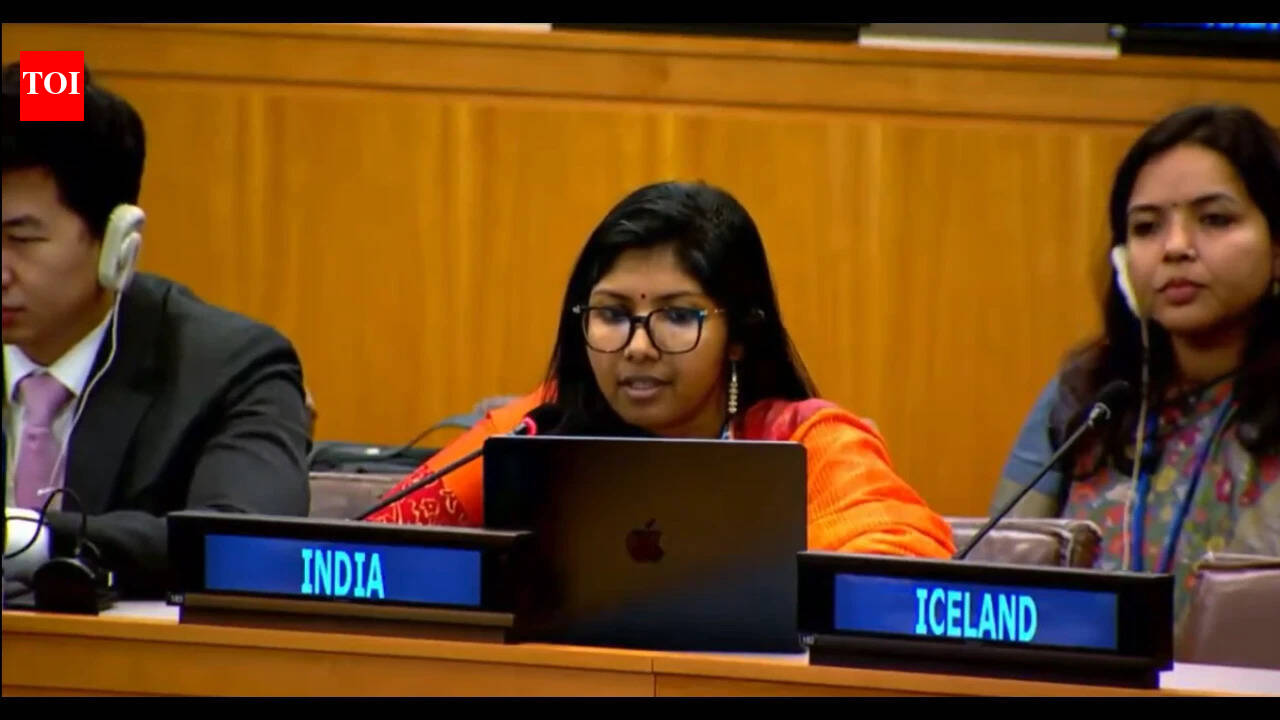
India's UN representative Bhavika Mangalanandan sharply criticized Pakistan for its hypocrisy regarding religious rights and the treatment of soldiers. The rebuke highlighted Pakistan's refusal to claim its own fallen troops during the 1999 Kargil War versus India's respectful treatment of them.
A Diplomatic Rebuttal at the United Nations
In a pointed diplomatic exchange at the United Nations, India utilized the historical record of the 1999 Kargil War to expose what it characterizes as deep-seated hypocrisy within Pakistan’s foreign policy. Indian diplomat Bhavika Mangalanandan delivered a stinging address during an interactive dialogue with the UN Special Rapporteur on Freedom of Religion or Belief. The core of India’s argument rests on the stark contrast between Pakistan’s vocal advocacy for religious rights on the international stage and its historical failure to honor the remains of its own soldiers who perished in combat.
The Kargil Legacy and Ethical Conduct
The narrative centers on the 1999 Kargil conflict, a defining moment in India-Pakistan relations. India’s intervention at the UN highlighted that while Pakistan frequently lectures the international community on religious freedom and burial rights, it famously refused to accept the bodies of its own soldiers killed during the Kargil incursions. Conversely, the Indian Army, adhering to professional military standards and humanitarian norms, buried those fallen soldiers with full military honors and Islamic rites. This historical fact serves as a cornerstone for India’s claim that Pakistan’s current rhetoric lacks moral authority.
Challenging the Narrative on Minorities and Funeral Rights
Beyond the historical reference to Kargil, India’s critique extended to the contemporary handling of religious discrimination. Mangalanandan questioned the approach of the UN Special Rapporteur, specifically regarding reports that seemed to advocate for the funeral rights of terrorists. India argued that it is fundamentally problematic for international bodies to prioritize the rights of combatants involved in extremist activities while potentially overlooking the victims of such violence. This stance serves as a broader indictment of how religious discourse is weaponized to protect non-state actors under the guise of human rights.
Geopolitical Implications and Jammu and Kashmir
India’s address was not limited to historical grievances but also tackled the ongoing diplomatic friction regarding Jammu and Kashmir. By demanding that Pakistan cease its obsession with the region and instead focus on its own internal governance and the status of territories under its illegal occupation, New Delhi signaled a shift toward a more aggressive, fact-based diplomatic posture. This approach aims to deflect Pakistan’s attempts to internationalize the Kashmir issue by focusing the spotlight back onto Pakistan’s own domestic record regarding minorities and civil rights.
Analyzing the Shift in Diplomatic Strategy
This exchange reflects a broader trend in Indian diplomacy, characterized by a willingness to confront international narratives head-on. By systematically deconstructing Pakistan’s claims regarding religious freedom, India is attempting to neutralize the efficacy of Pakistan’s regional lobbying efforts at the UN. The focus on the 'rights of terrorists' versus the 'rights of victims' suggests that India is seeking to align its diplomatic messaging with the global counter-terrorism agenda, thereby isolating Pakistan’s traditional arguments.
Conclusion: The Future of India-Pakistan Diplomatic Discourse
As India continues to challenge the credibility of Pakistan’s human rights rhetoric, the diplomatic landscape at the UN is likely to remain polarized. Future trends suggest that India will continue to utilize historical accountability as a tool to counter Pakistan's narrative, while Pakistan will likely continue to seek international intervention on Kashmir. Ultimately, this confrontation underscores the deep-seated mistrust and the fundamentally different interpretations of sovereignty, religion, and human rights that continue to define the relationship between the two nuclear-armed neighbors.