India's deep-sea bet: Centre's 'Samudra Manthan' to churn crude — How it works
Source Entity
SHIVANGHI PAYAL
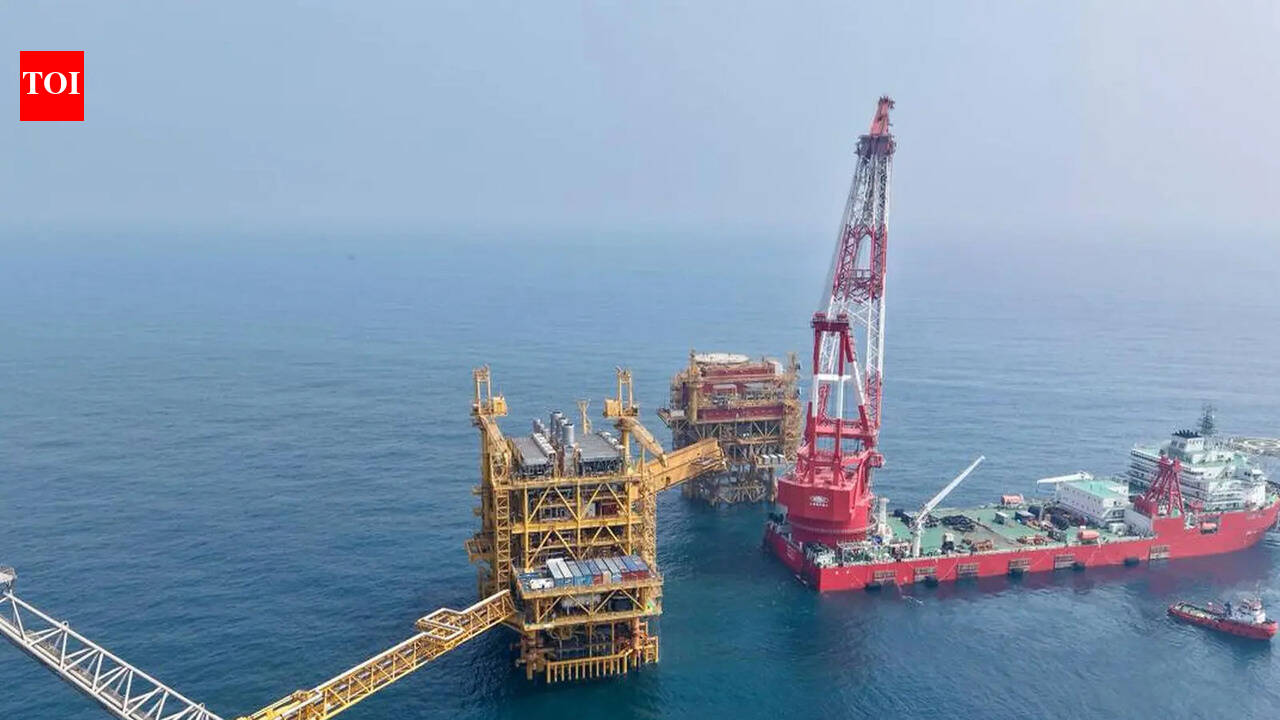
The Indian government has launched the Rs 84,084 crore 'Samudra Manthan' scheme to boost domestic deep-sea oil and gas exploration. By subsidizing 50% of drilling costs, the initiative aims to reduce energy import dependence and incentivize exploration in high-risk offshore zones.
India's Strategic Pivot to Deep-Sea Exploration
India has officially launched the 'Samudra Manthan' National Offshore Exploration Scheme, a significant policy intervention designed to bolster the nation's energy security. By committing Rs 84,084 crore to the initiative, the Union Cabinet is signaling a decisive move toward reducing India’s heavy reliance on foreign energy imports. This move comes at a critical juncture where global geopolitical tensions, particularly in the Middle East, have introduced significant volatility into energy supply chains, prompting New Delhi to prioritize domestic resource extraction.
De-risking Offshore Ventures
The core of the Samudra Manthan initiative lies in the government's commitment to subsidizing 50% of the cost for deepwater and ultra-deepwater exploration wells. Historically, private and state-owned firms have avoided these offshore zones due to the prohibitive capital expenditure and the high risk of dry holes. By capping the government's contribution at Rs 650 crore per well, the state is effectively absorbing a portion of the financial burden, making high-risk exploration projects commercially viable for energy companies.
Infrastructure and Efficiency
Beyond direct financial subsidies, the scheme emphasizes the development of shared infrastructure. One of the primary barriers to entry in deep-sea exploration is the massive cost associated with setting up logistics and extraction hardware. By facilitating shared infrastructure, the government intends to lower the barrier to entry for subsequent discoveries. This systematic approach ensures that if a company makes a discovery, the surrounding ecosystem is already primed to support the development phase, thereby accelerating the timeline from exploration to production.
A Long-Term Energy Vision
The scope of the program is ambitious, targeting the drilling of sixty exploration wells over the next five years. This is not merely a short-term reaction to global oil price hikes but a structural shift in India's energy policy. By incentivizing exploration in previously ignored offshore areas, the government is attempting to map and tap into domestic reserves that have remained untouched due to the technical and financial hurdles of ultra-deepwater operations.
Strategic Implications and Future Outlook
Experts view this move as a necessary evolution for a growing economy like India. As the country’s energy consumption continues to climb, the ability to produce oil and gas domestically provides a vital buffer against external price shocks. If successful, the Samudra Manthan scheme could transform India’s energy landscape, shifting the nation from a passive consumer at the mercy of global supply chains to an active player in offshore resource development. The success of this initiative will ultimately depend on the technical efficacy of the drilling programs and the ability to convert these exploration efforts into sustainable, high-yield production assets.