India slams Pakistan at UN, says military remains country’s ‘real rulers’
Source Entity
India Latest News: Top National Headlines Today & Breaking News | The Hindu
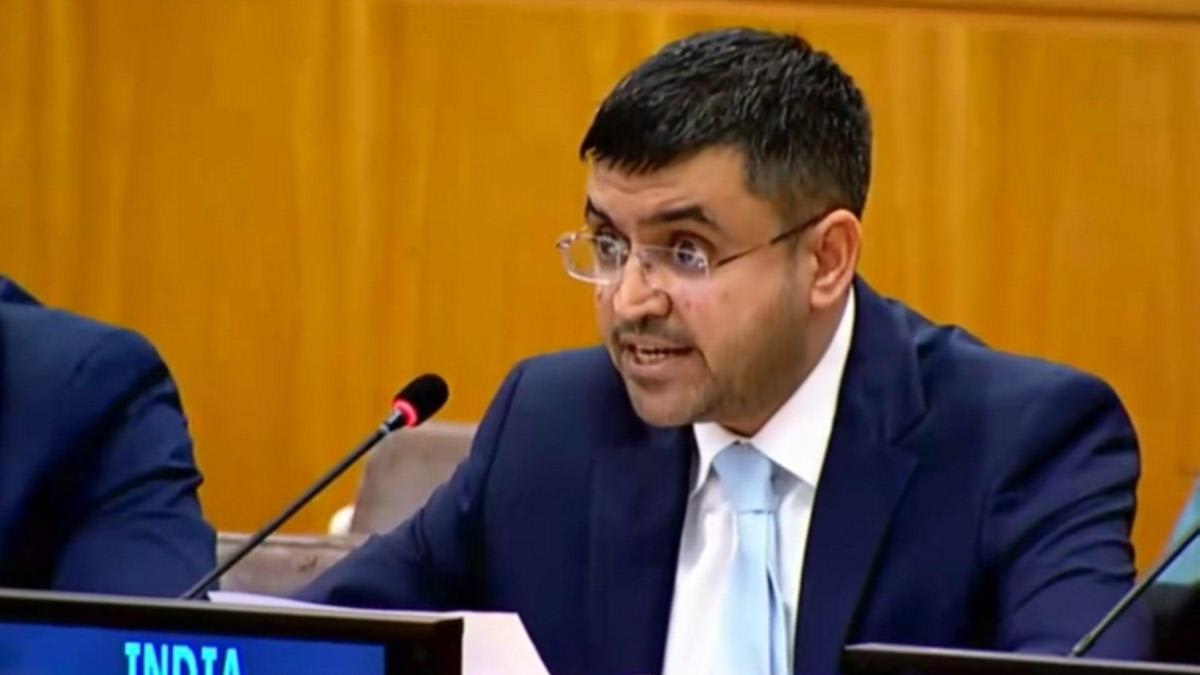
India has sharply criticized Pakistan at the UN, labeling its administration a 'Form 47 government' and accusing it of prioritizing military directives over minority welfare. The exchange highlights ongoing tensions regarding Kashmir and Pakistan's internal human rights record.
India Challenges Pakistan’s Legitimacy at the UN General Assembly
In a sharp diplomatic exchange at the UN General Assembly’s Third Committee, India’s First Secretary at the Permanent Mission, Raghoo Puri, launched a scathing critique of Pakistan’s governance and its record on minority rights. The discourse, which took place during an interactive dialogue with the Special Rapporteur on Minority Issues, saw India directly challenge the political autonomy of the Pakistani state.
The 'Form 47' Allegation and Military Influence
A centerpiece of India’s critique was the characterization of the current Pakistani administration as a “Form 47 government.” This terminology, which stems from the controversial 2024 general elections in Pakistan, refers to the official document used to record consolidated voting results. By invoking this term, India is underscoring widespread allegations of electoral rigging and irregularities that critics claim undermined the democratic mandate, effectively suggesting that the current government lacks true popular legitimacy and operates under the shadow of the military establishment.
Prioritizing Welfare Over Military Directives
Beyond electoral legitimacy, the Indian delegation urged Pakistan to focus its governance on the welfare of its own citizens rather than following military directives. India highlighted the documented decline of minority populations in Pakistan since the country's inception as evidence of systemic failure. By framing the Pakistani military as the “real rulers,” India aimed to delegitimize Islamabad’s attempts to criticize India’s internal affairs, suggesting that these attacks are merely propagandist maneuvers directed by the military rather than genuine humanitarian concerns.
Reasserting Territorial Sovereignty
Throughout the dialogue, New Delhi maintained its consistent stance that Jammu and Kashmir remains an integral and inalienable part of India. The Indian response was prompted by Pakistan’s attempt to use the international platform to paint a “propagandist” picture of India. By pivoting the conversation back to Pakistan’s internal human rights record and its democratic deficits, India sought to neutralize Pakistan’s narrative regarding the Kashmir region.
Broader Implications for South Asian Diplomacy
This exchange reflects the deep-seated diplomatic friction that defines the India-Pakistan relationship. By utilizing specific political terminology like “Form 47,” India is signaling a shift toward more aggressive rhetorical tactics in international forums. This strategy aims to expose the structural vulnerabilities of the Pakistani state—specifically the dominance of the army in civil governance—to international observers, thereby weakening the impact of Pakistan’s diplomatic efforts against India.
Looking Ahead: The Future of UN Discourse
As these nations continue to clash on the global stage, the use of targeted, evidence-based accusations regarding democratic processes is likely to become more frequent. The international community is increasingly being asked to look past state-sponsored rhetoric and examine the underlying mechanics of power within both nations. Moving forward, India’s focus on the “military-led” nature of Pakistan’s administration serves as a strategic deterrent, intended to constrain Pakistan’s ability to effectively lobby against India at the United Nations.
Multiple Citing Sources
Verification Required?