‘Prioritise welfare over military directives’: India raps Pak on minority rights
Source Entity
RAJEEV SINGH
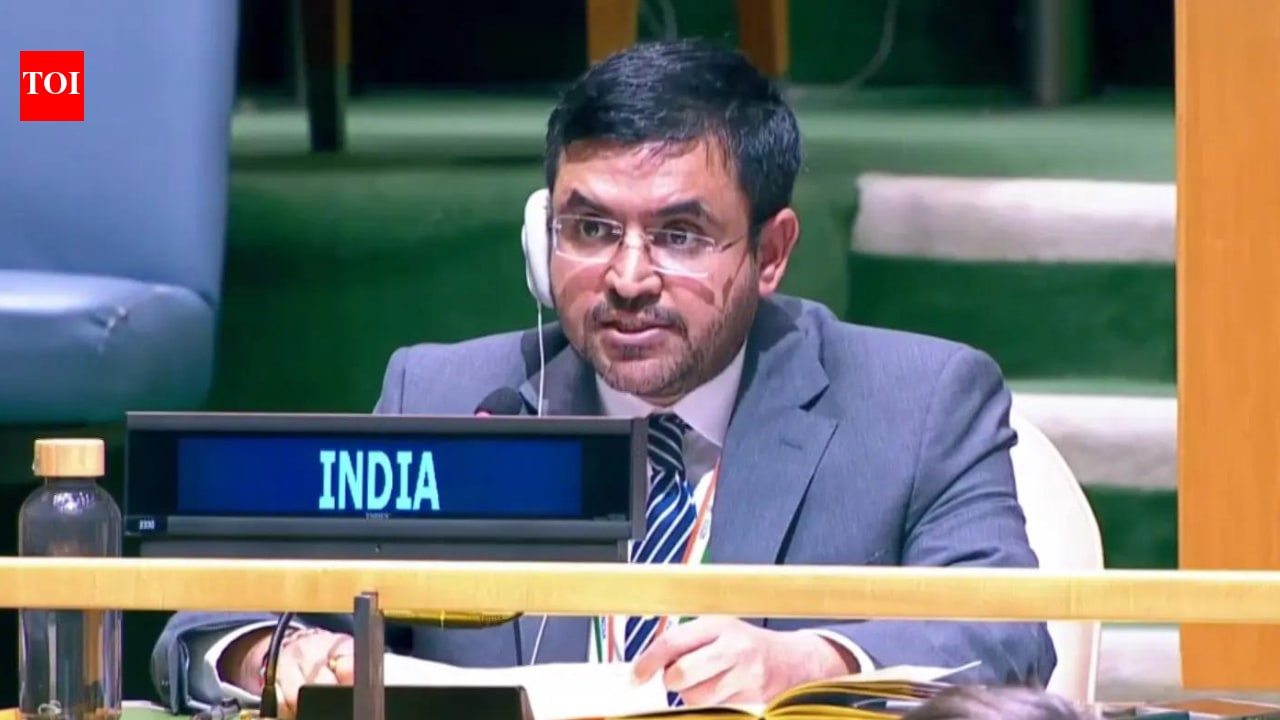
India has sharply criticized Pakistan at the UN, labeling its administration a 'Form 47 government' controlled by the military. New Delhi asserted that Islamabad should address its own minority rights record rather than propagating narratives regarding Jammu and Kashmir.
India Challenges Pakistan’s Legitimacy at the United Nations
In a sharp diplomatic exchange at the UN General Assembly’s Third Committee, India’s First Secretary at the Permanent Mission, Raghoo Puri, launched a stinging rebuke against Pakistan. The confrontation occurred during an interactive dialogue with the Special Rapporteur on Minority Issues, where India sought to dismantle Pakistan’s attempts to cast aspersions on New Delhi’s internal affairs, specifically regarding Jammu and Kashmir.
The 'Form 47' Allegation and Military Influence
The core of India's criticism centered on the legitimacy of the current Pakistani administration, which New Delhi labeled a "Form 47 government." This terminology refers to the controversial February 2024 general elections in Pakistan, where the consolidation of voting results was widely marred by allegations of rigging and irregularities. By invoking "Form 47," India is signaling to the international community that the current Pakistani leadership lacks a democratic mandate and operates under the direct influence of the country’s "real rulers," the military.
Minority Rights as a Diplomatic Lever
Beyond the critique of governance, India emphasized the disparity between Pakistan’s external rhetoric and its internal human rights record. Mr. Puri pointedly remarked that Pakistan’s minority populations have shrunk significantly since its independence. This argument serves to highlight what India characterizes as "propagandist" behavior, suggesting that Islamabad’s focus on international forums is a diversionary tactic meant to obscure its own systemic failures in protecting minority rights.
Reaffirming Sovereignty over Jammu and Kashmir
Throughout the dialogue, India maintained its steadfast position that Jammu and Kashmir is an integral and inalienable part of its territory. By rejecting Pakistan's narrative at the UN, India is attempting to neutralize the recurring attempts by Islamabad to internationalize the Kashmir issue. The message from the Indian delegation was clear: Pakistan’s directives on this matter are not a reflection of genuine regional concern, but rather a scripted performance dictated by its military establishment.
Broader Implications for South Asian Diplomacy
This diplomatic spat underscores the deepening polarization between the two nuclear-armed neighbors. By explicitly questioning the autonomy of the Pakistani government, India is moving toward a more assertive diplomatic posture. This strategy not only challenges the credibility of Pakistan’s representatives on global stages but also highlights the structural constraints within Pakistan that hinder meaningful bilateral dialogue. As long as the military remains the dominant political force, the prospects for diplomatic normalization appear increasingly remote.
Conclusion: A Shift in Diplomatic Strategy
Ultimately, India’s remarks at the UN reflect a calculated effort to shift the burden of proof back onto Pakistan. By framing the Pakistani government as a military-controlled entity lacking democratic legitimacy, New Delhi is effectively delegitimizing Islamabad’s criticism of Indian policies. This move suggests that India will continue to utilize international platforms to expose what it views as the fundamental contradictions and democratic deficits inherent in the Pakistani state.