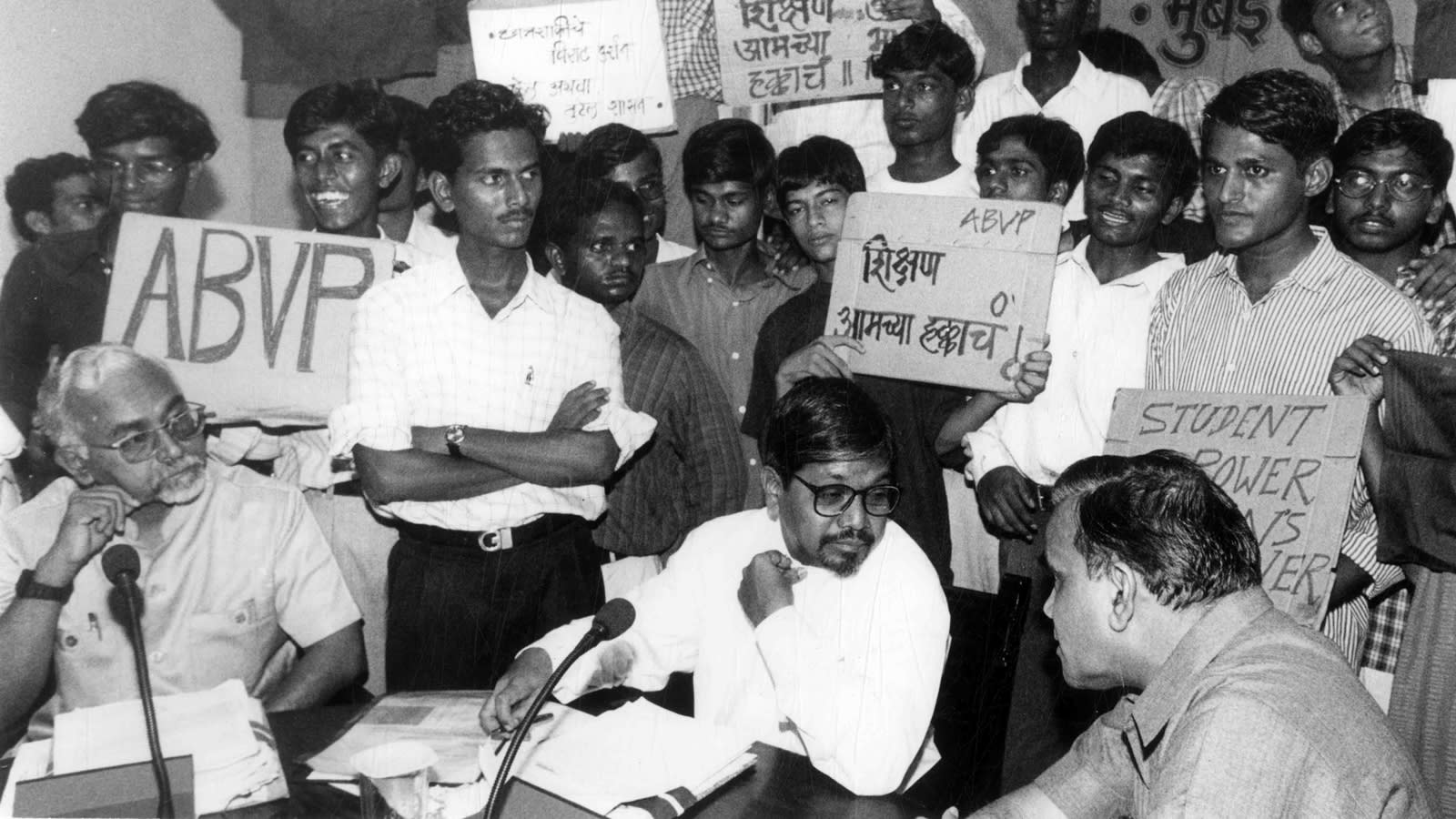
Why Maharashtra’s campuses have gone 30 years without a student vote
Source Entity
Pallavi Smart
Student movements across India, led by groups like AISA and CJP, are challenging the political status quo following controversies like the NEET paper leak. These activists are demanding greater accountability and the restoration of student elections, signaling a shift toward independent youth political engagement.
The Resurgence of Student Activism in India
Recent developments across Indian campuses signal a significant shift in the political landscape, as youth movements begin to challenge the traditional perception of students as mere electoral vote banks. Leaders like Neha Bora of the All India Students’ Association (AISA) have articulated a growing frustration among the youth, arguing that the current political system has historically minimized the intellectual agency of young people, treating them as passive constituencies rather than active participants in democratic discourse.
The Catalyst of Accountability
The recent wave of unrest, particularly in Maharashtra and Delhi, has been fueled by widespread indignation over systemic issues, most notably the NEET paper leak. Thousands of students have taken to the streets to demand transparency and administrative accountability. This movement transcends local grievances, evolving into a broader critique of how education and governance are handled at the national level. The call for the resignation of Union Education Minister Dharmendra Pradhan reflects a demand for structural reform rather than superficial policy adjustments.
The Impact of Historical Precedent
The current wave of student activism is deeply rooted in historical struggle. Leaders like Ms. Bora explicitly tie contemporary movements to the legacy of Rohith Vemula, whose struggle at the University of Hyderabad continues to serve as a foundational narrative for modern student politics. This historical consciousness provides students with a sense of continuity, ensuring that their current demands for justice are understood as part of a long-term fight for democratic integrity.
The Struggle for Campus Democracy
A critical, often overlooked dimension of this unrest is the absence of on-campus democratic processes. In regions like Maharashtra, students have gone three decades without the ability to vote for their own campus representatives. The current protests have reignited the demand for the restoration of student unions, as activists argue that true political maturity begins with the ability to exercise democratic rights within educational institutions.
Strategic Divergence and Regional Dynamics
The movement’s organizational tactics are also evolving, as evidenced by the Cockroach Janta Party (CJP). While the CJP was instrumental in the Jantar Mantar protests, their tactical absence in regions like Ranchi suggests a deliberate strategy of local autonomy. By allowing regional leaders and local coalitions—such as the Jharkhand Loktantrik Krantikari Morcha (JLKM)—to take the lead, the CJP aims to build a more decentralized and resilient protest infrastructure.
Future Trends and Implications
The trajectory of these movements suggests that Indian student politics is entering a new era of sophistication. As organizations move beyond high-profile national protests to focus on granular, local issues and the long-dormant demand for campus elections, the political establishment faces a new challenge. If these groups successfully bridge the gap between street protests and institutional representation, they may fundamentally alter the relationship between the Indian youth and the state.