India supports UN membership for Palestine, says MEA
Source Entity
India Latest News: Top National Headlines Today & Breaking News | The Hindu
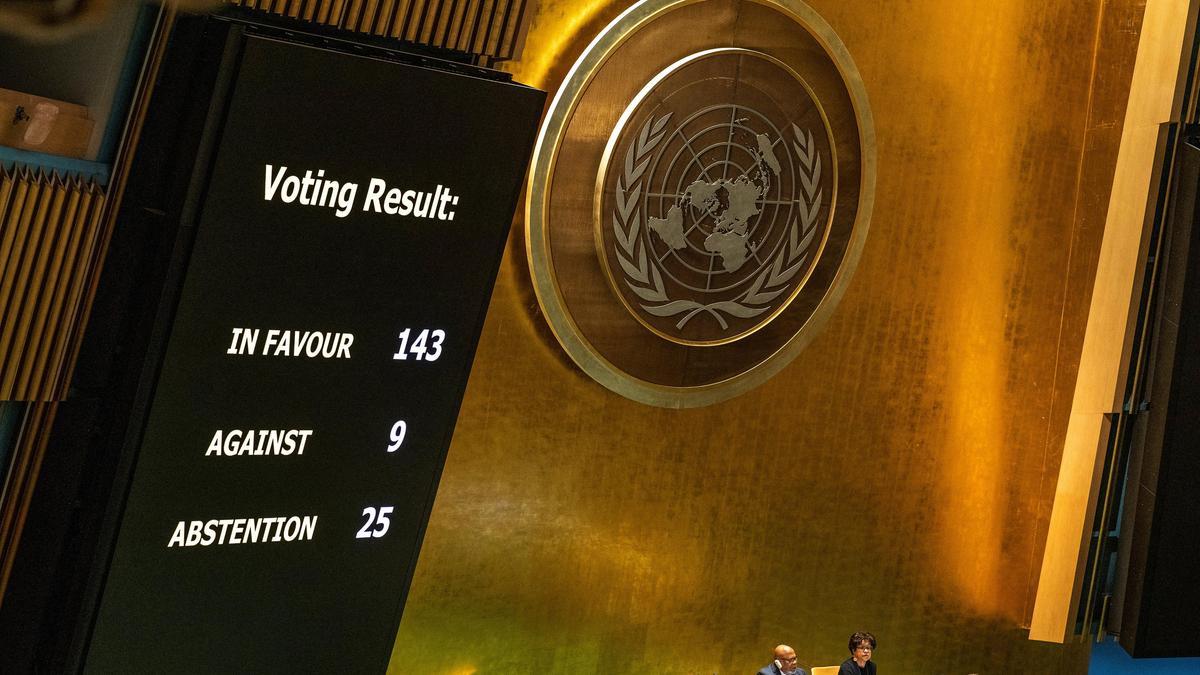
India’s position on Palestine was apprised by Sripriya Ranganathan, a secretary at the External Affairs Ministry, during a ministerial meeting of the Palestine Donor Group, held in Brussels July 13
India's Diplomatic Reaffirmation of Palestinian Sovereignty
India has reiterated its long-standing diplomatic commitment to the Palestinian cause by officially supporting its bid for full membership in the United Nations. This position was articulated by Sripriya Ranganathan, a secretary at the Ministry of External Affairs (MEA), during a high-level ministerial meeting of the Palestine Donor Group held in Brussels on July 13. This statement underscores India's continued adherence to a balanced foreign policy in the Middle East, emphasizing the necessity of a formal international status for the State of Palestine to ensure a sustainable peace process.
Historical Context and the Two-State Solution
To understand the significance of this move, one must analyze India's historical relationship with Palestine. Since the era of Jawaharlal Nehru, India has been a steadfast supporter of the Palestinian people's right to self-determination. India was among the first non-Arab nations to recognize the Palestine Liberation Organization (PLO) as the sole legitimate representative of the Palestinian people. By supporting UN membership, India is not pivoting toward a new policy but is rather reaffirming a legacy of supporting a sovereign, independent, and viable state of Palestine existing side-by-side with Israel in peace and security.
The Strategic Importance of the Brussels Meeting
The venue and context of this announcement—a meeting of the Palestine Donor Group in Brussels—are critical. The Donor Group consists of international partners providing essential financial and humanitarian aid to the Palestinian Authority. India's participation and its clear stance on UN membership signal that its support is not merely rhetorical but is integrated into the practical framework of international aid and institutional building. Sripriya Ranganathan's role in conveying this message ensures that India's voice is heard among the key global powers that influence the financial and political stability of the Palestinian territories.
The 'Dehyphenation' Strategy in Action
This announcement highlights the complex "dehyphenation" strategy employed by India's current administration. For several years, India has sought to maintain a robust strategic partnership with Israel—spanning critical sectors such as defense, technology, and agriculture—while simultaneously upholding its traditional support for Palestine. By advocating for UN membership, India demonstrates that its strategic closeness with Israel does not come at the expense of its commitment to the two-state solution. This balancing act is essential for India to maintain its influence across the Global South and among its key energy partners in the Arab world.
Implications for the United Nations Framework
The push for Palestine's full UN membership is a highly contentious issue within the UN Security Council, where the United States has historically used its veto power to block such transitions. India's explicit support adds to a growing international consensus that Palestine deserves full member status to enhance its diplomatic capacity and legal standing on the global stage. If more influential nations align with this view, it could increase the pressure on the Security Council to reconsider the current observer status of Palestine, potentially shifting the diplomatic dynamics of the Israeli-Palestinian conflict.
Future Trends and Geopolitical Predictions
Looking forward, India is likely to continue playing the role of a "bridge-builder" in the Middle East. As India expands its economic ambitions through initiatives like the India-Middle East-Europe Economic Corridor (IMEC), maintaining a principled stand on Palestinian sovereignty will be crucial for its legitimacy among Palestinian and Arab partners. It is predicted that India will continue to advocate for a negotiated settlement and will support institutional milestones, such as UN membership, as a means to stabilize the region and foster long-term peace and security.
Conclusion
In summary, the statement made by the MEA in Brussels is a clear manifestation of India's consistent foreign policy objectives. By advocating for Palestine's UN membership, India reaffirms its belief in the two-state solution and the importance of multilateralism. This move ensures that India remains a relevant and respected actor in the Middle East, carefully balancing its modern strategic interests with its historical commitments to global justice and sovereign rights.
Verification Required?