At -48 Degrees Celsius, India Takes Swachh Bharat Mission To Antarctica
Source Entity
NDTV News Search Records Found 1000
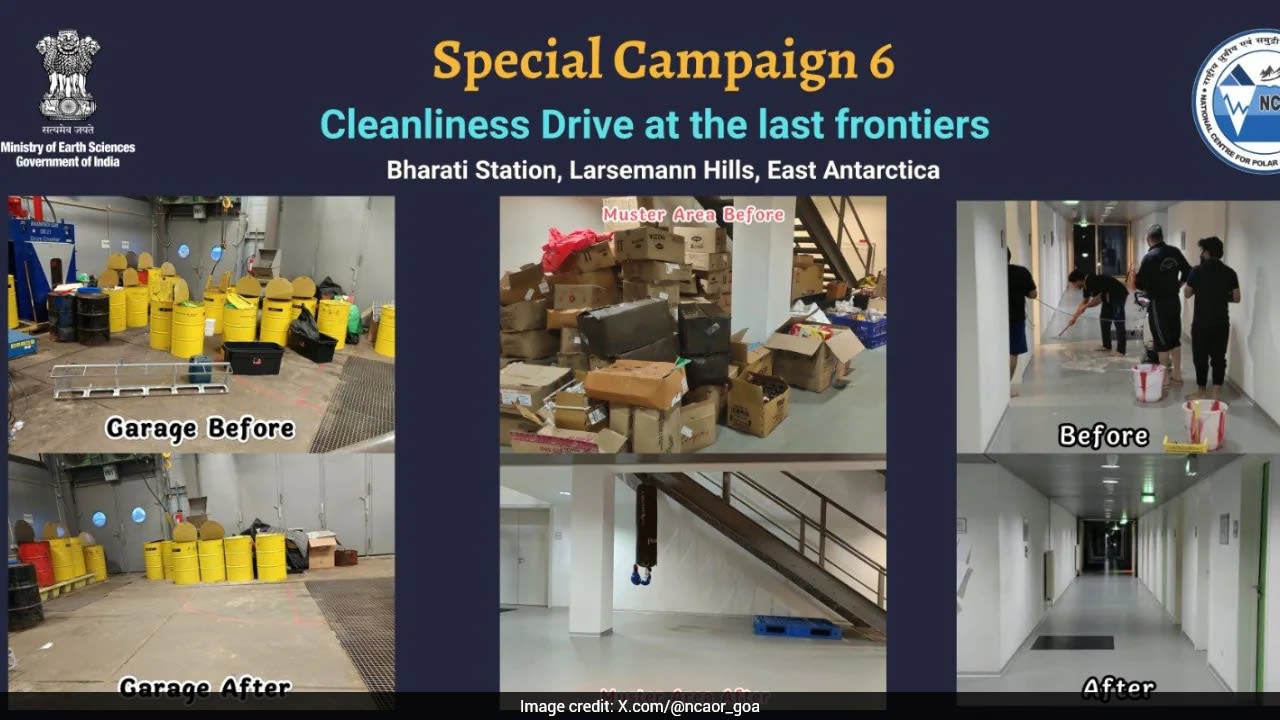
India's Swachh Bharat Mission has extended to the Bharati research station in Antarctica, where a winter team including three Indian women is stationed. This initiative highlights India's commitment to environmental sustainability even in the world's most extreme climates.
India Extends Swachh Bharat Mission to the Frozen Frontier
In a remarkable demonstration of global environmental stewardship, India has officially extended its flagship Swachh Bharat Mission (Clean India Mission) to its research facilities in Antarctica. Despite the brutal, life-threatening temperatures reaching as low as -48 degrees Celsius, the mission to maintain sanitation and environmental purity remains a top priority for the Indian expedition team at the Bharati Station. This expansion signifies that the principles of cleanliness and waste management are not limited by geography, but are a fundamental mandate for Indian personnel wherever they operate.
The Role of the Winter Team
The current winter team stationed at Bharati is notable not only for its logistical resilience but also for its inclusivity. The inclusion of three Indian women in this isolated, high-stakes environment marks a significant milestone in India's polar research history. These researchers are tasked with balancing complex scientific objectives—such as climate data collection and geological surveying—while simultaneously upholding the strict waste management and sustainability protocols dictated by the Swachh Bharat Mission in one of the planet's most fragile ecosystems.
Environmental Preservation in Antarctica
Antarctica is governed by the Antarctic Treaty System, which places immense importance on the preservation of the continent's pristine environment. By integrating the Swachh Bharat Mission into their daily operations, the Indian team at Bharati is ensuring that their footprint remains minimal. This involves sophisticated waste disposal techniques, such as the segregation and removal of non-biodegradable materials, which is essential to prevent the contamination of the Antarctic ice shelf and surrounding waters.
Challenges of Extreme Climates
Operating a sanitation and waste management initiative at -48 degrees Celsius presents unparalleled engineering and logistical challenges. Standard waste management practices used in mainland India must be heavily modified to function in polar conditions. The success of this mission serves as a testament to the adaptability of Indian scientific infrastructure, demonstrating that sustainability can be achieved even in environments where human survival is a constant struggle against the elements.
Future Implications and Global Leadership
Looking forward, this initiative positions India as a leader in responsible polar research. As nations continue to increase their presence in Antarctica, the model of 'Clean Research' established by the Bharati team could become a benchmark for other countries. By proving that a national sanitation mission can be executed at the bottom of the world, India reinforces its commitment to global environmental treaties and sets a high standard for future international polar expeditions.
Verification Required?