Tanu Sharma, daughter of a Sanskrit teacher is now wrestling Worlds medallist
Source Entity
Pritish Raj
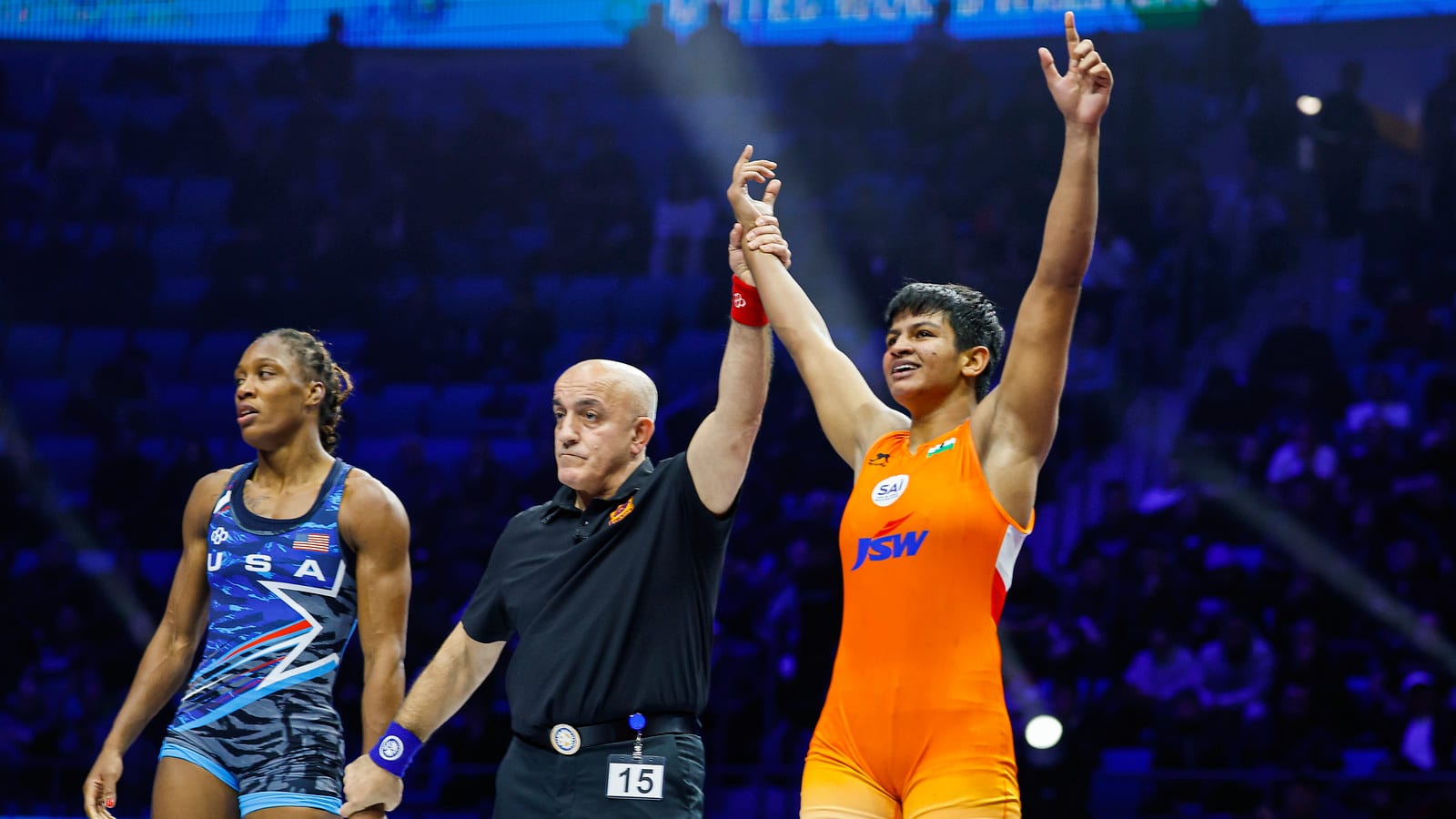
Indian wrestlers Tanu Sharma and Manisha Bhanwala have achieved historic success at the 2026 World Wrestling Championships in Astana. Tanu secured a bronze medal in the 72kg category, while Manisha advanced to the 59kg final.
A Historic Campaign for Indian Wrestling in Astana
The 2026 World Wrestling Championships in Astana, Kazakhstan, have become a watershed moment for Indian sports, marked by the exceptional performances of Tanu Sharma and Manisha Bhanwala. These athletes have demonstrated not only individual excellence but also the growing depth of India’s wrestling talent pool, which continues to produce world-class competitors from regions like Haryana.
Tanu Sharma: A Breakthrough Bronze
At just 20 years old, Tanu Sharma has etched her name into the history books by securing a bronze medal in the 72 kg category. Her decisive 9-5 victory over American wrestler Precious Bell highlights a significant technical prowess and mental fortitude. The narrative of her victory is deeply personal; while she battled on the mat over 3,000 kilometers away, her father—a Sanskrit teacher—navigated the quiet nerves of a parent who finds the sport too intense to watch live. This win represents the first-ever bronze medal for India in this specific weight class at the World Championships, signaling a shift in the competitive landscape for Indian female wrestlers.
Manisha Bhanwala’s Path to the Final
Complementing the success of the younger generation, 29-year-old Manisha Bhanwala has showcased the resilience of a seasoned veteran. Her journey to the 59 kg title bout, solidified by a hard-fought victory over home favorite Altyn Shagayeva, has been a masterclass in focus. Coming off a competitive appearance at the Aichi-Nagoya Asian Games, where she faced the formidable Akari Fujinami, Manisha has channeled that experience into a relentless pursuit of gold in Astana. She is now poised to become India’s first-ever women’s wrestling world champion.
Regional Dominance and Cultural Impact
It is no coincidence that both athletes hail from Haryana, a state that has become the epicenter of India’s wrestling revolution. The success of athletes like Tanu and Manisha reflects a robust grassroots ecosystem that supports young talent despite modest financial backgrounds. The contrast between Virender Sharma’s humble life as a school teacher and his daughter’s global achievements on the mat serves as a poignant reminder of the transformative power of sport in rural Indian communities.
Broader Implications for Indian Athletics
The performance in Astana serves as a vital morale booster for the Indian wrestling contingent, particularly following the disappointment of Sujeet Kalkal’s quarterfinal exit in the 65 kg men’s category. By securing multiple medals, including a guaranteed podium finish for Manisha, the Indian women’s team has effectively anchored the nation's campaign at these championships. This success suggests that India is moving beyond reliance on a few star athletes and is instead developing a sustainable pipeline of champions capable of performing on the world stage.
Future Trends and Outlook
Looking ahead, the success of these wrestlers sets a new benchmark for upcoming international tournaments. As India continues to integrate its training methodologies with global standards, the consistency shown by athletes like Manisha and the rapid ascent of talents like Tanu indicate that India will remain a formidable force in global wrestling. The focus will now shift to whether this momentum can be sustained into the next Olympic cycle, further cementing India's reputation as a wrestling powerhouse.