India’s Got Latent and the 60-second feminism test
Source Entity
The Indian Express
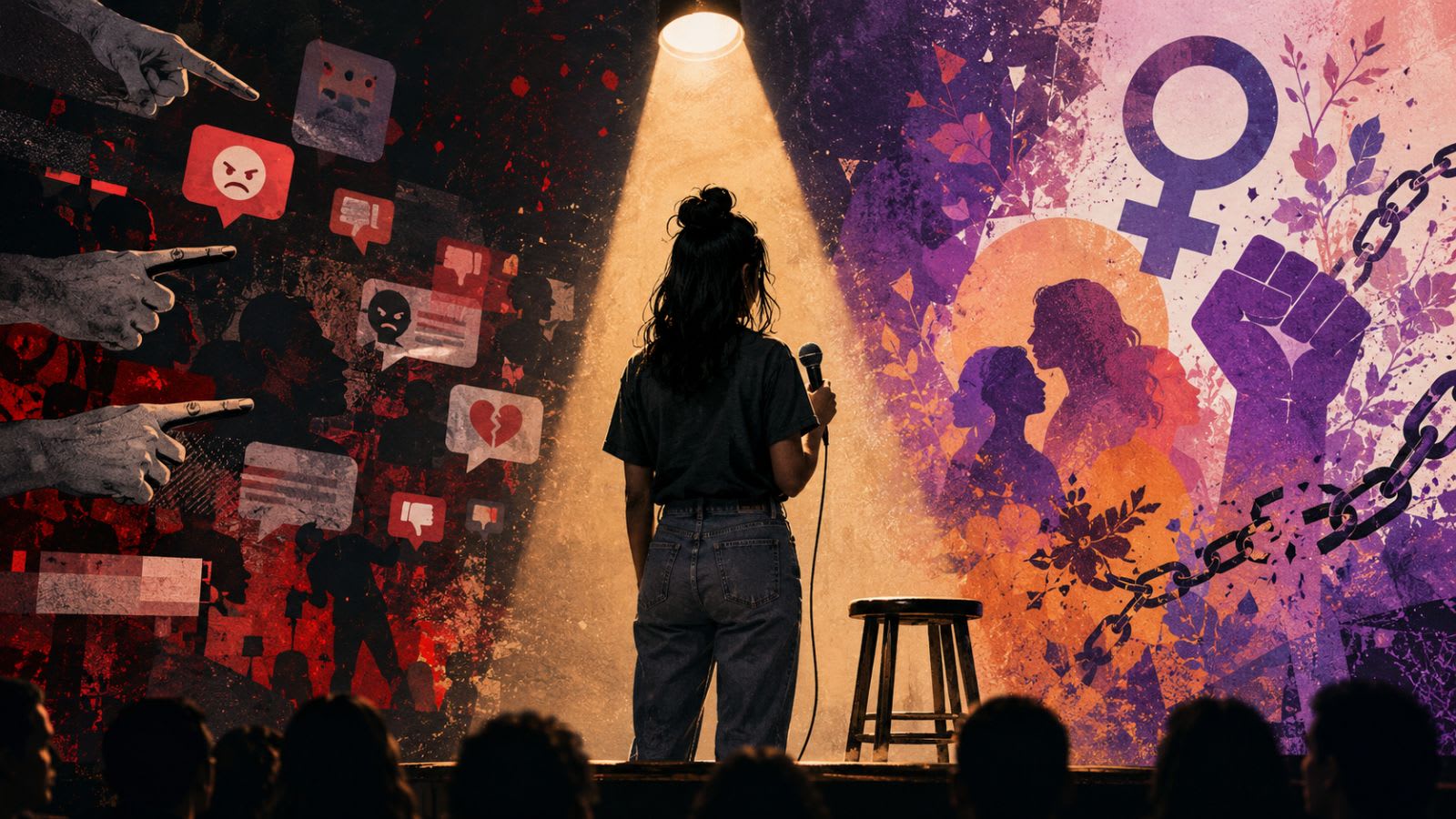
An 18-year-old contestant’s performance on Samay Raina’s show 'India’s Got Latent' has ignited a viral debate. The segment, centered on themes of misandry, highlights the intersection of modern digital culture and feminist discourse among young women.
The Intersection of Comedy and Cultural Critique
The recent viral performance by an 18-year-old contestant named Sakshi on Samay Raina’s show, India’s Got Latent, has become a focal point for intense discourse regarding gender roles and modern feminism in India. The show, known for its controversy-ridden nature and unfiltered format, provided a platform for a minute-long set that centered entirely on the premise of the performer identifying as a 'man-hater.' By utilizing mockery and sweeping generalizations, the performance managed to capture the attention of the 'chronically online' demographic, effectively turning a comedy stage into a site of social friction.
The 'Man-Hater' Archetype as Performance
At the core of this discourse is the performative nature of the 'man-hater' trope. The contestant’s set, which included provocative statements like desiring a 'red flag' in life, reflects a contemporary trend where young women utilize hyperbolic, aggressive rhetoric to navigate and react to patriarchal structures. This approach suggests a shift in how feminist sentiment is being expressed by younger generations—often through the medium of irony and digital-first provocation, rather than traditional academic or social advocacy.
Patriarchy Before Theory
As noted in the analysis of the performance, young women today often encounter the harsh realities of patriarchy long before they have the opportunity to engage with formal feminist theory. The contestant’s admission that she can never be a 'big man' because of her gender highlights a latent, lived frustration with the structural limitations placed upon women. In this context, the comedy performance serves as an outlet for these frustrations, even if the delivery is polarized and abrasive.
The Digital Echo Chamber
India’s Got Latent functions as a microcosm of modern digital culture, where short-form, high-impact content is designed to trigger reaction and debate. By centering a comedy set on gender-based antagonism, the show effectively leverages the existing cultural tension between men and women in India. The resulting memes and social media commentary demonstrate how quickly niche performances can become national talking points, highlighting the power of platforms like YouTube to amplify controversial social perspectives.
Broader Implications for Feminist Discourse
The viral nature of this incident raises critical questions about the future of gender discourse in the digital age. When feminism is filtered through the lens of a comedy show—and specifically a 'controversy-ridden' one—the nuance of the movement is often lost in favor of viral engagement. While the performance sheds light on genuine grievances, the medium risks trivializing the very issues it touches upon, potentially alienating audiences and reducing complex sociological struggles to mere 'red flag' punchlines.
Conclusion
Ultimately, the appearance of this performance on a platform like India’s Got Latent signifies a turning point in how Indian youth express their relationship with gender dynamics. Whether viewed as an empowering reclaiming of the 'man-hater' identity or as a detrimental form of social polarization, the event underscores a reality where digital platforms have become the primary stage for testing the boundaries of gender-based comedy and social critique.