Space push, cricket World Cup, electricity in villages: Indira Gandhi's 1983 Independence Day speech
Source Entity
Latest News: Todays Latest News Headlines from India & World | Hindustan Times | Hindustan Times
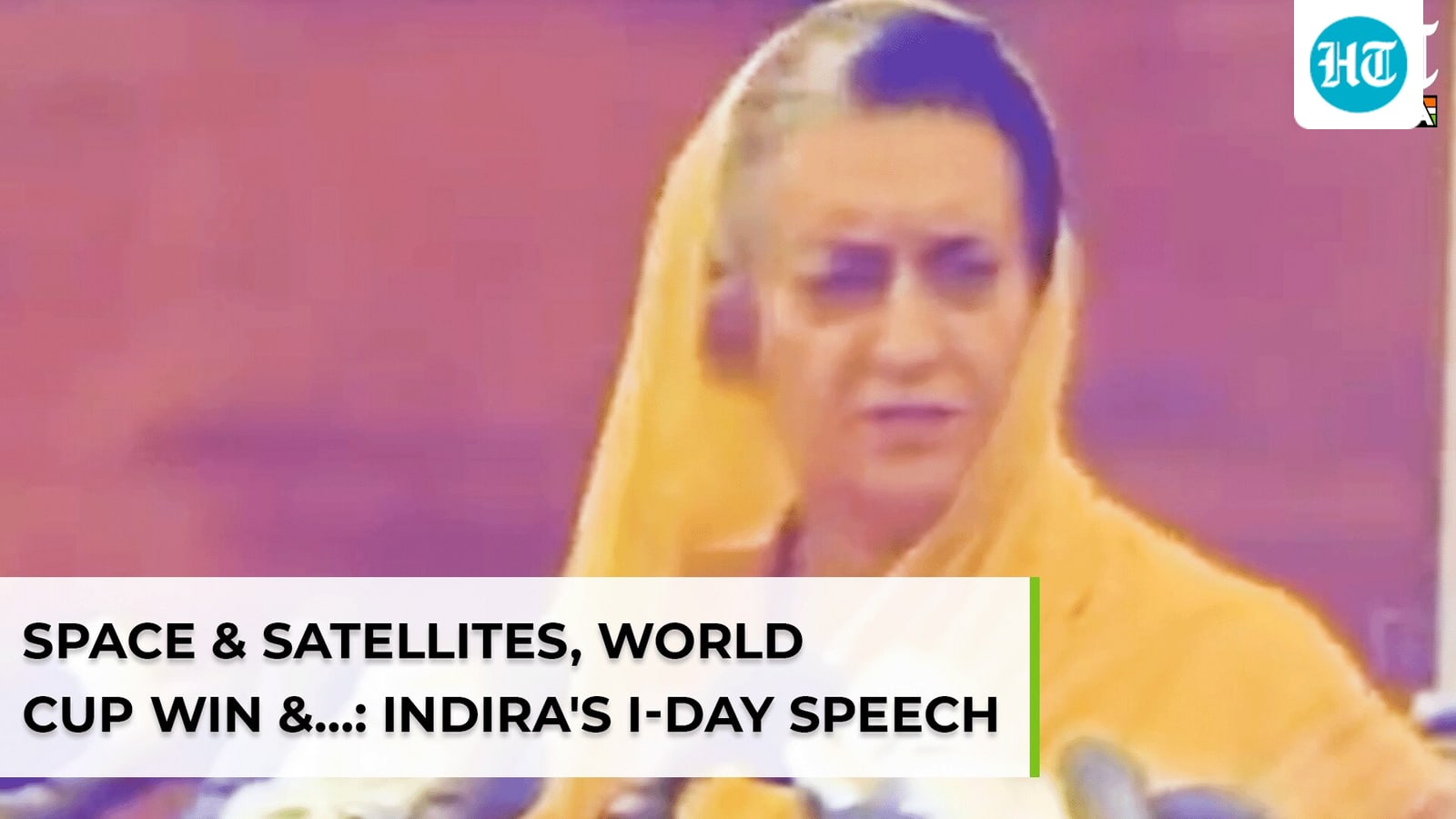
This analysis revisits Prime Minister Indira Gandhi's 1983 Independence Day speech from the Red Fort. It highlights her focus on India's emerging space ambitions, sports achievements, and rural infrastructure development.
Reflecting on a Pivotal Moment: Indira Gandhi’s 1983 Address
As India commemorates its Independence Day, revisiting the historical archives—specifically Prime Minister Indira Gandhi’s speech delivered from the Red Fort in 1983—provides a unique lens into the nation's developmental trajectory during that era. The 1983 address serves as a time capsule, capturing the socio-political climate and the specific national priorities that defined the early 1980s under Gandhi’s leadership.
Advancements in Science and Space Exploration
During the 1983 speech, Prime Minister Gandhi emphasized India's burgeoning aspirations in the scientific domain. By highlighting space exploration, she signaled to the nation and the international community that India was committed to self-reliance in cutting-edge technology. This focus was foundational for the Indian Space Research Organisation (ISRO), setting the stage for the country's eventual transition into a global leader in cost-effective satellite launches and planetary exploration.
Sports as a National Unifier
Beyond science, the speech prominently touched upon the significance of the cricket World Cup. The 1983 victory remains a watershed moment in Indian sports history, acting as a catalyst for the sport's massive popularity in the country. By acknowledging this achievement, Gandhi underscored the role of sports in fostering national pride and unity, a theme that continues to resonate in contemporary Indian society.
Rural Development and Electrification
Infrastructure was a cornerstone of Gandhi’s address, particularly the push for electricity in villages. This initiative was part of a broader, long-term strategy to bridge the urban-rural divide and modernize the agrarian economy. The electrification of remote villages was not merely an infrastructural target but a social imperative aimed at improving the quality of life and facilitating education and commerce in underserved regions.
Historical Context and Governance
Indira Gandhi’s 1983 speech reflected the challenges and ambitions of a nation striving for modernization while maintaining its core democratic principles. The address balanced high-level technological goals with ground-level social welfare, illustrating the multifaceted nature of governance during her tenure. Her ability to weave together disparate topics—from space research to rural power supply—demonstrates the comprehensive vision required to lead a diverse and developing democracy.
Legacy and Future Trends
Looking back, the themes discussed in 1983 have evolved into the pillars of modern India. The focus on space exploration has matured into ambitious lunar and solar missions, while the electrification initiatives have laid the groundwork for today’s national power grids. By analyzing these past priorities, we can better understand the historical continuity behind India’s current growth trajectory and the enduring emphasis on technological and social progress.
Verification Required?