States cannot cite financial burden to oppose raising retirement age of judicial officers: Supreme Court
Source Entity
India Latest News: Top National Headlines Today & Breaking News | The Hindu
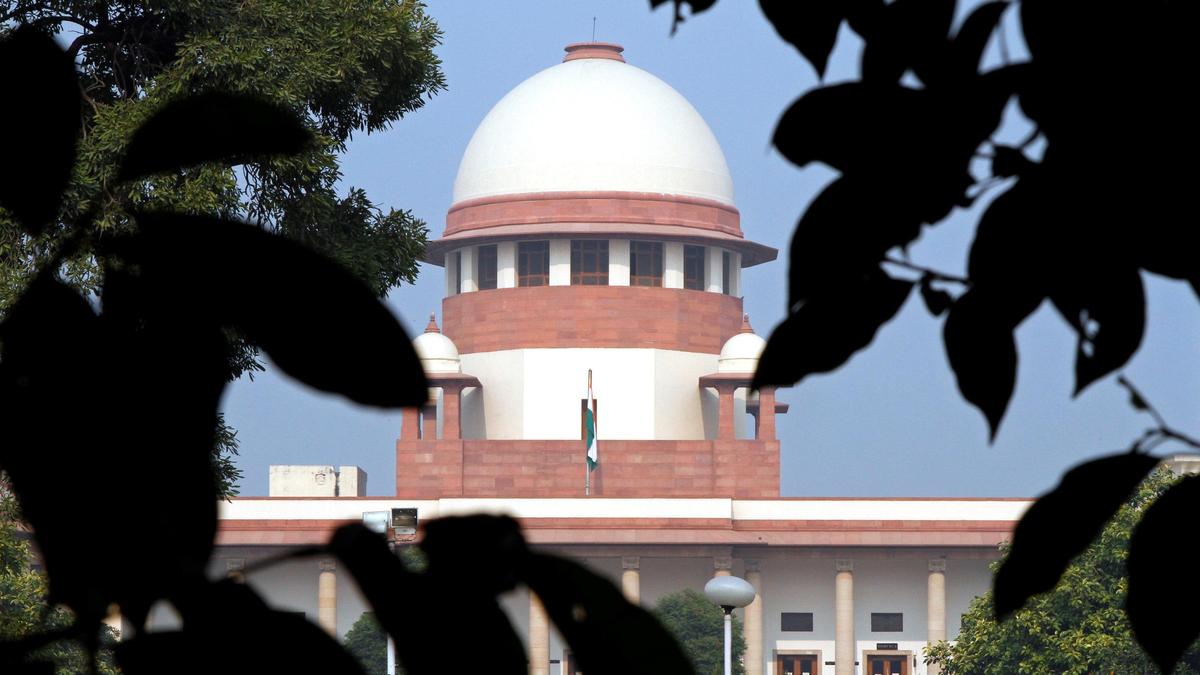
The Supreme Court has directed state governments to reconsider raising the retirement age for judicial officers, dismissing concerns over financial burdens. The Court emphasized that retaining experienced judges is more cost-effective than the process of recruitment and training for new vacancies.
Supreme Court Mandates Reconsideration of Judicial Retirement Age
In a significant directive issued on August 5, 2026, the Supreme Court of India, led by Chief Justice Surya Kant and Justices Joymalya Bagchi and V. Mohana, has firmly rejected the argument that state governments can cite financial constraints to oppose raising the retirement age of judicial officers. The Court’s intervention underscores a critical pivot in how the judiciary perceives its own human capital management, moving away from fiscal austerity toward long-term institutional efficiency.
Dismantling the 'Financial Burden' Argument
The central tension in this discourse lies in the state governments' persistent claim that increasing the superannuation age would inflate pension and salary expenditures. However, the Bench characterized these concerns as "misconceived." The Court’s logic is rooted in the practical realities of judicial administration: the fiscal drain caused by retiring seasoned jurists and the subsequent cycle of recruiting, training, and onboarding new officers often outweighs the costs of retaining existing, experienced personnel who are already integrated into the system.
Prioritizing Institutional Experience
By requesting that states revisit the enhancement of retirement ages within a two-week window, the Supreme Court is highlighting the irreplaceable value of experience. Judicial wisdom is a cumulative asset; the longer an officer serves, the more adept they become at managing complex dockets and navigating procedural intricacies. Retaining these individuals ensures a higher quality of justice delivery and administrative continuity, which are essential for maintaining public trust in the legal system.
Decoupling Judicial Service from General Administration
The Court’s order specifically instructs state governments to address this issue independently of the superannuation rules applied to general government employees. This distinction is vital; it recognizes that judicial officers hold a unique constitutional position. Because their roles are fundamentally different from those in the executive bureaucracy, their retirement policies should be governed by the specific needs of the judiciary rather than uniform, blanket policies applied across all state departments.
Future Implications for Judicial Efficiency
This directive serves as a catalyst for potential structural reforms within the Indian judiciary. If states comply by standardizing an increased retirement age, the immediate effect will be a reduction in the rate at which vacancies appear, potentially stabilizing the workforce and preventing the sudden loss of institutional memory. Looking ahead, this move could lead to a more robust judicial pipeline, where the focus shifts from constant recruitment crises to the optimization of existing judicial talent.
Conclusion
Ultimately, the Supreme Court's stance marks a firm assertion of judicial independence regarding administrative policy. By framing the retention of experienced judges as a fiscal advantage rather than a liability, the Court has challenged states to rethink their priorities. As the two-week deadline approaches, the response from state governments will determine whether the judiciary can effectively mitigate its staffing gaps through the retention of its most experienced members.
Verification Required?