Mojtaba names new ‘enemies’: Did US allies in Gulf quietly open their bases for brutal Iran strikes?
Source Entity
Latest News: Todays Latest News Headlines from India & World | Hindustan Times | Hindustan Times
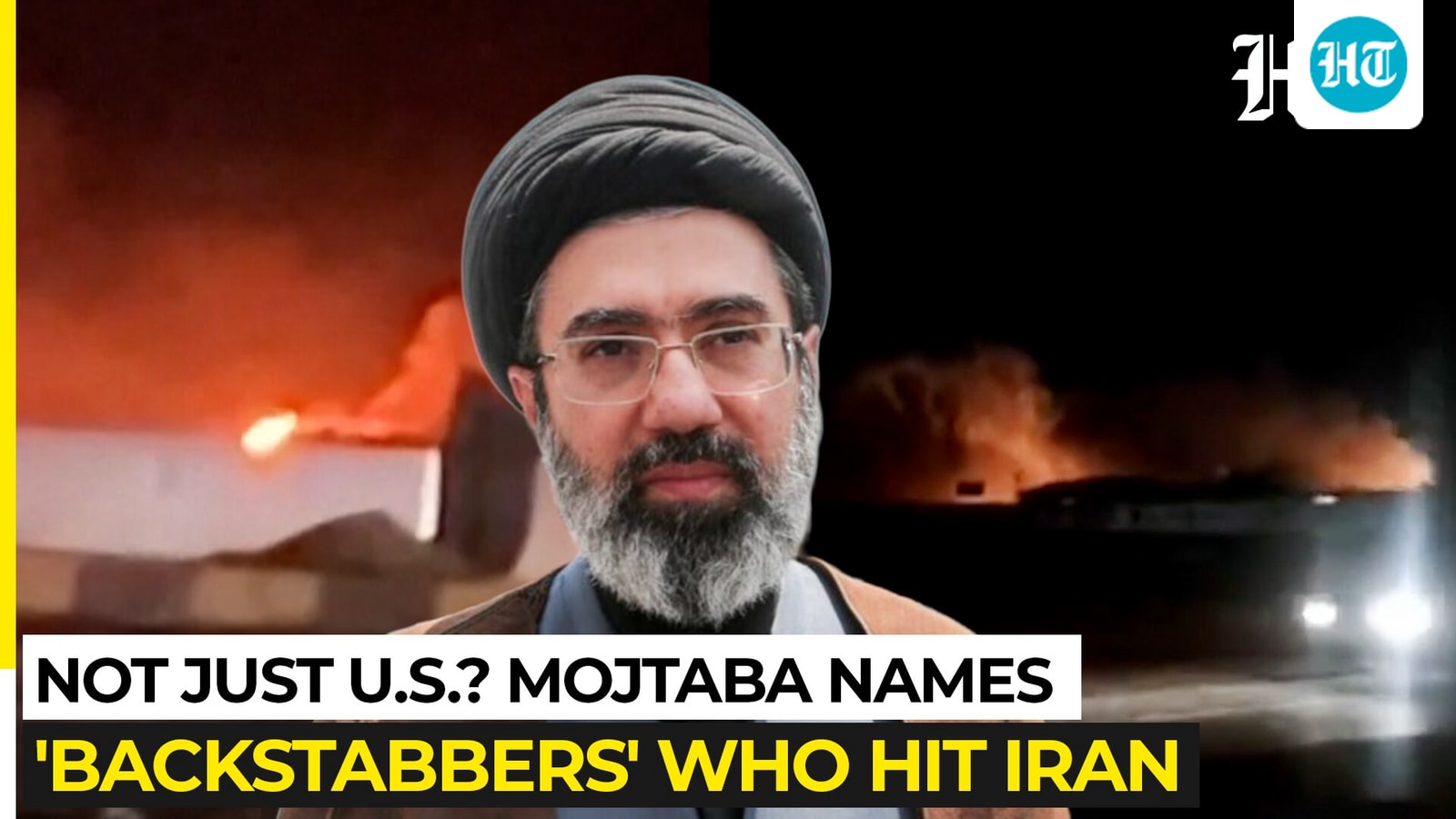
Iran has accused neighboring Gulf states of participating in recent U.S.-led military strikes, further escalating regional tensions. While Donald Trump has paused strikes to allow for diplomacy, Tehran has rejected direct negotiations and signaled a shift toward an offensive military posture.
The Escalating Standoff: Iran, the U.S., and the Gulf
Recent developments in the Middle East have pushed the Gulf region into a precarious state of uncertainty. Iran’s Foreign Ministry spokesman, Esmaeil Baghaei, has leveled serious allegations against neighboring Gulf states, claiming that these nations not only provided territorial access for U.S. military operations but actively participated in strikes against Iranian interests. These accusations represent a significant shift in regional rhetoric, moving beyond the traditional Iran-U.S. binary to implicate local allies in a broader conflict framework.
The Fragile Diplomatic Pause
In response to the escalating hostilities, former President Donald Trump has signaled a temporary halt to U.S. military strikes. This pause is explicitly framed as an opening for diplomatic engagement, utilizing intermediaries such as Oman to facilitate indirect communication. However, the efficacy of this strategy remains in doubt, as the administration has coupled this offer with a stern warning: should these diplomatic efforts fail, the resumption of military action is considered inevitable. This creates a volatile environment where the window for de-escalation is narrowing rapidly.
Tehran’s Strategic Defiance
Tehran’s response to these diplomatic overtures has been one of staunch defiance. By officially ruling out fresh negotiations with Washington, Iran is asserting its sovereignty and challenging the American perception of power dynamics in the region. Spokesman Baghaei’s assertion that Tehran—rather than Washington—will determine the timeline for war or peace serves as a psychological maneuver to regain the strategic initiative. This narrative of self-determination is aimed at both domestic audiences and regional rivals who may be considering closer alignment with U.S. security interests.
The Spectre of an 'Offensive Phase'
Despite the temporary lull in direct U.S. strikes, the situation on the ground remains highly combustible. Iran has signaled a transition toward an "offensive phase," suggesting that their military doctrine is shifting in response to the perceived involvement of neighboring states. This rhetoric signals that Tehran may be preparing for a more aggressive posture, potentially focusing on the Strait of Hormuz, a critical global chokepoint. The potential for disruption in this maritime corridor remains the most significant threat to global energy markets and international security.
Implications for Regional Stability
The involvement of Gulf states, as alleged by Iran, complicates the regional security architecture. If these nations are indeed seen as active participants in anti-Iran operations, they may become direct targets for future retaliatory measures. This shift risks turning a localized standoff into a multi-front regional conflict. As the clock ticks on the U.S.-led diplomatic window, the international community is left to watch whether the current "pause" will lead to a breakthrough or merely serve as a precursor to a more intense and uncontrolled phase of military engagement.
Conclusion: A Crisis of Confidence
The current impasse is defined by a deep-seated lack of trust and conflicting strategic goals. With Washington demanding concessions through diplomatic pressure and Tehran doubling down on its right to choose the terms of engagement, the path to stability is obscured. The coming weeks will be critical; if the indirect mediation efforts through regional partners fail to produce a tangible cooling-off period, the region may witness an escalation that transcends the current "war of words" and erupts into a direct, large-scale confrontation.
Multiple Citing Sources
Verification Required?