Iran hardliners accuse leaders of 'soft coup' as US truce comes under fresh strain: Report
Source Entity
TOI WORLD DESK
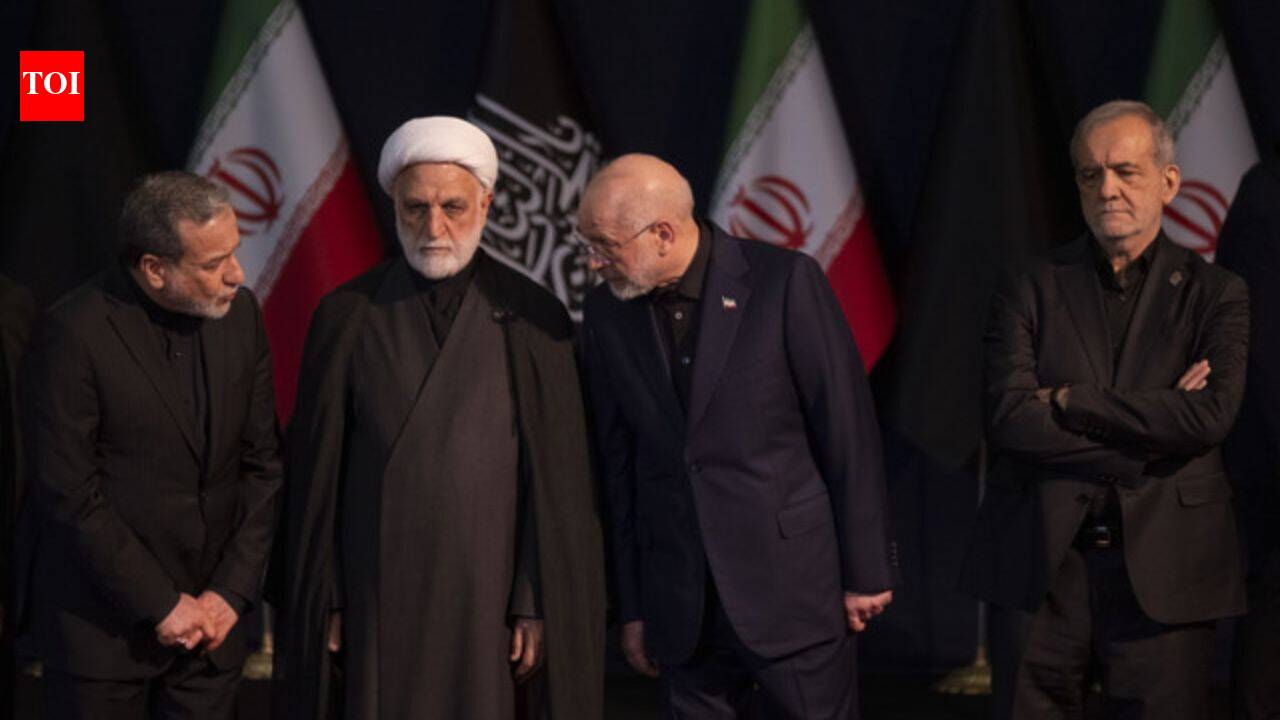
Iran's hardline factions are accusing President Pezeshkian and Foreign Minister Araghchi of orchestrating a 'soft coup' following the Supreme Leader's funeral. The internal strife centers on allegations of surrender to the US for sanctions relief, jeopardizing a fragile ceasefire.
Internal Fracture: The 'Soft Coup' Allegations in Iran
The political landscape in Iran has entered a period of extreme volatility following the funeral of the Supreme Leader. What began as a period of mourning has rapidly transformed into a theater of political warfare, with hardline factions openly accusing the current administration of orchestrating a "soft coup." This internal schism is not merely a disagreement over policy but a fundamental clash over the direction of the Islamic Republic's sovereignty and its relationship with the West.
The Nexus of Hostility: Pezeshkian and Araghchi
At the center of this storm are President Pezeshkian and Foreign Minister Araghchi, both of whom have become primary targets of public hostility. The hardline elements within the establishment argue that these leaders have bypassed the authority of the new Supreme Leader to pursue a clandestine agenda. The accusation of a "soft coup" suggests that the administration is attempting to shift the power balance of the state from within, effectively neutralizing the influence of the radical guard to pave the way for a more pragmatic, and in the eyes of hardliners, "submissive" governance.
The US Factor and the Sanctions Dilemma
"Hardliners believe officials surrendered to the United States and ignored the new Supreme Leader."
A critical driver of this unrest is the administration's pursuit of sanctions relief. For the pragmatic wing of the government, easing economic pressure from the United States is a necessity for national survival. However, for the hardline factions, any negotiation that implies a concession to Washington is viewed as an act of betrayal. This tension is exacerbated by a fragile ceasefire with the United States, which is currently under renewed strain due to recent attacks. The hardliners view the administration's attempts to maintain this truce as a sign of weakness and a surrender of Iran's regional posture.
Strategic Sidelines and Radical Resistance
Analysts indicate that the current leadership is intentionally attempting to sideline radical factions. By marginalizing the most extreme elements of the political establishment, Pezeshkian and Araghchi hope to present a more stable and negotiable face to the international community. This strategy is designed to secure the economic concessions necessary to stabilize the domestic economy. However, this approach has backfired in the short term, triggering a visceral reaction from those who believe the revolutionary identity of the state is being traded for financial relief.
Broader Implications for Regional Stability
The instability within Tehran has immediate and dangerous implications for the broader Middle East. When the internal hierarchy of a nuclear-capable state is in flux, the risk of miscalculation increases. The "soft coup" claims indicate a breakdown in the chain of command, where different factions may be pursuing contradictory foreign policies. If the hardliners succeed in forcing the leadership's hand, the fragile truce with the US could collapse entirely, potentially leading to an escalation of hostilities in a region already on the brink.
Conclusion: A Precarious Balance
In summary, Iran is currently gripped by a high-stakes power struggle between pragmatic officials seeking economic survival and hardliners guarding ideological purity. The accusations of a soft coup, paired with the public hostility directed at President Pezeshkian and Foreign Minister Araghchi, signal a deep crisis of legitimacy. As the new Supreme Leader attempts to consolidate power, the tension between the desire for sanctions relief and the demand for ideological defiance will likely determine whether Iran moves toward a diplomatic opening or descends further into internal chaos and external conflict.
Multiple Citing Sources