Behind the BRICS agreement: No Ukraine, Iran-UAE balance, swipe at (US) tariffs, flagging Gaza
Source Entity
Divya A, Shubhajit Roy
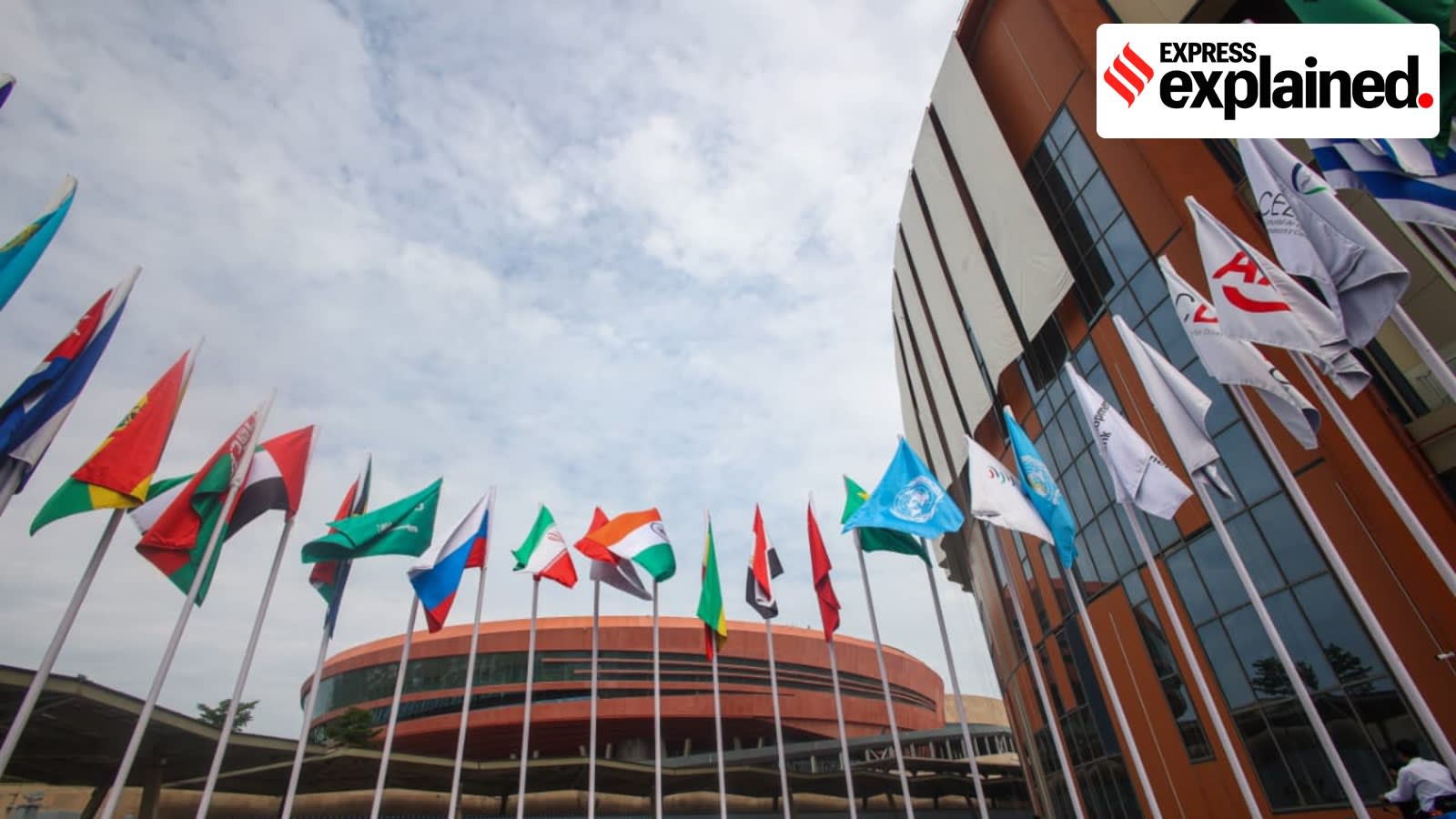
Iranian President Masoud Pezeshkian visited New Delhi for the 18th BRICS summit, highlighting the impact of escalating US and Israeli sanctions on Iran. Prime Minister Narendra Modi urged for diplomatic resolutions and emphasized the critical need for secure energy supply chains through the Strait of Hormuz.
The Geopolitical Shift: Iran’s Strategic Engagement at BRICS
Iranian President Masoud Pezeshkian’s arrival in New Delhi for the 18th BRICS summit marks a pivotal moment in contemporary international relations. As the Middle East faces a volatile period, the Iranian leadership is actively seeking to leverage multilateral forums to counter the isolation imposed by Western-led sanctions. By participating in the BRICS Business Forum, President Pezeshkian is signaling that Iran views the bloc as a necessary economic bulwark against what he describes as the 'active aggression' of the United States and Israel.
The Intersection of Economics and Security
During his address, President Pezeshkian underscored a fundamental truth of modern statecraft: economic security is inextricably linked to national and regional sovereignty. The 'extensive' sanctions imposed on Iran have entered a 'far more dangerous phase' in recent months, according to the President. This rhetoric highlights the strain on the Iranian economy, which is struggling under the weight of coordinated punitive measures. By framing these economic pressures as a form of 'active aggression,' Tehran is attempting to shift the narrative from a domestic financial crisis to a matter of regional security, seeking solidarity from fellow BRICS members.
The Strait of Hormuz and Global Energy Stability
Prime Minister Narendra Modi’s intervention during his meeting with President Pezeshkian highlights the global stakes of the current standoff. The Strait of Hormuz serves as a vital artery for global energy, and its current 'chokehold' status—resulting from the military coalition actions initiated on February 28—poses a direct threat to the global energy supply chain. India, as a major energy importer, is acutely aware that the instability in West Asia is not merely a regional localized conflict but a systemic risk to global economic recovery.
Dialogue vs. Coercion: The Diplomatic Tightrope
Prime Minister Modi’s call for 'dialogue and diplomacy' reflects India’s traditional stance of strategic autonomy. By advocating for a peaceful resolution, India attempts to balance its historical diplomatic ties with Iran against its critical security and economic partnerships with the United States and other Western allies. However, the tone from Tehran remains defiant. President Pezeshkian’s characterization of the U.S. and Israel as 'bullies' and his assertion that 'Iran will not be bullied' suggests that the path to a diplomatic breakthrough remains narrow and fraught with ideological friction.
Future Trends and the BRICS Influence
Looking ahead, the role of BRICS as a platform for mediating such tensions will be tested. If the bloc is to remain relevant, it must address the economic grievances of its members without becoming a party to their military conflicts. The upcoming sessions in New Delhi will likely focus on creating alternative trade mechanisms to bypass traditional sanctions, a move that could fundamentally alter the effectiveness of U.S.-led economic pressure in the coming years. Whether this leads to a de-escalation or a further hardening of international blocs remains the defining question for the region.
Multiple Citing Sources