Iran's shadow fleet rushed $6 billion of oil to China during brief US truce: Report
Source Entity
TOI WORLD DESK
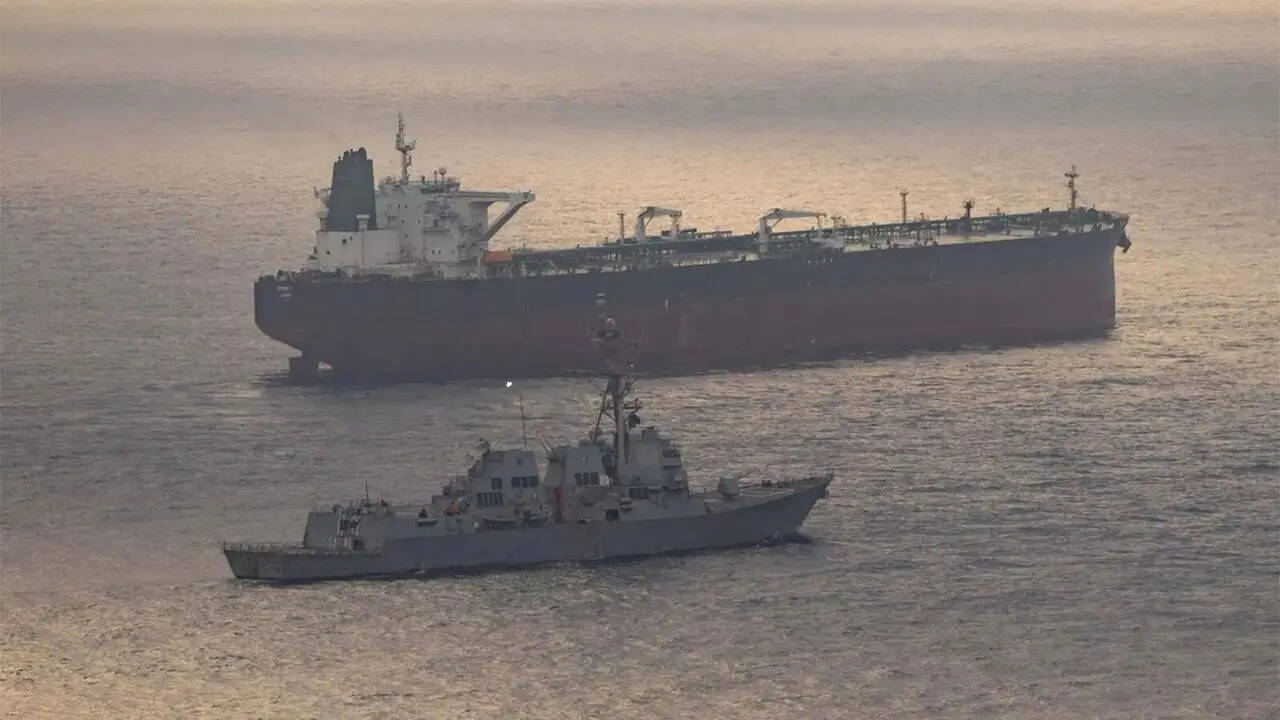
Iran leveraged a brief one-month window following a June 17 US agreement to export $5-6 billion worth of oil to China. Using a fleet of approximately 20 tankers operating off the coast of Malaysia, Tehran successfully cleared significant pent-up oil supplies.
Strategic Maneuvering: Iran's Oil Rush During US Truce
In a sophisticated display of geopolitical and economic agility, Iran successfully navigated a narrow diplomatic window to export billions of dollars in crude oil to China. According to reports from United Against Nuclear Iran and analysts cited by The Wall Street Journal, Tehran utilized a roughly one-month period following a temporary agreement signed on June 17, during which the United States lifted its blockade on Iranian ships. This strategic window allowed Iran to move an estimated $5 billion to $6 billion worth of oil, highlighting the precarious nature of US-Iran relations and the efficiency of Tehran's export mechanisms.
The Logistics of the 'Shadow Fleet'
Central to this operation was the deployment of what is commonly referred to as a 'shadow fleet.' Starting in late June, approximately 20 Iranian tankers were observed arriving in the waters off the east coast of Malaysia. This region often serves as a critical hub for ship-to-ship (STS) transfers, a technique used to obscure the origin of the cargo before it reaches its final destination. By concentrating its fleet in Malaysian waters, Iran was able to rapidly process and redirect its pent-up oil supplies, ensuring that the cargo reached China with minimal interference during the truce.
Economic Imperatives and Pent-up Supply
The urgency of this operation was driven by Tehran's desperate need to liquidate pent-up oil reserves. Under prolonged US sanctions and blockades, Iranian crude often accumulates in storage or on tankers idling at sea, creating a significant financial bottleneck for the Iranian government. The June 17 agreement provided a rare 'pressure valve,' allowing the state to convert physical reserves into liquid capital. The scale of the export—reaching up to $6 billion—underscores the massive volume of energy resources Iran had been holding back in anticipation of such a diplomatic opening.
China's Role as the Primary Destination
China continues to be the primary destination for Iranian oil, reinforcing the deep strategic and economic partnership between Beijing and Tehran. Despite US efforts to isolate Iran through financial and maritime blockades, China's demand for affordable energy often outweighs the risks associated with US secondary sanctions. The arrival of these shipments in China confirms that the demand for Iranian crude remains robust and that the infrastructure for bypassing US-led energy restrictions is well-established and highly operational.
Broader Geopolitical Implications
This incident illustrates a recurring pattern in the 'cat-and-mouse' game between the US and Iran. The ability of Iran to mobilize 20 tankers almost immediately after a blockade lift demonstrates a high level of readiness and tactical planning. It suggests that Iran maintains a constant state of operational preparedness to exploit any flicker of diplomatic flexibility. Furthermore, it highlights the limitations of US maritime blockades when faced with a determined adversary and a willing buyer like China.
Conclusion and Future Outlook
Ultimately, the rush of $6 billion in oil to China serves as a reminder that economic sanctions are often porous. While the US can implement blockades to exert pressure, temporary agreements or 'truces' can be leveraged by Iran to secure vital funding. Moving forward, it is likely that the US will tighten its monitoring of the Malaysian coast and the 'shadow fleet' to prevent similar surges, while Iran will continue to seek clandestine or temporary channels to sustain its economy through energy exports.