What is really inside this mountain? Iran just issued a warning to Trump that changes everything
Source Entity
Latest News: Today's Latest News Headlines from India & World | Hindustan Times | Hindustan Times
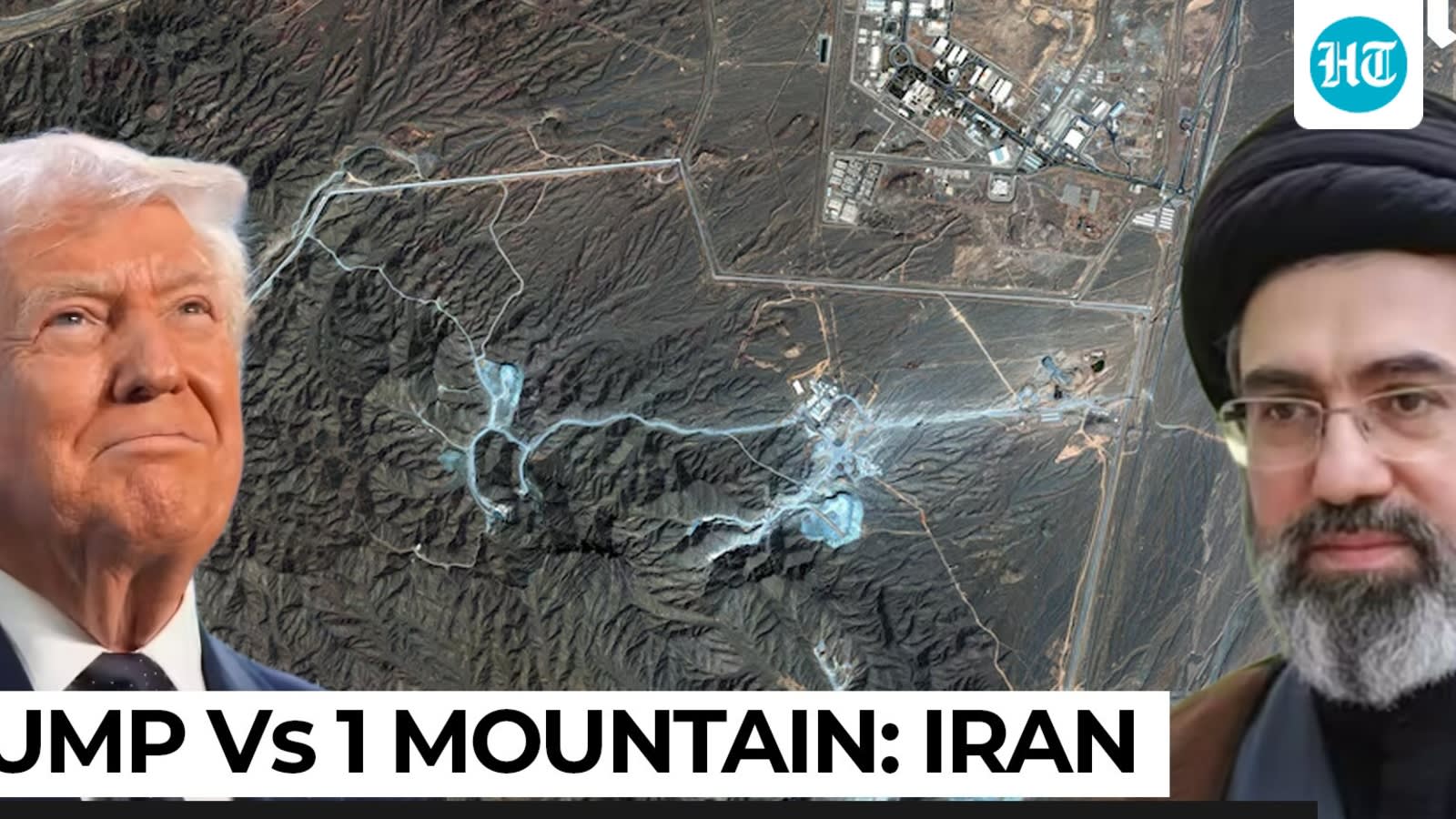
Iran has issued a stern warning to the United States following reports that President Donald Trump may target the 'Pickaxe Mountain' underground facility near the Natanz nuclear complex, asserting that any strike would provoke a devastating retaliatory response.
Escalation in the Shadows: The Standoff Over Pickaxe Mountain
The geopolitical tension between the United States and the Islamic Republic of Iran has reached a critical juncture with the emergence of "Pickaxe Mountain" as a central point of contention. Recent reports indicating that President Donald Trump may target this deeply buried facility near the Natanz nuclear complex have prompted a severe warning from Tehran. This escalation marks a shift from diplomatic maneuvering to explicit military threats, highlighting the precarious nature of the current U.S.-Iran standoff and the volatility of the regional security environment.
The Strategic Enigma of Pickaxe Mountain
The "Pickaxe Mountain" site is not merely a geographical landmark but a symbol of Iran's strategic shift toward "deep fortification." By utilizing extensive underground tunnel networks, Iran seeks to protect its most sensitive assets from conventional aerial bombardment and precision-guided munitions. The proximity of this site to the Natanz nuclear complex—a facility already under intense international scrutiny—makes it a primary intelligence priority for Western agencies. The ability to hide critical infrastructure deep within mountain ranges creates a "hard target" scenario, significantly complicating the military calculus for any potential U.S. strike.
Tehran's Deterrence Strategy and Regional Risks
In response to the reported threats, Tehran has signaled that any kinetic action against Pickaxe Mountain would trigger a "devastating response." This rhetoric is designed to establish a clear red line, suggesting that Iran is prepared to move beyond localized skirmishes to target U.S. interests and regional partners. This strategy of deterrence relies on the threat of asymmetric warfare, leveraging Iran's influence over regional proxies to create a high cost for U.S. military intervention. Such a response could potentially disrupt global energy markets and threaten the stability of the Persian Gulf.
The Conflict of Narratives: Nuclear vs. Conventional
A central point of friction in this standoff is the actual purpose of the facility. While Western analysts maintain that the underground network is tied to nuclear ambitions or the protection of nuclear materials, Iran vehemently denies these claims, insisting the site is not being used for nuclear activities. Tehran argues that these allegations are fabricated to provide a casus belli for military aggression. This clash of narratives is typical of the long-standing nuclear dispute, where intelligence gaps are often filled by strategic assumptions, further fueling a cycle of mistrust and escalation.
Broader Geopolitical Implications
The focus on Pickaxe Mountain extends the conflict beyond a bilateral dispute, potentially drawing in U.S. regional allies who fear being caught in the crossfire of a larger confrontation. A strike on such a facility could destabilize the Middle East, prompting a cascade of retaliatory strikes across the region. The tension underscores the fragility of regional security architectures and the risk that a single miscalculation regarding the nature of an underground site could ignite a wider, more destructive conflict.
Future Trends and Conclusion
Looking forward, the standoff over Pickaxe Mountain is likely to intensify the "shadow war" of intelligence and cyber operations. Before any physical strike is attempted, the U.S. will likely focus on enhancing its penetration capabilities and intelligence gathering to verify the site's contents. However, as long as Iran views these facilities as essential for national survival and the U.S. views them as existential threats, the risk of escalation remains high. In summary, the dispute over Pickaxe Mountain encapsulates the broader struggle for dominance and security in a region defined by deep-seated suspicion and military posturing.
Verification Required?