Israeli West Bank settler tells BBC attacks on Palestinians are justified as revenge
Source Entity
BBC News
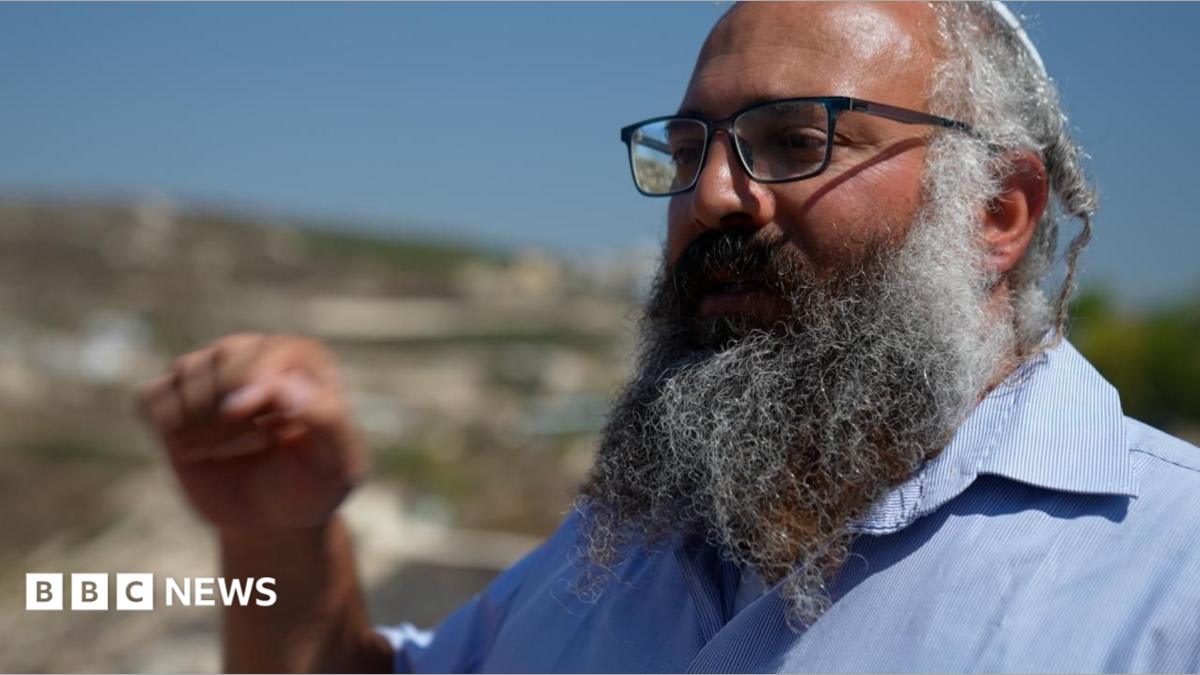
Tensions in the West Bank have escalated following a violent confrontation near the Havat Gilad outpost that resulted in multiple deaths. Israeli settlers have defended retaliatory attacks against Palestinian villages, highlighting the deepening cycle of violence and settlement expansion in the region.
The Escalating Crisis in the West Bank
The recent surge in violence within the occupied West Bank underscores a deepening volatility rooted in the expansion of Israeli outposts like Havat Gilad. Situated across multiple hilltops and overlooking neighboring Palestinian communities, these settlements serve as both physical and ideological focal points in a decades-long territorial struggle. The proximity of these structures to Palestinian villages creates a constant friction point, where daily interactions are increasingly defined by confrontation rather than coexistence.
Anatomy of the Recent Conflict
The most recent wave of unrest was ignited by a violent clash in the village of Tal. The incident, which resulted in the death of an Israeli security guard from Havat Gilad, also claimed the lives of four Palestinians and one Israeli soldier. While the precise catalyst for this confrontation remains a subject of dispute, the aftermath saw a significant escalation in hostilities, with settler groups launching retaliatory attacks against nearby Palestinian villages, further destabilizing an already fragile security environment.
The Ideology of Retaliation
Interviews conducted within the Havat Gilad outpost reveal a hardening stance among some settlers, who explicitly justify the recent attacks on Palestinian villages as acts of vengeance. This rhetoric suggests a shift toward normalized vigilantism, where individual security concerns are used to validate collective punishment. Such justifications complicate the efforts of international observers and security forces to de-escalate tensions, as the cycle of violence is increasingly framed by participants as a necessary defensive or retributive measure.
Settlement Expansion and Regional Stability
The expansion of outposts like Havat Gilad is a critical factor in the broader geopolitical landscape of the West Bank. As these settlements grow, they effectively fragment the territory, making the prospect of a contiguous Palestinian state increasingly difficult to envision. The physical footprint of these settlements, characterized by sheds and block houses, serves as a permanent marker of control that directly challenges the viability of international peace frameworks and heightens the sense of grievance among the local Palestinian population.
Future Implications and Conclusion
Looking ahead, the situation remains precarious. The combination of unchecked settlement expansion and the rise of settler-led retaliatory violence creates a feedback loop that threatens to engulf the region in deeper conflict. Without a clear mechanism to mediate these disputes or curb the expansion of unauthorized outposts, the potential for further loss of life remains high. The events at Havat Gilad are not merely isolated incidents but are indicative of a systemic breakdown in order, where the absence of a political resolution is being filled by increasingly radicalized local factions on both sides.