JPMorgan CEO Jamie Dimon has a ‘huge worry’ over US-China ‘big problems’
Source Entity
TOI TECH DESK
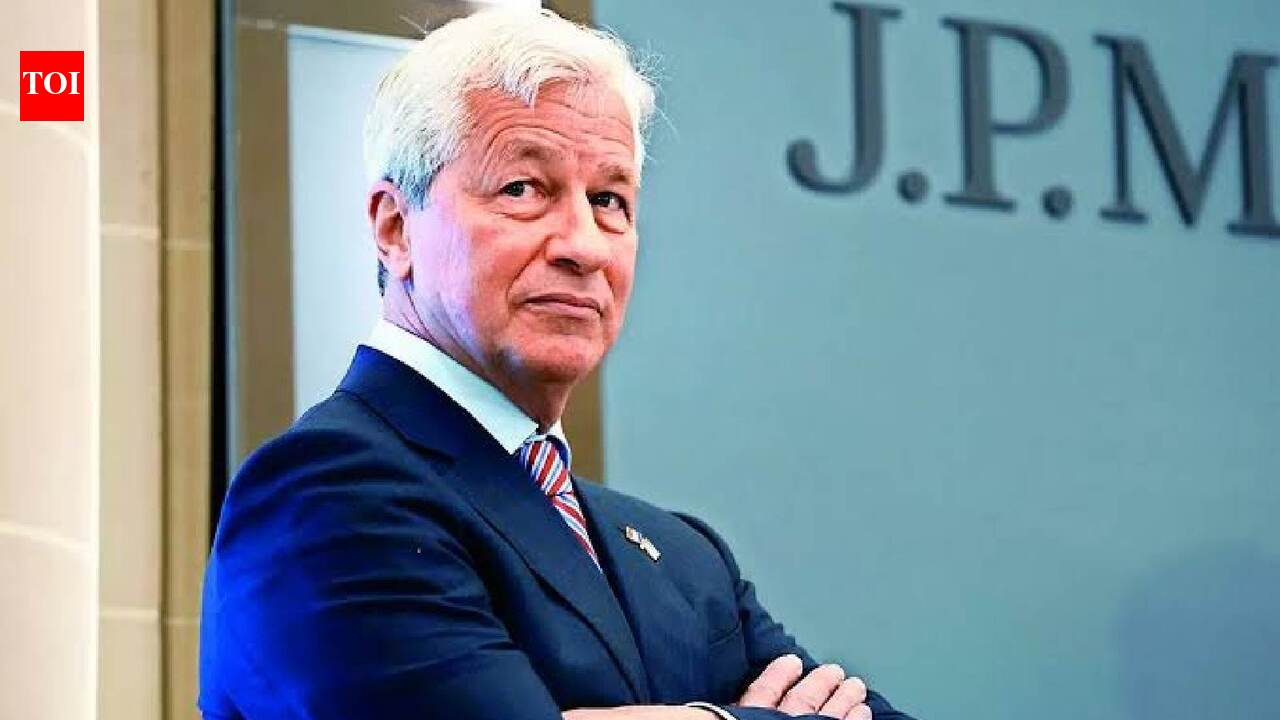
JPMorgan CEO Jamie Dimon has identified geopolitical tension and slowing economic growth as his primary concerns for the global economy. He advocates for robust growth as a necessary mechanism to resolve complex disputes between the United States and China.
The Geopolitical Lens of Wall Street Leadership
Jamie Dimon, the veteran CEO of JPMorgan Chase, has recently articulated a sobering perspective on the current state of global affairs. During a high-profile visit to Hong Kong, Dimon identified geopolitical instability as his single greatest concern, framing it as an existential threat to the stability of the global economic order. As the leader of America's largest financial institution, Dimon’s assessment carries significant weight, signaling to investors and policymakers alike that the era of ignoring political friction in favor of pure market optimization may be drawing to a close.
Economic Growth as a Diplomatic Bridge
At the heart of Dimon's argument is the premise that economic prosperity acts as a fundamental stabilizer for international relations. He posits that robust growth provides the necessary fiscal and social bandwidth for nations to manage complex challenges, such as trade disputes, debt sustainability, and systemic rivalries. By prioritizing growth, Dimon suggests that the United States and China might find more common ground, as the mutual benefits of a thriving global market often outweigh the short-term political gains of protectionism or aggressive posturing.
The US-China Nexus
The relationship between Washington and Beijing represents the most critical geopolitical challenge of the 21st century. Dimon’s commentary highlights the reality that these two superpowers are inextricably linked through supply chains, capital markets, and technological dependencies. When these nations experience a slowdown, the ripple effects are felt globally, exacerbating existing tensions and limiting the capacity for diplomatic de-escalation. Dimon's call for practical collaboration is a pragmatic acknowledgment that complete economic decoupling is likely both unfeasible and detrimental to world peace.
Navigating the Risk Landscape
Investors and corporate leaders are increasingly forced to internalize 'geopolitical risk' as a core component of their strategic planning. Dimon’s focus on this issue underscores a shift in the corporate zeitgeist, where financial success is no longer viewed in a vacuum, independent of statecraft. As he engages with local business leaders in Hong Kong, his message serves as a reminder that the stability of the global financial system is contingent upon the ability of major nations to maintain open channels of communication and a commitment to shared economic prosperity.
Future Trends and Strategic Implications
Looking ahead, it is probable that the influence of financial leaders like Dimon in diplomatic discourse will continue to grow. As governments struggle to balance national security concerns with the need for economic efficiency, the private sector will likely play a role in advocating for 'de-risking' rather than total decoupling. If growth remains sluggish, the world may see an uptick in protectionist policies; however, if leaders heed the warning that prosperity is the ultimate antidote to conflict, we may see a pivot toward more coordinated international efforts to stabilize the global economy.
Conclusion
Jamie Dimon’s recent remarks serve as a vital reality check for the global business community. By framing economic growth as the primary solution to world peace and geopolitical friction, he provides a clear, albeit challenging, roadmap for the future. Whether policymakers in Washington and Beijing can reconcile their differences to foster this growth remains the defining question for the global economy in the coming decade.