Women at Jantar Mantar protest struggle for toilets, water as basic facilities remain out of reach
Source Entity
India Latest News: Top National Headlines Today & Breaking News | The Hindu
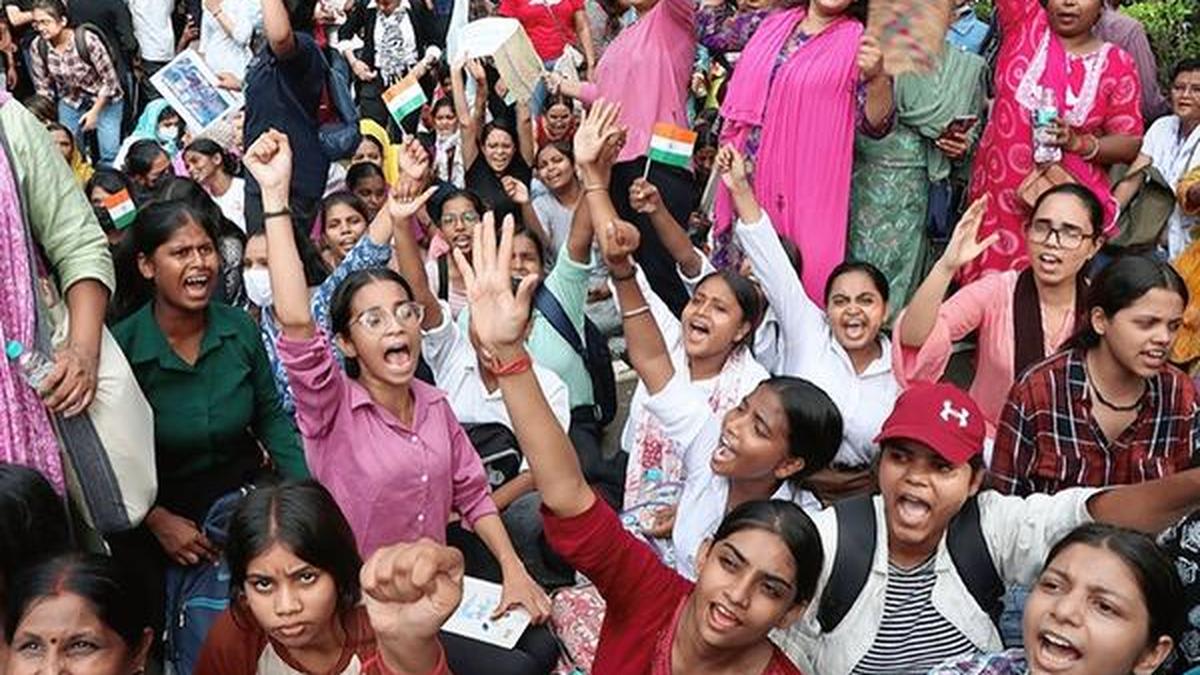
Protesters at Jantar Mantar are facing severe infrastructure challenges, including a lack of basic hygiene facilities and water. Meanwhile, heightened police surveillance and legal ambiguity regarding force usage have created a tense environment for demonstrators.
The Crisis of Basic Dignity at Jantar Mantar
As the protest at Jantar Mantar continues to draw participants from across the nation, the site has transformed into a focal point for both civic expression and systemic neglect. Beyond the core demands of the movement, protesters—particularly women—are grappling with a severe lack of basic amenities. The withdrawal of water supply and the scarcity of clean, accessible washrooms have turned daily survival into a logistical ordeal. For women like Harishma, who traveled from Bengaluru, the simple act of finding a sanitary facility has become a barrier to civic participation, often necessitating long trips back to accommodation and disrupting their ability to sustain their presence at the protest site.
The Intersection of Hygiene and Health
The degradation of sanitation infrastructure is not merely an inconvenience; it is a public health concern. Volunteer doctors at the site report that the inability to maintain personal hygiene is forcing many individuals to abandon the protest entirely. This attrition rate highlights a precarious reality where the lack of state-provided or civic-maintained facilities effectively acts as a deterrent to democratic expression. When fundamental human needs are unmet, the physical toll of the protest increases, creating an environment where only those with external support systems can afford to remain.
Surveillance and the Chilling Effect
Adding to the physical strain is an unprecedented layer of technological surveillance. The Delhi Police have deployed advanced tools, including 'DP-Dristhi' and 'Ikshana' surveillance vans, equipped with AI-assisted facial recognition. These systems scan live CCTV feeds against police databases to monitor and isolate specific individuals. The presence of a Mobile Command and Control Vehicle further centralizes this oversight. For younger protesters, such as university students, this environment induces significant apprehension, as the persistent tracking of their movements creates a 'chilling effect' on their willingness to engage in political activity.
Legal Ambiguity in Crowd Control
Surrounding the physical tension is a complex legal landscape regarding police conduct. Following allegations of brutality during the Cockroach Janta Party (CJP) protests, the debate over the limits of police power has intensified. Although the Bharatiya Nagarik Suraksha Sanhita (BNSS) provides the authority to disperse unlawful assemblies, there is a notable lack of statutory mandates for transparency, such as the requirement for body-worn cameras. While constitutional courts have established principles of legality, necessity, and proportionality, the absence of a comprehensive national framework leaves these protections fragmented and open to interpretation.
Conclusion: The Future of Democratic Space
The situation at Jantar Mantar represents a critical juncture for democratic protest in India. The combination of crumbling basic infrastructure and the rise of high-tech surveillance suggests a shift in how the state manages dissent. Moving forward, the lack of a codified, transparent policy on the use of force—coupled with the increasing reliance on AI-driven identification—will likely remain a point of contention. Protecting the right to protest requires not only the physical provision of water and sanitation but also a clear, legally binding commitment to privacy and the measured use of state authority.
Multiple Citing Sources
Verification Required?