Japan’s mission to Mars’s moons takes off
Source Entity
Latest News: Todays Latest News Headlines from India & World | Hindustan Times | Hindustan Times
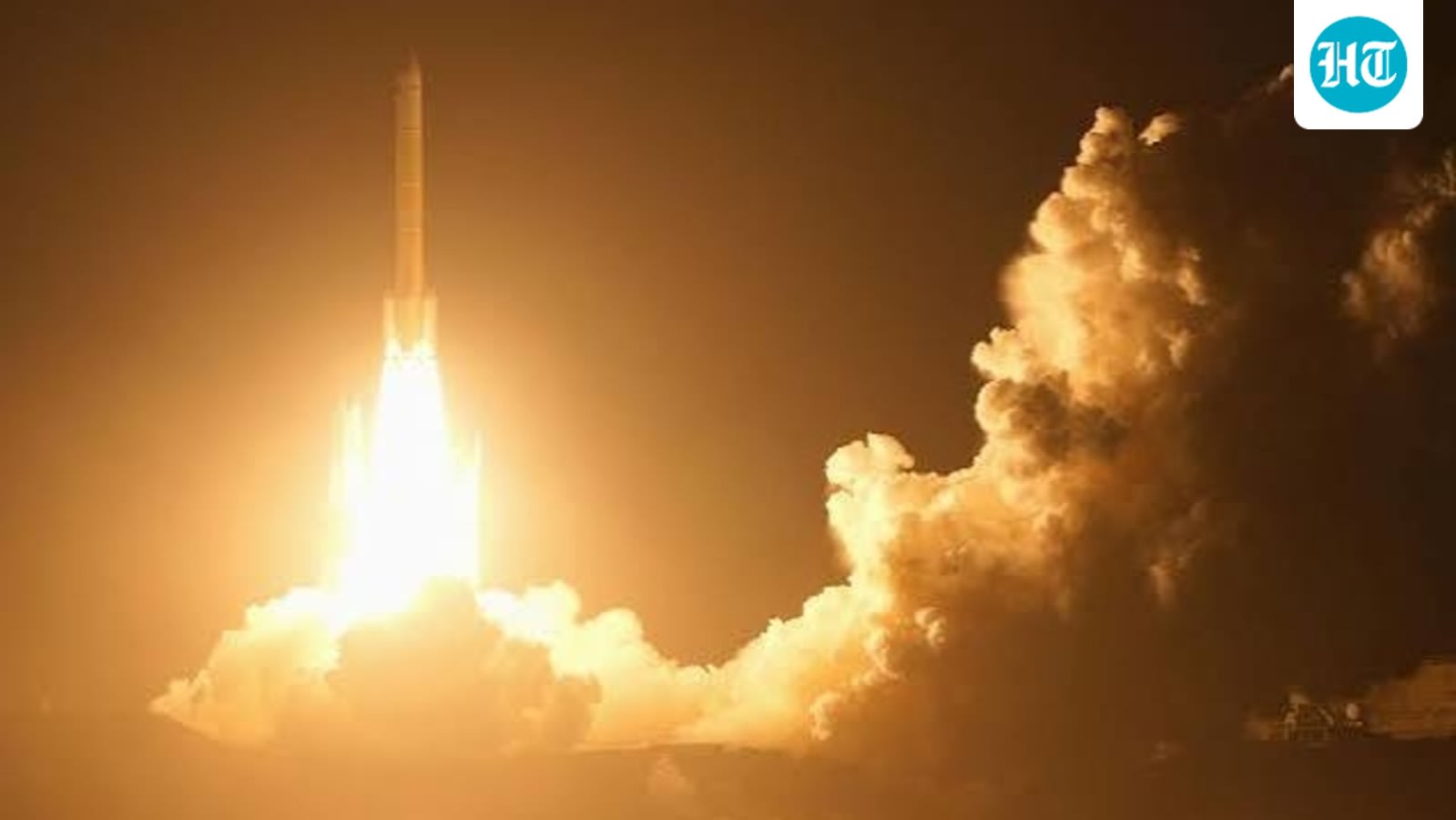
JAXA's MMX mission has successfully launched with the goal of retrieving soil samples from the Martian moon Phobos. This historic endeavor aims to determine the origin of Mars's moons and provide critical data about the Red Planet's history.
A New Frontier: Japan's MMX Mission to Phobos
On October 20th, the Japan Aerospace Exploration Agency (JAXA) successfully launched its Martian Moons eXploration (MMX) mission from the Tanegashima Space Center. Utilizing an H3 rocket, this ambitious project represents a significant leap in deep-space exploration. While previous missions have sent orbiters, landers, and rovers to the Martian surface, none have successfully managed to return samples back to Earth. The MMX mission is uniquely designed to bridge this gap, marking a potential turning point in our ability to study extraterrestrial geological materials in high-tech laboratories on our own planet.
The Objectives of the MMX Mission
The primary focus of the MMX probe is the Martian moon Phobos, the larger of the two natural satellites orbiting the Red Planet. The spacecraft is scheduled to spend approximately one year in transit before reaching its destination. Once it arrives, the mission aims to land on the surface of Phobos and collect at least ten grams of rock and dust. This material is invaluable, as it may contain preserved signatures of the moon's formation, offering a window into the violent early history of the Martian system.
Solving the Mystery of Martian Moons
For decades, planetary scientists have debated the origins of Phobos and its companion, Deimos. Theories range from the moons being captured asteroids to fragments of a larger body that was shattered by a massive impact on Mars. By analyzing the physical and chemical composition of the returned samples, researchers hope to finally resolve this long-standing puzzle. These samples will provide concrete evidence that is far more reliable than the remote sensing data currently available from orbiting satellites.
Technological Implications and Future Trends
The successful deployment of the H3 rocket from Kagoshima prefecture underscores Japan's growing influence in space exploration. The complexity of landing on a low-gravity body like Phobos, collecting samples, and executing a return journey to Earth by 2031 sets a high bar for international space agencies. This mission serves as a precursor to future human exploration efforts, as understanding the local environment of Martian moons could prove essential for planning future crewed missions to Mars itself.
The Broader Scientific Significance
Beyond the origin of the moons, the mission carries the potential to reveal significant details about Mars itself. As dust from the Martian surface is frequently lofted into the atmosphere and potentially deposited on its moons, the samples collected by MMX may contain remnants of Martian history that are otherwise difficult to access. By studying these materials, scientists hope to search for signs of ancient life or at least the chemical precursors that might have existed in the planet’s early, more hospitable environment.
Conclusion
The MMX mission is a testament to the power of international collaboration and rigorous scientific inquiry. By aiming to return physical samples from the Martian system, JAXA is not merely exploring a moon; it is opening a new chapter in planetary science. The successful return of these samples in 2031 promises to reshape our understanding of the solar system's evolution and solidify Japan's role as a leader in the next generation of space exploration.
Verification Required?