Japan launches mission to bring home a piece of the Martian moon Phobos
Source Entity
Stephen Clark
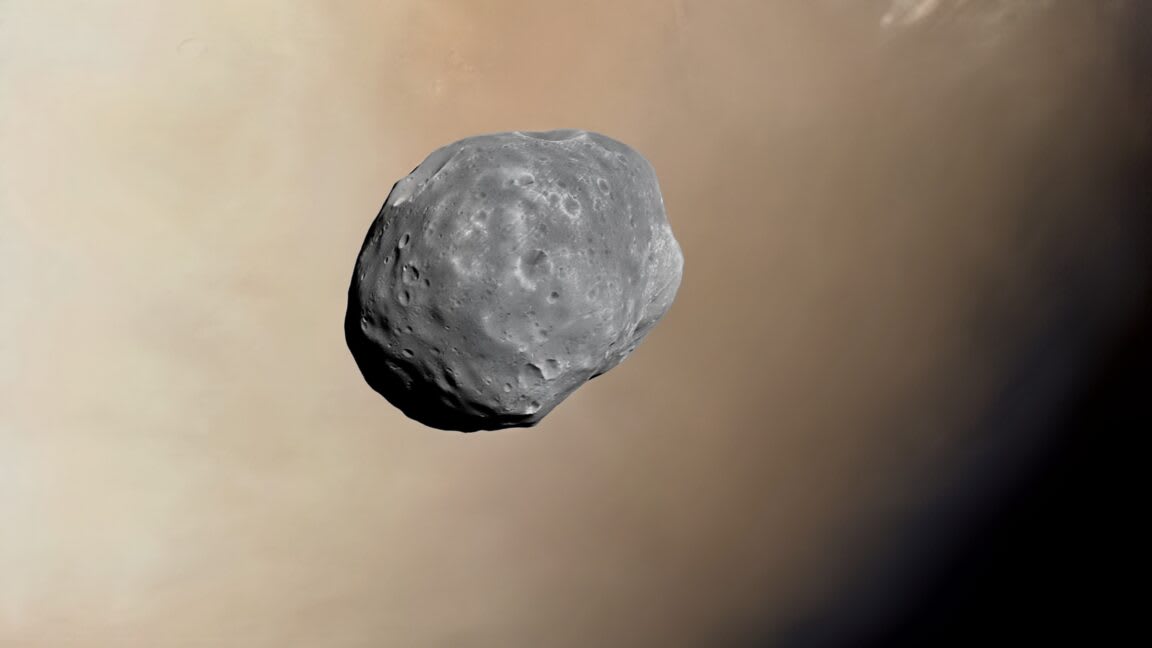
JAXA has launched the ambitious $578 million MMX mission to retrieve soil samples from Mars' moon Phobos. This historic endeavor aims to determine the origin of Martian moons and represents the first attempt to return material from the Martian system to Earth.
The MMX Mission: A New Frontier in Planetary Science
The Japan Aerospace Exploration Agency (JAXA) has officially launched the Martian Moons Exploration (MMX) mission, a landmark $578 million endeavor aimed at unlocking the secrets of the Red Planet’s surroundings. By targeting Phobos, the larger of Mars' two moons, this mission seeks to retrieve at least 10 grams of regolith to be returned to Earth for rigorous laboratory analysis. This launch, which took place from the Tanegashima Space Center, represents a collaborative international effort involving five different space agencies, highlighting the global scale of modern planetary exploration.
Addressing the Mystery of Martian Moons
One of the primary scientific objectives of the MMX mission is to resolve the long-standing debate regarding the origin of Phobos and Deimos. Scientists have long theorized whether these moons are captured asteroids or remnants of a massive impact event on Mars. By analyzing the physical and chemical composition of the returned dust and rock samples, researchers hope to provide definitive evidence regarding their formation, which will significantly refine our understanding of the early solar system's evolution.
The Technical Complexity of Sample Return
Retrieving samples from the Martian environment is an unprecedented technical challenge. Unlike previous missions that have simply orbited or landed on Mars, the MMX craft must navigate the complex gravitational environment of Phobos to deploy a rover and successfully collect material. Prof. Sara Russell of the Natural History Museum, who serves as the mission's deputy for sample analysis, has underscored the ambition of this project, noting that no prior mission has successfully returned material from the Martian system to Earth-based laboratories.
Strategic Timeline and Global Cooperation
The mission timeline is as ambitious as its scientific goals. Following its launch from Japan, the spacecraft is scheduled to arrive at Phobos in August 2027. This five-year journey will require precise navigational maneuvers and deep-space communication. The project’s reliance on international cooperation demonstrates a shift toward collective scientific inquiry, where the expertise of multiple space agencies is leveraged to mitigate the high risks associated with deep-space sample return missions.
Future Implications for Space Exploration
The success of the MMX mission would set a new precedent for planetary science. If JAXA manages to deliver 10 grams of Martian moon material to Earth, it will provide researchers with pristine samples that are shielded from the contamination risks inherent in in-situ robotic analysis. This data will serve as a foundational reference for future human and robotic exploration of Mars, offering insights into the surface conditions and material composition that future explorers may encounter on the Red Planet and its orbital satellites.