'Keep my wife's name the hell out of your mouth': JD Vance on remarks about Usha
Source Entity
TOI WORLD DESK
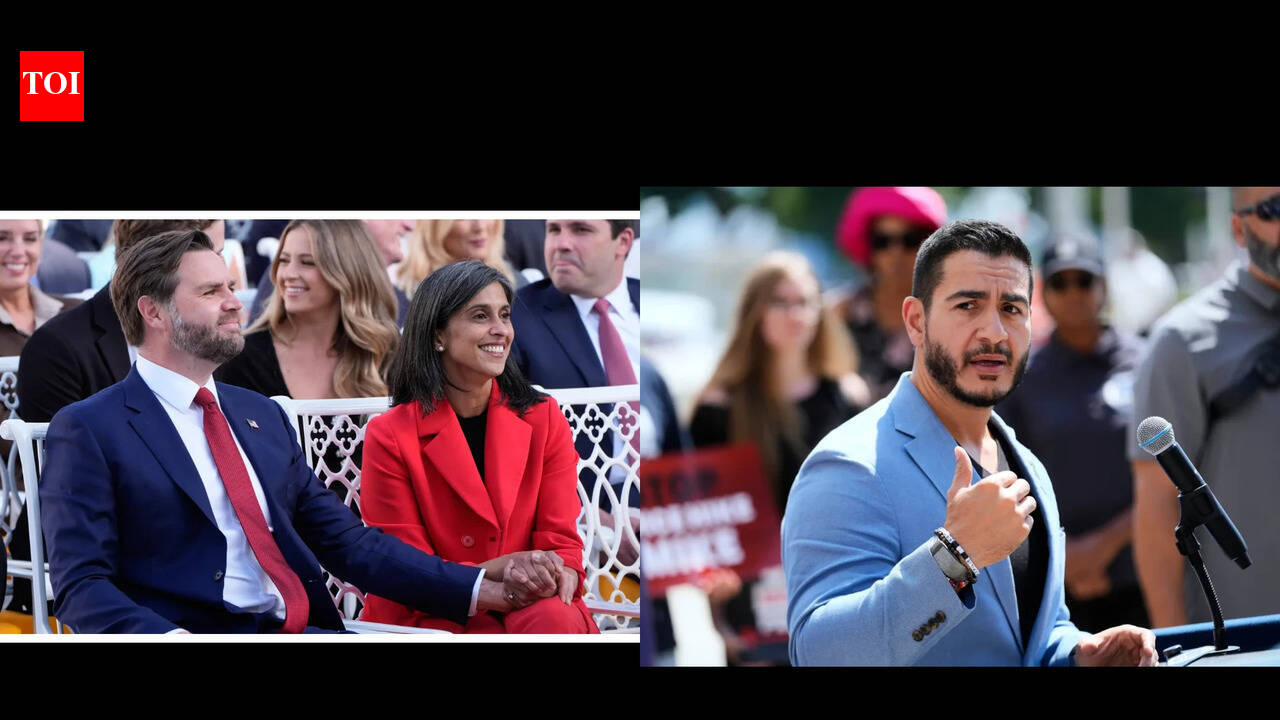
JD Vance publicly confronted Democrat Abdul El-Sayed during a Michigan rally, demanding he stop mentioning his wife, Usha Vance. The heated exchange stems from ongoing political tensions regarding past comments on Sharia law and personal family histories.
The Vance-El-Sayed Confrontation: A Deep Dive
Escalating Tensions on the Campaign Trail
The political discourse during the current election cycle reached a new level of intensity as Vice President JD Vance issued a stern warning to Michigan Democratic Senate nominee Abdul El-Sayed. During a MAGA rally in Michigan held to support Republican candidate Mike Rogers, Vance explicitly stated, "Keep my wife's name the hell out of your mouth." This confrontation marks a significant escalation in the rhetoric between the two figures, highlighting the increasingly personal nature of modern political campaigning.
Origins of the Conflict
The roots of this public spat lie in a series of reciprocal attacks. The controversy gained momentum after JD Vance initiated criticism against Abdul El-Sayed, specifically targeting comments the Democrat had previously made regarding Sharia law during an appearance in Ohio. Vance’s decision to elevate this critique during his campaign events suggests a strategic move to frame the opposition's ideological stances as disqualifying, thereby mobilizing his base through high-stakes cultural debate.
The Role of Personal Narratives
Central to this conflict is the intersection of political debate and personal family history. Beyond the critique of Sharia law, the tension was exacerbated by El-Sayed’s references to Usha Vance, the Second Lady, and the subsequent fallout regarding remarks about JD Vance’s late grandfather, whom he affectionately calls "Papaw." Vance’s public defense of his wife and his family legacy reflects the heightened sensitivity surrounding the families of political figures, who are increasingly becoming targets—or shields—in partisan warfare.
Characterization and Political Branding
In his address, Vance did not merely critique El-Sayed's policies; he labeled the Democratic nominee as "very, very evil." This type of inflammatory language is emblematic of the hyper-polarized environment in which both parties operate. By painting his opponent in such stark moral terms, Vance is attempting to consolidate support for his party's candidates, such as Mike Rogers, by framing the election as a fundamental battle between good and evil rather than a mere difference in policy preference.
Broader Implications for Future Discourse
This incident serves as a bellwether for the remainder of the election cycle. As candidates continue to utilize personal attacks and family-focused rhetoric to gain media traction, the potential for civil discourse to deteriorate further remains high. The reliance on "name-calling" and aggressive public demands suggests that voters will continue to see a campaign style defined by personal provocation rather than traditional substantive debate.
Conclusion
The confrontation between JD Vance and Abdul El-Sayed underscores a broader trend in American politics where the boundaries between professional political critique and personal grievance are increasingly blurred. Whether this approach proves effective in securing electoral victories remains to be seen, but it is clear that such moments of friction will continue to define the current political landscape.
Multiple Citing Sources