Defence PSUs told to reduce dependence on imports
Source Entity
India Latest News: Top National Headlines Today & Breaking News | The Hindu
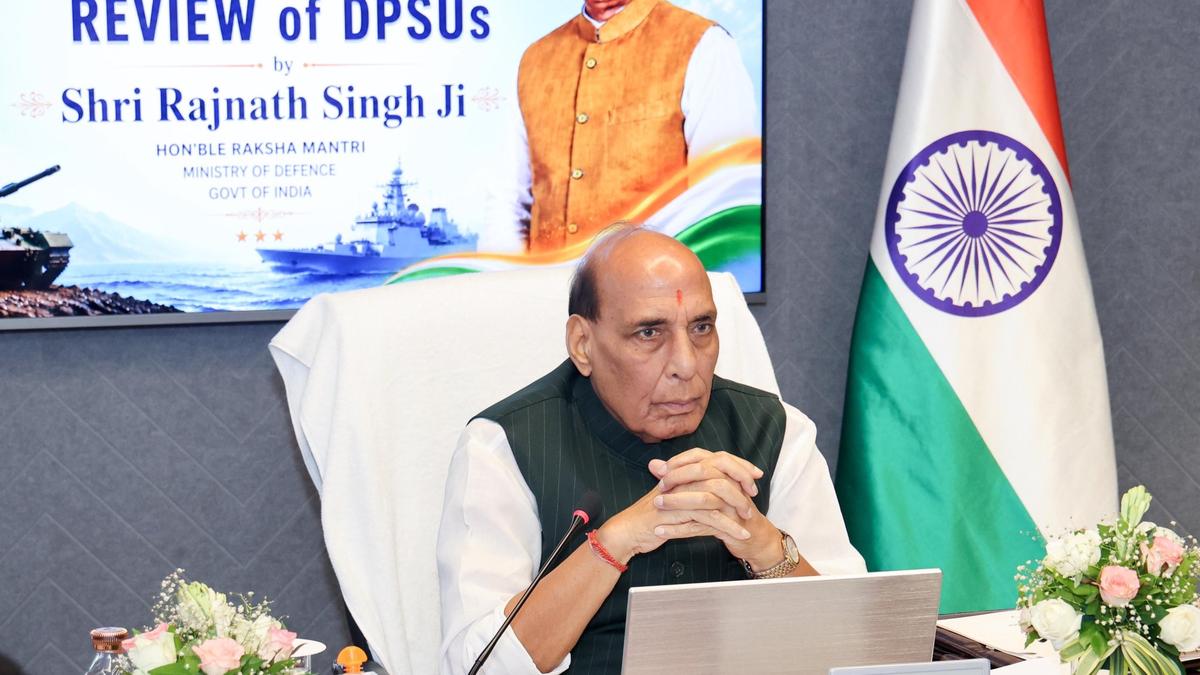
Defence Minister Rajnath Singh has directed 16 defence PSUs to minimize import reliance and boost indigenous manufacturing. The initiative aims to enhance national security by ensuring supply chain resilience and global competitiveness.
Strengthening India's Defence Autonomy
On September 1, 2026, Union Defence Minister Rajnath Singh conducted a pivotal review of India's 16 defence Public Sector Undertakings (PSUs). This high-level meeting, which also included Minister of State for Defence Sanjay Seth and Secretary (Defence Production) Sanjeev Kumar, focused on the strategic necessity of transitioning from an import-dependent framework to a self-reliant indigenous ecosystem. The directive underscores a fundamental shift in India's defence policy, prioritizing internal capability over external procurement.
Lessons from Global Conflicts
The impetus for this directive stems from recent global geopolitical volatility. Minister Singh emphasized that modern conflicts have highlighted critical vulnerabilities in international supply chains. To maintain national security, India must guarantee surge production capacity and the availability of critical spares. The ability to conduct rapid repairs and sustain manufacturing operations throughout prolonged periods of conflict is now viewed as a core pillar of the nation's military readiness.
The Mandate for Innovation and R&D
Beyond mere manufacturing, the Defence Minister has called for a significant ramp-up in Research and Development (R&D) efforts within state-owned enterprises. By strengthening internal R&D, defence PSUs are expected to move up the value chain, transitioning from assembly-focused entities to innovators of proprietary military technology. This push for indigenous intellectual property is essential for reducing long-term costs and avoiding the geopolitical constraints often associated with foreign-supplied hardware.
Transforming into Global Competitors
A central theme of the ministerial briefing was the aspiration for Indian defence PSUs to evolve into globally competitive entities. The government is not merely seeking self-sufficiency for domestic use; it is aiming to position these companies as viable players in the international arms market. By ensuring the timely delivery of major projects and maintaining high quality-control standards, the Ministry of Defence intends to transform these PSUs into engines of economic growth and strategic influence.
Roadmap for Future Readiness
As the Chairmen and MDs of the various PSUs presented their performance roadmaps, the focus remained squarely on operational efficiency. The integration of advanced manufacturing techniques and the streamlining of project timelines are being positioned as the primary metrics for success. This systematic review process serves as a benchmark for measuring progress in indigenous manufacturing capabilities, setting the stage for a more resilient and autonomous Indian defence sector.
Conclusion
In summary, the directive issued to the 16 defence PSUs represents a critical evolution in India's strategic defense doctrine. By emphasizing import substitution, R&D investment, and global competitiveness, the Ministry of Defence is proactively addressing the challenges of an uncertain global security environment. The success of this initiative will likely define India's military posture and industrial capacity for the coming decade.
Verification Required?