Jev is (probably) Qwen3.5-35B-A3B
Source Entity
Hacker News
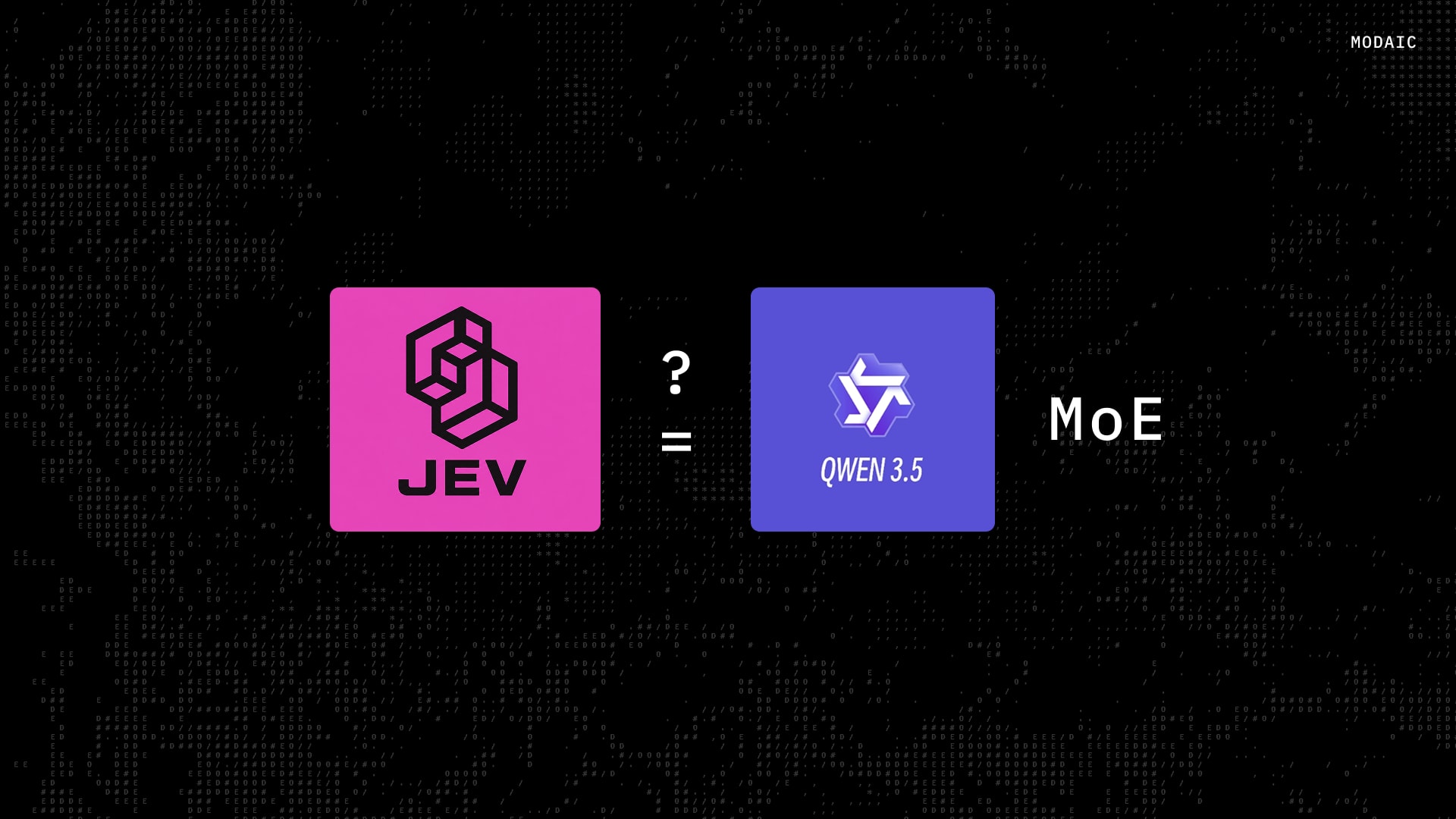
Recent community speculation suggests that the mysterious AI model 'Jev' is likely a rebranded or specific version of Qwen3.5-35B-A3B. This identification highlights the ongoing trend of model obfuscation and the importance of benchmarking transparency in AI development.
The Mystery of 'Jev' and Model Identity
In the rapidly evolving landscape of Large Language Models (LLMs), the emergence of mysterious, high-performing models often triggers intense scrutiny from the developer community. The recent discourse surrounding the entity known as 'Jev' has centered on its potential technical architecture. Based on available data, there is a strong consensus among researchers and enthusiasts that 'Jev' is likely an iteration of the Qwen3.5-35B-A3B architecture. This identification process is standard in the open-source AI community, where model weights and performance profiles are analyzed to determine their lineage.
Analyzing the Technical Parallels
The speculation linking 'Jev' to Qwen3.5-35B-A3B is rooted in comparative performance benchmarking and parameter analysis. The Qwen series, developed by Alibaba, has gained significant traction for its efficiency and capability in reasoning tasks. When a new model exhibits a performance signature—such as specific tokenization patterns, latency benchmarks, or weight distributions—that mirrors an existing architecture, observers often conclude that the new entity is either a fine-tuned version or a direct alias of the established model.
The Trend of Model Obfuscation
This event underscores a broader trend in the AI industry: the practice of releasing models under cryptic names or without clear documentation regarding their provenance. While some developers choose this route to maintain a competitive edge or to test the community's analytical capabilities, it creates challenges for transparency. For users and researchers, verifying the underlying architecture of a model is critical for understanding its safety guardrails, potential biases, and intended use cases.
Broader Implications for Open Source AI
The identification of 'Jev' as Qwen3.5-35B-A3B highlights the strength of the collective intelligence within the AI research ecosystem. By crowdsourcing verification, the community acts as a safeguard against misleading marketing. As models become more modular—often utilizing Mixture-of-Experts (MoE) architectures like the A3B configuration—the ability to identify the base architecture becomes a vital skill for practitioners who need to ensure they are deploying models that meet specific performance requirements.
Future Trends in Model Identification
Looking forward, we can expect developers to implement more robust fingerprinting techniques to prevent unauthorized cloning or rebranding of proprietary models. Conversely, the community will likely develop automated tools to detect model origins through statistical analysis of output patterns. The case of 'Jev' serves as a microcosm for the tension between the desire for proprietary control and the collaborative nature of the open-source AI community, where transparency remains the ultimate standard for credibility.