Jharkhand CM Soren urges PM Modi to reconsider mining bill, flags impact on State’s finances
Source Entity
India Latest News: Top National Headlines Today & Breaking News | The Hindu
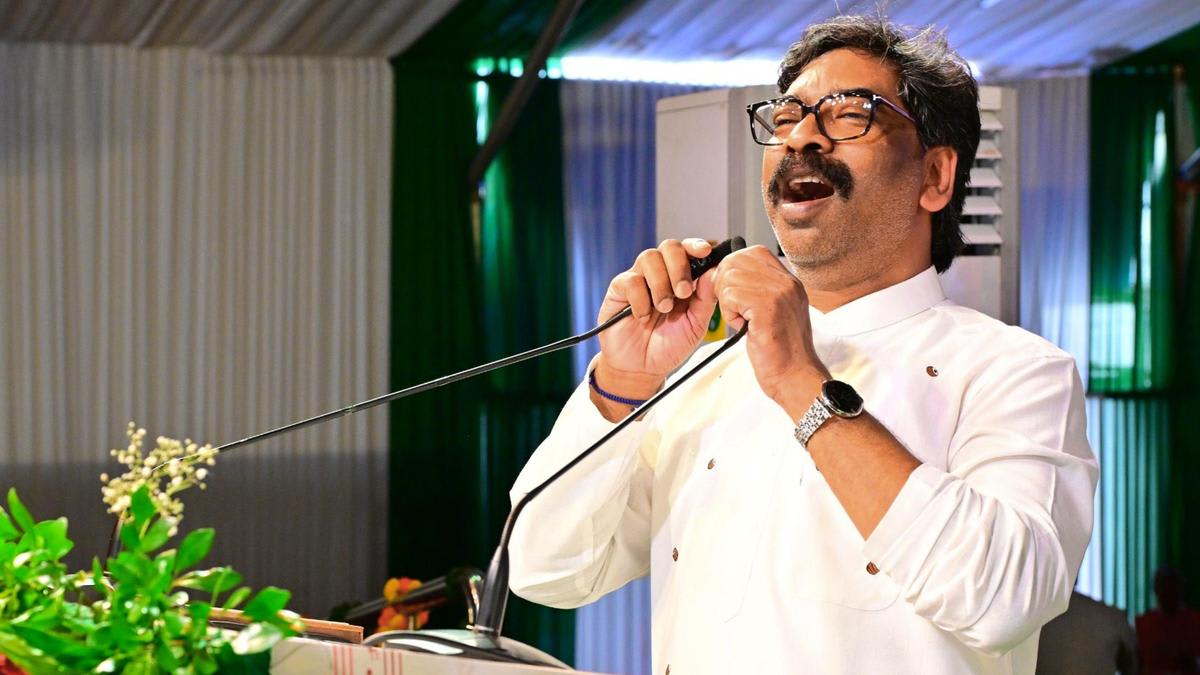
Jharkhand CM Hemant Soren has protested the newly passed MMDR Amendment Bill 2026, claiming it undermines state fiscal autonomy. While the Centre maintains the law will not cause revenue losses, the state government fears for its critical mining-dependent budget.
The Constitutional Tension Over Mineral Rights
The passage of the Mines and Minerals (Development and Regulation) Amendment Bill, 2026, has ignited a significant confrontation between the Union government and the state of Jharkhand. Chief Minister Hemant Soren has vehemently opposed the legislation, labeling it a direct infringement on the state's sovereign rights over its natural resources. At the heart of this conflict is the question of fiscal federalism and the extent to which the central government can override state-level taxation on mineral-bearing lands.
Fiscal Impact on Jharkhand
For a resource-rich state like Jharkhand, the financial stakes are exceptionally high. According to the State Economic Survey for 2025-26, mining revenue accounted for a staggering 84.9% of the state’s own non-tax revenue in 2024-25. Mr. Soren argues that restricting the state’s ability to levy taxes will severely curtail its fiscal space, hindering its capacity to fund essential social programs and mitigate the significant environmental degradation associated with large-scale mining operations.
Legal Context and the Supreme Court
This legislative move by the Centre arrives in a complex legal environment. In 2024, the Supreme Court had issued a landmark ruling upholding the power of states to levy taxes on mineral rights and mineral-bearing lands. The Court had further permitted states to collect tax arrears dating back to April 1, 2005. The new 2026 Amendment Bill appears to be a legislative response designed to recalibrate the regulatory framework, effectively prohibiting states from imposing these levies unless they conform to conditions prescribed by the Centre.
The Centre's Stance vs. State Concerns
Union Mines Minister G. Kishan Reddy has sought to assuage the fears of state governments, asserting that the amendment will not result in actual revenue losses. However, the disconnect between the Centre’s assurances and the state’s projections remains stark. While the Union government views the Bill as a necessary step toward standardizing the regulatory landscape for mining across India, Jharkhand’s leadership perceives it as an erosion of their constitutional autonomy.
Political Implications and Future Trends
Chief Minister Soren has threatened a massive agitation, framing the issue as a fight for the rights of Jharkhand’s people. By asserting that 'minerals belong to Jharkhand,' he is tapping into regional sentiment and challenging the centralization of power in Delhi. As the Bill awaits the President’s assent, the path forward remains contentious. Future trends suggest that this conflict may lead to further litigation in the Supreme Court, as states seek to protect their revenue streams against what they perceive as federal overreach in the management of local natural resources.
Multiple Citing Sources
Verification Required?