The other Jharkhand story: They fought odds, cleared prelims, but exam got cancelled
Source Entity
Shubham Tigga
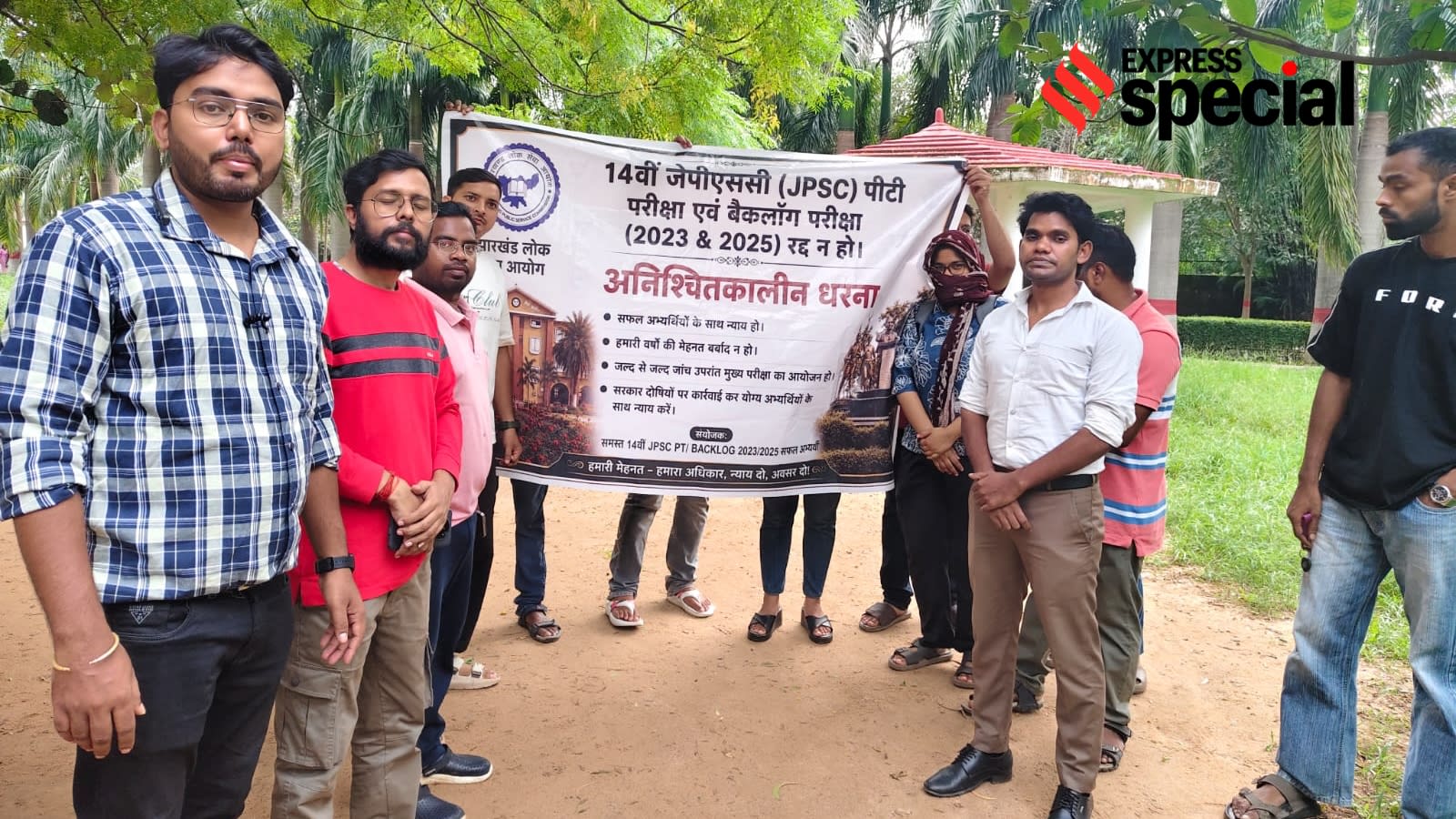
Jharkhand authorities have filed an FIR against 300 protesters following a march over alleged examination irregularities. The unrest highlights the deep-seated frustration among aspirants facing repeated exam cancellations and delays.
The Jharkhand Exam Crisis: A Clash of Aspirations and Governance
The Escalation of Protests
The ongoing unrest in Ranchi, Jharkhand, reached a critical juncture following the August 10 march to the State Assembly. Demonstrations, which have persisted for 20 days, reflect deep-seated grievances among job aspirants regarding alleged irregularities in government-led recruitment examinations. The situation escalated when authorities registered an FIR against 300 unnamed individuals, citing violations of prohibitory orders, damage to government property, and physical altercations with police personnel. Ranchi SP Paras Rana confirmed that identification efforts are currently underway using video surveillance to hold those responsible for the disruption accountable.
The Toll on Aspirants
At the heart of this conflict is the immense personal cost borne by students. With seven protesters currently on a hunger strike—including prominent leader Devendra Nath Mahto, who has fasted for over 11 days—the physical and mental toll is becoming increasingly visible. Many aspirants have spent years preparing for these roles, often sacrificing career opportunities and financial stability. The uncertainty surrounding exam timelines, coupled with the pressure of approaching age limits, has created a volatile environment where the state's administrative failures are felt acutely as personal life-path derailments.
The Paradox of Cancellation
The complexity of the crisis is further underscored by the government's decision to cancel the 14th JPSC Combined Civil Services examination. While many protesters view this cancellation as a victory against systemic corruption and paper leaks, it has simultaneously devastated the 2,204 candidates who had successfully cleared the preliminary stage. For these individuals, the cancellation represents a setback that many fear they cannot recover from, as it voids months of rigorous preparation and personal sacrifice without a transparent, independent probe into the specific irregularities.
Broader Implications for Indian Governance
Jharkhand's situation is not an isolated incident but rather a microcosm of a national crisis. Across various Indian states, exam aspirants face a recurring cycle of delays, leaks, and abrupt cancellations. This structural instability forces young people to remain in a state of suspended animation, unable to plan their futures or secure stable employment. The reliance on centralized, high-stakes recruitment processes, when coupled with administrative inefficiency, threatens to erode public trust in government institutions.
The Path Forward
As the state grapples with the fallout of the August 10 march, the demand from protesters remains clear: they seek a direct audience with the Chief Minister to address their concerns. The government now faces the dual challenge of maintaining law and order while addressing the systemic failures that triggered the unrest. Moving forward, the resolution of this crisis will likely depend on the state's ability to balance the need for examination integrity with the protection of the interests of successful candidates, all while providing a fair, transparent, and timely recruitment process that respects the aspirations of the youth.
Multiple Citing Sources