L-G enforces major administrative reshuffle in J&K, ruffles feathers with elected government
Source Entity
India Latest News: Top National Headlines Today & Breaking News | The Hindu
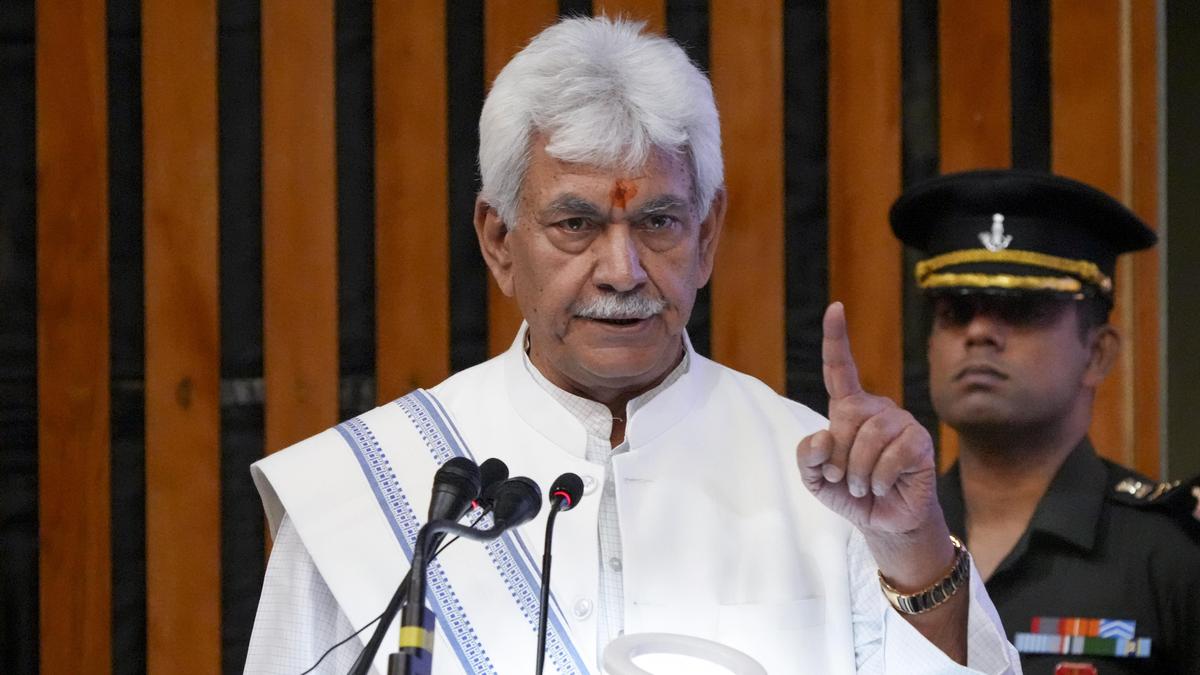
Lieutenant Governor Manoj Sinha has enacted a major administrative reshuffle involving 49 officers in Jammu and Kashmir, sparking friction with the newly elected government. CM Omar Abdullah has signaled a pragmatic approach to working with the new appointees while highlighting the ongoing tensions inherent in the Union Territory's dual power structure.
Administrative Friction in the Union Territory
The political landscape of Jammu and Kashmir (J&K) has entered a period of heightened tension following a significant administrative reshuffle orchestrated by Lieutenant Governor (L-G) Manoj Sinha. On October 7, 2026, the L-G’s office issued an order transferring 49 officers, spanning both the Indian Administrative Service (IAS) and the J&K Administrative Service (JKAS). This move, which impacts 30 departments, has reignited debates regarding the limits of executive authority under the Union Territory governance model.
The Dual Power Dilemma
The core of the current controversy lies in the structural tension between the elected government, led by Chief Minister Omar Abdullah, and the L-G’s office. Recently, CM Abdullah expressed concerns in the Assembly regarding the 'dual power system,' specifically questioning the L-G's prerogative to unilaterally transfer officials in departments that the elected administration considers to be within its purview. The inclusion of the Information department and the Srinagar Municipal Corporation (SMC) in this reshuffle directly challenges the authority of the elected representatives.
Official Justification vs. Political Reality
The General Administration department has defended the mass transfer as an exercise conducted 'in the interest of administration.' However, the timing of this move—occurring shortly after the CM's public critique of administrative overreach—suggests a more complex political dynamic. While the L-G maintains constitutional authority to manage the bureaucracy, the elected government views these moves as a strategic impediment to their governance agenda.
The CM’s Pragmatic Pivot
Despite the friction, Chief Minister Omar Abdullah has adopted a measured and pragmatic stance. In his public remarks, he suggested that the L-G likely acted with a 'good vision' for the administration. By choosing to work with the newly posted officers rather than initiating a direct confrontation, the CM is attempting to maintain functional governance while signaling to the public that his administration remains committed to serving the people despite the constraints of the current political architecture.
Broader Implications for Governance
The incident serves as a microcosm of the challenges facing Jammu and Kashmir as it navigates the transition to a Union Territory model. When the executive branch of the bureaucracy is managed by an appointee of the central government while the legislative branch is held by elected representatives, friction is inevitable. This dynamic often leads to bureaucratic paralysis, as officers find themselves caught between competing directives from two centers of power.
Future Trends and Outlook
Moving forward, the relationship between the L-G’s office and the elected government will likely remain a defining feature of J&K politics. Unless there is a formal clarification or a 'gentleman’s agreement' regarding the division of administrative control, such reshuffles will continue to serve as flashpoints. The success of the current government will depend on its ability to navigate these institutional hurdles without alienating the civil service, which is essential for the delivery of public services and regional stability.
Verification Required?