UK's iconic Jodrell Bank telescope faces axe in science cuts
Source Entity
BBC News
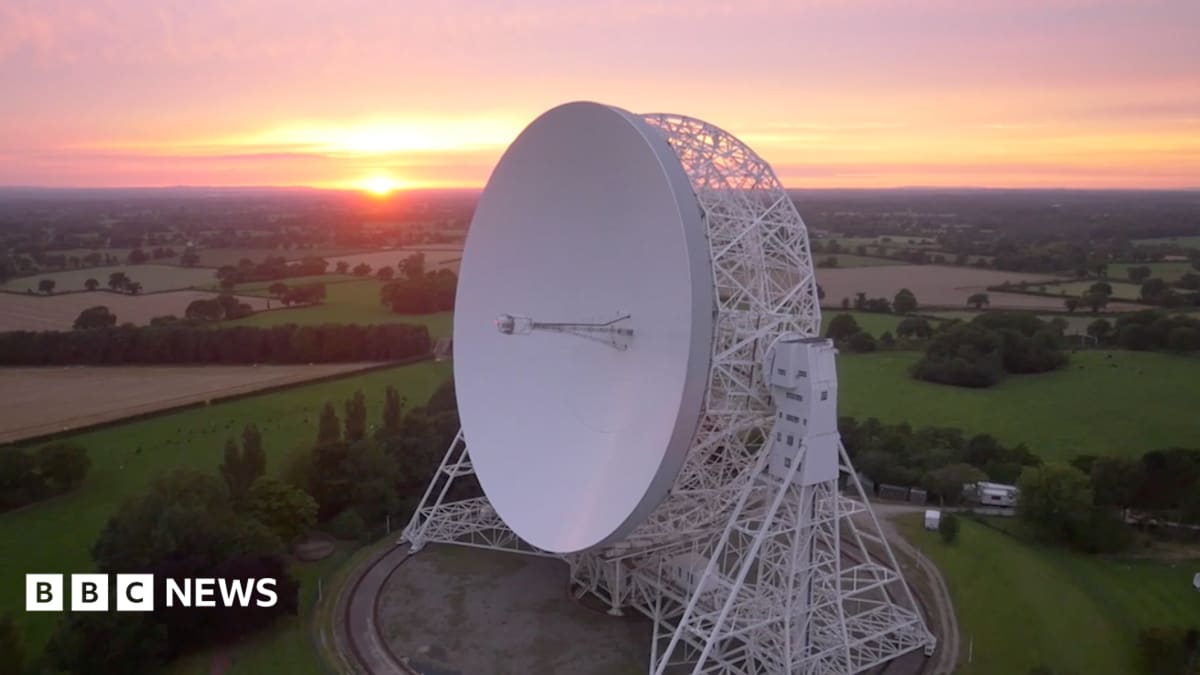
The historic Jodrell Bank Observatory faces potential closure by April 2028 due to a withdrawal of UKRI funding. Astronomers warn this decision threatens the future of British radio astronomy and the training of next-generation scientists.
The Impending Silence at Jodrell Bank
The scientific community is reeling following news that the Jodrell Bank Observatory, a cornerstone of British astronomy for nearly 70 years, faces an existential threat. Reports indicate that the UK Research and Innovation (UKRI) agency has withdrawn funding, setting a deadline of April 1, 2028, for the cessation of all scientific observations. For an institution that has served as the bedrock of radio astronomy since its inception in 1945, this development marks a devastating pivot in the UK’s commitment to fundamental space research.
A Legacy of Pioneering Discovery
Established in the immediate post-war era, Jodrell Bank has been instrumental in expanding humanity's understanding of the universe. It was the site that pioneered radio astronomy, allowing scientists to peer into the depths of galaxies far beyond our own. The site's historical significance is matched only by its ongoing contributions to modern astrophysics, serving as a critical node in a global network of telescopes that track celestial phenomena and deepen our grasp of cosmic evolution.
The Human Cost of Austerity
Beyond the hardware and the data, the most profound loss identified by astronomers is the impact on human capital. Jodrell Bank has functioned as a premier training ground for generations of researchers. Critics of the funding withdrawal argue that shuttering the facility will effectively "tear the heart out" of UK science, leaving a generation of young astronomers without the hands-on experience and mentorship essential for a career in observational physics. The loss of such an iconic training hub risks a "brain drain" that could hollow out the UK’s scientific expertise for decades.
The UKRI Justification and Its Critics
The UKRI has defended its decision by citing the need to prioritize investments that deliver the "greatest long-term impact." This utilitarian approach to scientific funding highlights a growing tension between immediate budgetary constraints and the preservation of long-standing, high-impact research infrastructure. However, the scientific community remains largely unconvinced, labeling the move as "scientifically misguided" and a failure to recognize the intangible value of a site that has anchored British science since 1945.
Future Implications and The Road Ahead
As the April 2028 deadline looms, the future of Jodrell Bank rests on the possibility of securing alternative funding. If the observatory is indeed forced to close, it would signify a monumental shift in the UK’s scientific landscape, signaling a retreat from foundational, ground-based observation in favor of more focused, perhaps more commercially or technologically oriented, projects. The potential loss of Jodrell Bank is not merely the closure of a telescope; it is the abandonment of a legacy, leaving a void that would be nearly impossible to fill in the competitive arena of global space science.