Anti-CEC protest: Delhi Police registers at least 10 FIRs against right-wing members over assaults on protesters
Source Entity
India Latest News: Top National Headlines Today & Breaking News | The Hindu
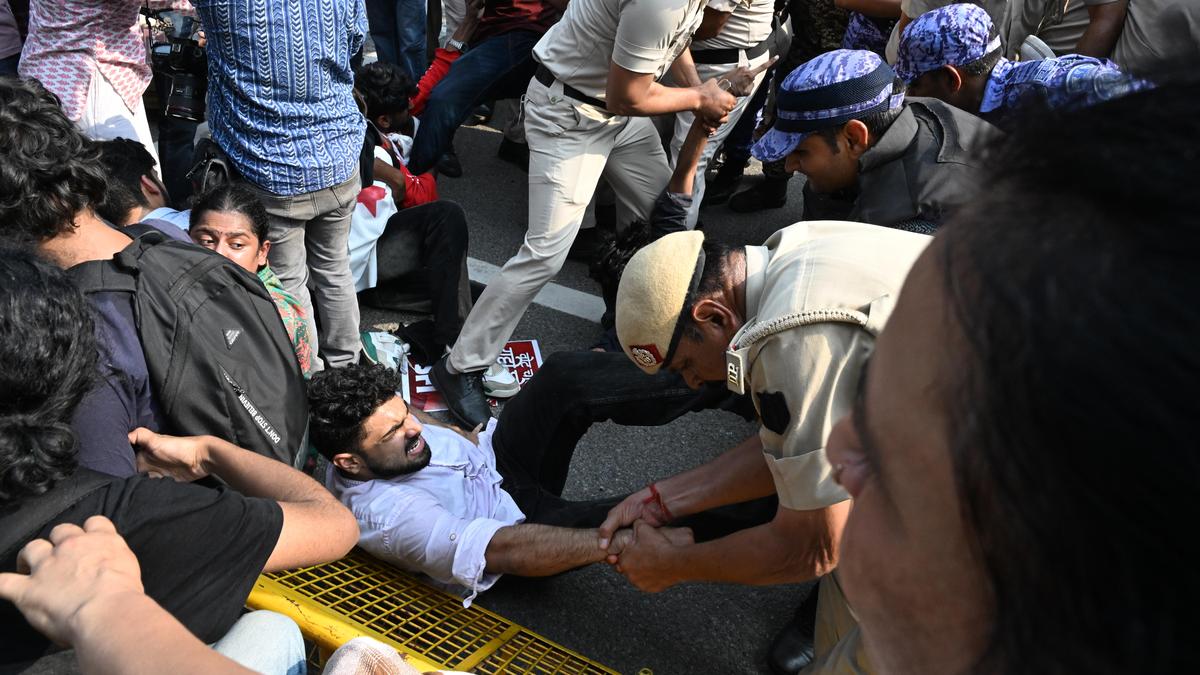
Press freedom in India faces severe scrutiny following the detention and assault of over 40 journalists covering protests against CEC Gyanesh Kumar. Press bodies are now demanding accountability for police misconduct, including allegations of sexual assault against media personnel.
The Crisis of Press Freedom Amidst Electoral Protests
Recent events surrounding the protests against Chief Election Commissioner (CEC) Gyanesh Kumar have highlighted a deepening crisis regarding the safety of the press in India. Between October 10 and October 11, 2026, over 40 journalists were detained across major cities, including Delhi, Ahmedabad, and Pune. This widespread crackdown occurred despite prior assurances from the Solicitor-General to the Supreme Court that the media would be permitted to perform their professional duties without interference.
The Scale of the Crackdown
The Committee to Protect Journalists (CPJ) documented that at least 39 of these detentions took place in Delhi. These incidents were not merely administrative delays; reporters described being struck and physically assaulted by security personnel. The intensity of the state's response—characterized by metro closures, internet shutdowns, and the deployment of 40,000 security personnel—effectively turned the capital into a fortress, creating an environment where the presence of the press was treated as a security threat rather than a democratic necessity.
Institutional Failures and Accountability
Beyond mass detentions, the climate for journalists has turned increasingly hostile. A coalition of major press organizations, including the Indian Women’s Press Corps and the Press Club of India, has formally demanded an FIR against an Assistant Commissioner of Police (ACP), Vivek Bhagat. The accusation involves the alleged sexual assault of three women journalists at the Jantar Mantar protest site on October 3. The failure of the police to register an FIR in this case represents a critical breakdown in legal accountability and institutional trust.
New Guidelines vs. Ground Reality
In an attempt to address the ongoing volatility, the Press Council of India issued new guidelines intended to facilitate orderly coverage of protests. These guidelines emphasize the necessity of valid identification and accreditation for journalists. However, critics argue that such bureaucratic measures do little to address the systemic issue of police overreach and the physical safety of those documenting the movement against the Special Intensive Revision (SIR) of the electoral roll.
Broader Implications for Democracy
The protests, driven by allegations of voter-list manipulation, strike at the heart of the electoral process. When the mechanism for reporting on such sensitive matters is suppressed, the legitimacy of the entire democratic discourse is called into question. The demand for an impartial judicial inquiry into the conduct of the police is not merely a request for justice for the affected journalists, but a necessary step to restore the independence of the fourth estate.
Future Trends and Outlook
The tension between the state's security apparatus and the press is likely to persist as long as the underlying grievances regarding the CEC remain unaddressed. If the legal system fails to address the allegations of assault and the arbitrary detention of reporters, the international standing of India’s press freedom index could face further degradation. Moving forward, the effectiveness of the Press Council’s guidelines will be measured by whether they serve to protect journalists on the ground or merely provide a veneer of order in an increasingly restrictive environment.
Multiple Citing Sources
Verification Required?