Kajal to fight Alpyeyeva aiming for India’s first women’s wrestling world title
Source Entity
Pritish Raj
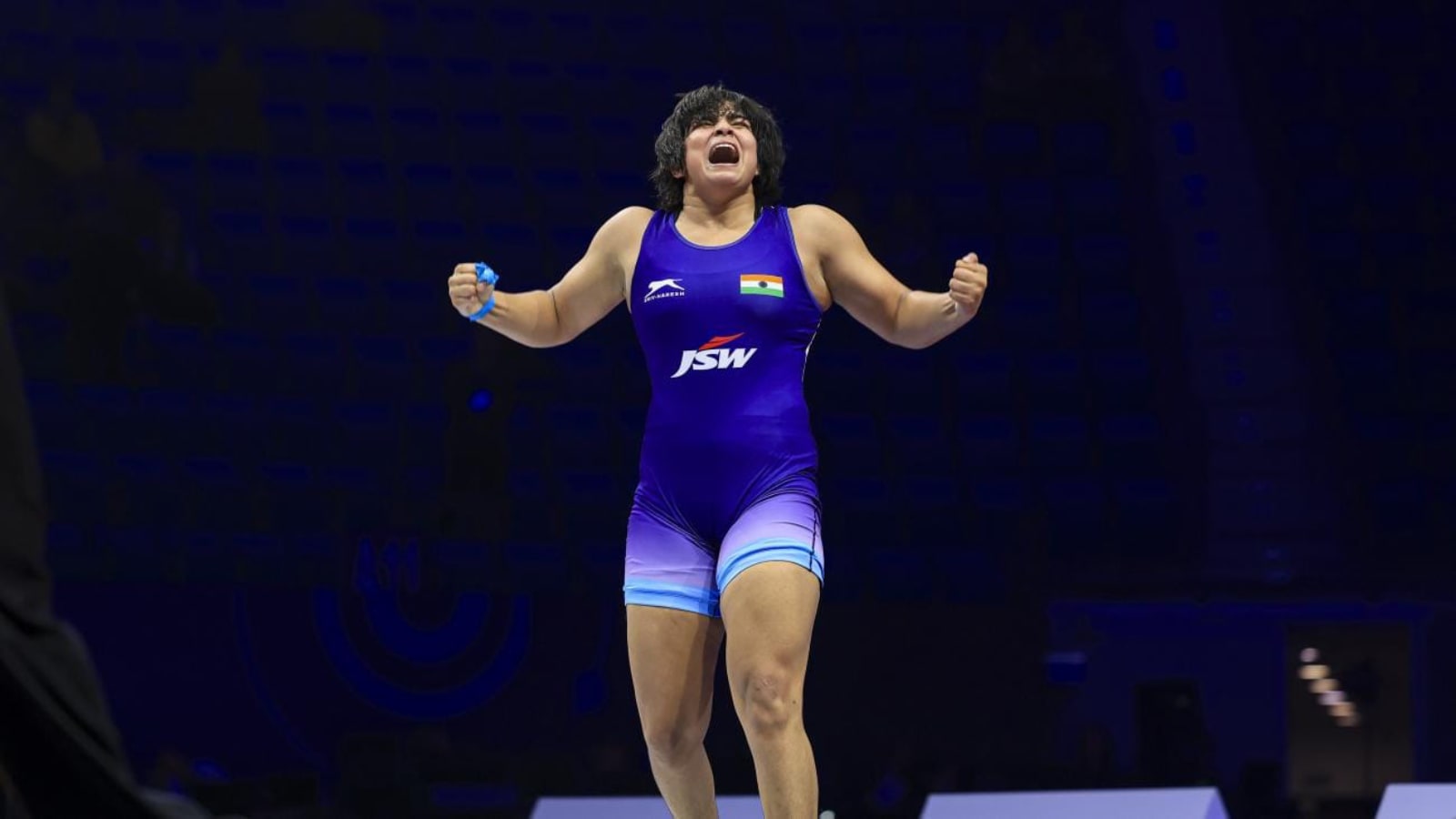
Indian wrestlers Kajal Dhochak and Neelam Sirohi have made history by reaching the finals of the Wrestling World Championships in Astana. Kajal secured a stunning comeback victory in the 76kg category, while Neelam dominated the 50kg bracket to set up a clash against legend Yui Susaki.
A Historic Milestone for Indian Women’s Wrestling
The landscape of Indian wrestling shifted dramatically at the Wrestling World Championships in Astana, Kazakhstan, as two Indian athletes, Kajal Dhochak and Neelam Sirohi, secured spots in their respective weight class finals. This achievement marks a significant departure from historical trends, as only one Indian woman, Anshu Malik in 2021, had previously reached a world final. By placing two athletes in the gold medal bouts, India has signaled a rapid evolution in its competitive wrestling program.
The Rise of Kajal Dhochak
Kajal Dhochak’s path to the 76kg final was nothing short of cinematic. Facing the seasoned world no. 2, Aiperi Medet Kyzy of Kyrgyzstan, the 18-year-old debutant found herself trailing 1-7 after the first period. Her ability to overcome both an early pin attempt and a substantial point deficit to win 10-7 highlights a level of tactical maturity rarely seen in debutants. Her coach, Krishan Dhochak, attributes this success to her exceptional mental fortitude, noting that she remains composed regardless of the opponent's stature.
Neelam Sirohi’s Dominant Path
In the 50kg category, 26-year-old Neelam Sirohi displayed tactical dominance throughout the tournament. After a commanding 6-0 win over Belarus’ Natallia Varakina and benefitting from the withdrawal of top seed Elizaveta Smirnova, she defeated Kazakhstan’s Zeinep Bayanova 7-3 in the semifinals. Her progression demonstrates a high level of consistency and preparation, setting the stage for a high-stakes finale against the legendary Japanese wrestler Yui Susaki.
The Challenge of the Finals
As the athletes prepare for their final bouts, the narrative shifts to the magnitude of their opponents. Kajal Dhochak is set to face Ukraine’s Anastasiya Alpyeyeva, a bout that represents a chance for India to secure its first-ever women’s world title. Simultaneously, Neelam Sirohi faces the daunting task of overcoming Yui Susaki, a Japanese legend pursuing her fifth world title. These matches are not merely contests for gold but serve as litmus tests for the current international standing of Indian women’s wrestling.
Broad Implications and Future Trends
This dual qualification suggests that the depth of talent within the Indian women’s wrestling circuit is expanding. Historically, Indian wrestling has often relied on individual standouts, but the emergence of multiple finalists indicates more robust training structures and a broader pipeline of talent. The ability of young wrestlers like Dhochak to perform under immense pressure suggests that the upcoming generation is better equipped for the rigors of the international stage.
Conclusion
The performances of Dhochak and Sirohi in Astana have redefined expectations for Indian wrestling on the global stage. Regardless of the final outcomes, their ability to reach the pinnacle of the World Championships serves as a testament to their dedication and the growing technical proficiency of the sport in India. As they step onto the mat for their final bouts, they carry the weight of history and the hopes of a nation aiming for its first world gold in women's wrestling.