Thirupparankundram ‘deepathoon’ row: Supreme Court agrees to list plea to detail Vijay’s role
Source Entity
India Latest News: Top National Headlines Today & Breaking News | The Hindu
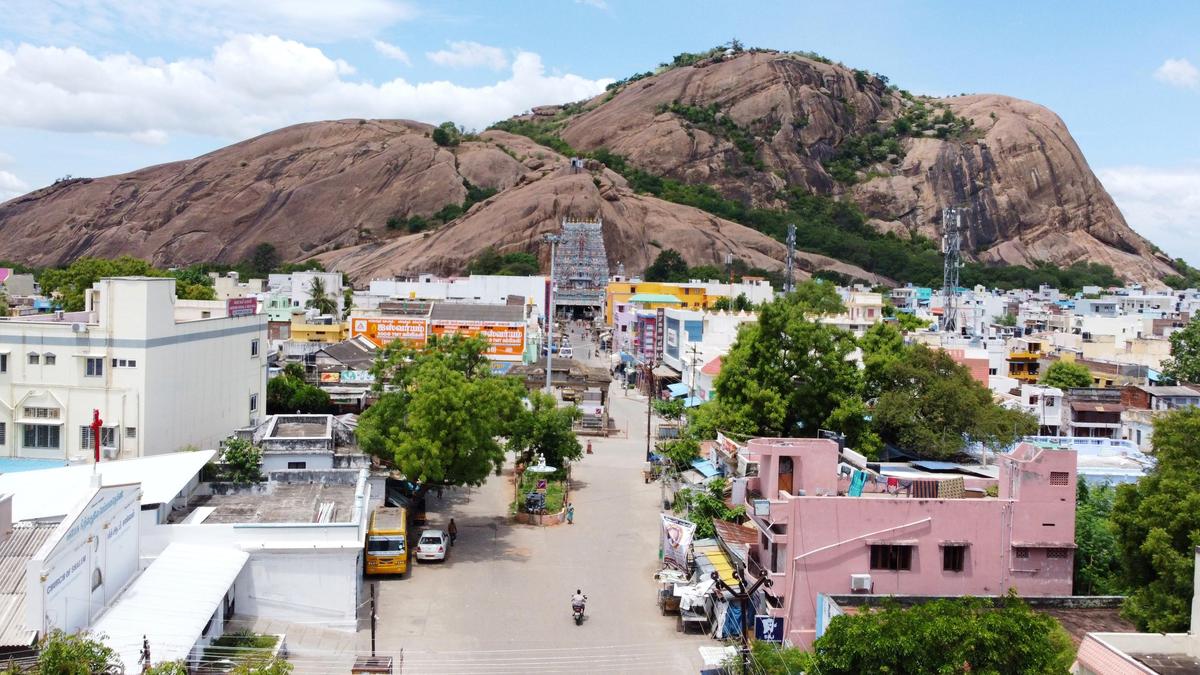
The Karthigai Deepam festival saw massive celebrations at the Arunachaleswarar Temple in Tiruvannamalai, while a legal and traditional dispute emerged over the lighting location in Thirupparankundram. Authorities face intense pressure balancing Supreme Court directives with long-standing religious customs.
The Significance of Karthigai Deepam: A Tale of Two Temple Towns
The Karthigai Deepam festival, a profound cultural and spiritual milestone in Tamil Nadu, has once again underscored the delicate intersection of ancient religious tradition and modern legal administration. In Tiruvannamalai, the Arunachaleswarar Temple served as the epicenter of devotion, where thousands of pilgrims gathered to witness the lighting of the 'Maha Deepam' atop the Arunachala Hill. The atmosphere, marked by the rhythmic chanting of 'Arunachaleshwara', highlights the enduring power of this festival to unite communities in a shared expression of faith.
Tradition vs. Legal Mandates in Thirupparankundram
Contrasting with the celebratory atmosphere in Tiruvannamalai, the situation in Thirupparankundram has been defined by administrative tension. A significant legal dispute arose regarding the specific location for the lighting of the lamp. Despite a Supreme Court order intended as a 'limited one-time arrangement' to allow lighting at a newly identified 'deepathoon' on the hillock, the temple administration opted to adhere to the traditional spot. This decision has sparked a polarized reaction, bringing to the forefront the complexities of enforcing judicial mandates in spaces governed by centuries-old 'Agama' rules.
The Role of Governance and Public Sentiment
The involvement of government officials, such as the Madurai Collector and state ministers, illustrates the high stakes involved in managing such sensitive religious events. In Thirupparankundram, the failure to comply with the Supreme Court’s direction triggered protests from political groups like the BJP, while ruling allies—including the Left parties, VCK, and MDMK—supported the decision to prioritize tradition. This divide highlights how religious festivals in India are increasingly becoming arenas for broader political and ideological discourse.
Historical Context and 'Agama' Rules
At the heart of the Thirupparankundram controversy lies the concept of 'Agama' rules. These ancient scriptures dictate the precise manner in which temple rituals must be performed. For many devotees and temple authorities, deviating from these established protocols is viewed as a violation of sanctity. This historical weight makes the transition toward modern judicial oversight particularly challenging, as the legal system seeks to introduce flexibility where custom demands absolute adherence.
Future Trends and Judicial Oversight
Looking ahead, the events of this year’s Karthigai Deepam suggest a trend of increasing judicial intervention in temple affairs. As administrative bodies continue to navigate the friction between constitutional law and religious autonomy, we can expect future litigation to become more frequent. The challenge for the state will be to maintain public order while respecting the cultural identity that defines these sacred spaces, ensuring that the spirit of the festival is not overshadowed by legal volatility.
Multiple Citing Sources
Verification Required?