Here's how engineers plan to save the satellite sent to save NASA's Swift mission
Source Entity
Stephen Clark
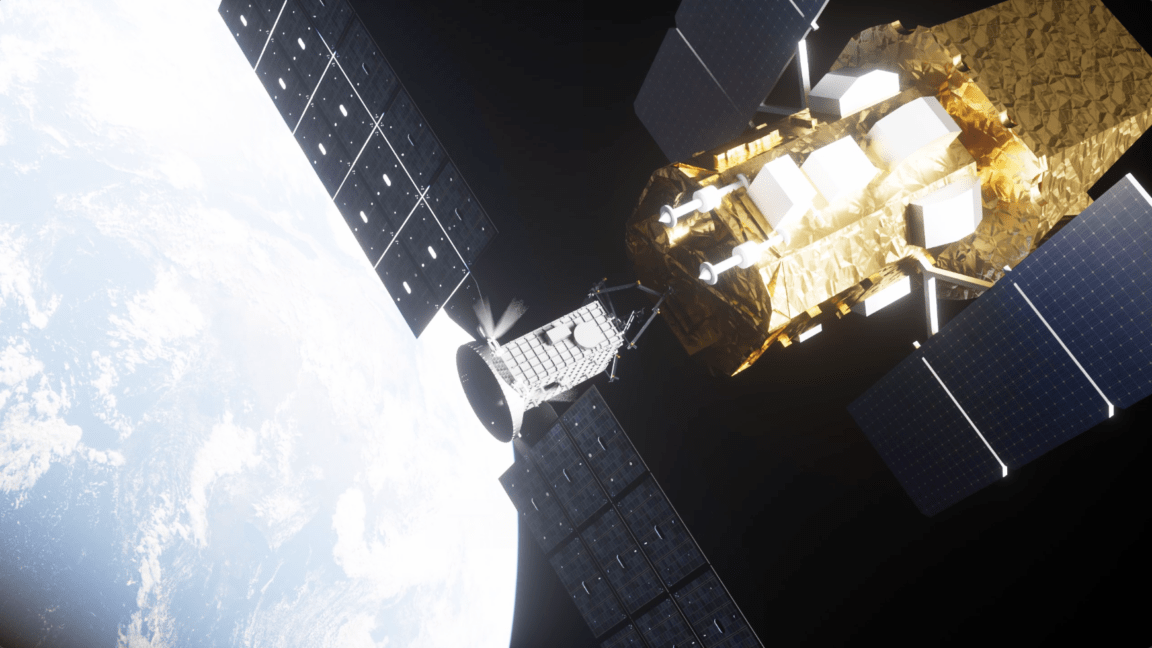
Engineers are working to stabilize the Link satellite after it began spinning out of control during a mission to rescue NASA's Swift observatory. Despite mechanical failures in reaction wheels and thrusters, the team remains optimistic about completing the $30 million servicing contract.
The Perilous Mission to Save NASA's Swift Observatory
A Critical Setback in Orbit
In a complex endeavor to extend the operational life of NASA’s $500 million Swift gamma-ray observatory, a significant technical hurdle has emerged. The Link satellite, a refrigerator-sized spacecraft designed by startup Katalyst Space Technologies, recently entered an uncontrolled spin while orbiting more than 200 miles above Earth. This development threatens the viability of a high-stakes rescue mission intended to provide vital maintenance to the aging observatory.
Mechanical Failures and Communication Challenges
The severity of the incident is underscored by the degradation of critical onboard systems. Two of the three reaction wheels, which are essential for precise pointing and stability, have ceased functioning. Furthermore, engineers have identified malfunctions in the cold gas thrusters, which are tasked with fine-tuned attitude control. These failures have resulted in the satellite rotating on multiple axes, severely hindering the ability of ground control to maintain a stable communication link.
The Role of Katalyst Space Technologies
Katalyst Space Technologies, the firm behind the Link satellite, is currently at the center of this aerospace crisis. Having secured a $30 million contract from NASA, the company is tasked with demonstrating the feasibility of in-orbit satellite servicing. This mission represents a broader industry trend where private entities are increasingly relied upon to perform complex maneuvers—such as docking and repair—that were historically the sole domain of government space agencies.
Prospects for Recovery
Despite the gravity of the situation, the engineering teams involved remain cautiously optimistic. The assessment from the project's technical leadership is that a capture of the Swift observatory remains "very much in the cards." Current efforts are focused on diagnosing the sporadic radio signals received from Link and formulating a recovery protocol to arrest the satellite's uncontrolled spin and restore its orientation capabilities.
Broader Implications for Satellite Servicing
This incident highlights the inherent risks of autonomous and semi-autonomous satellite servicing missions. As the reliance on orbital infrastructure grows, the ability to repair, refuel, and stabilize assets in space becomes a critical economic and scientific necessity. Should the Katalyst team successfully stabilize the Link satellite and proceed with the Swift mission, it would serve as a landmark case study for the resilience of private-sector aerospace engineering in the face of unforeseen orbital anomalies.
Concluding Outlook
The path forward requires precise execution to overcome the failures of the reaction wheels and thrusters. While the Link satellite’s current state is precarious, the ongoing mission underscores the high-stakes nature of modern space exploration. The outcome of this rescue attempt will undoubtedly influence future NASA procurement strategies and the operational standards for commercial satellite servicing startups worldwide.