In Kejriwal's spat with Malviya after Tahir Hussain's conviction in Delhi riots case, a jibe at Owaisi's AIMIM too
Source Entity
Latest News: Today's Latest News Headlines from India & World | Hindustan Times | Hindustan Times
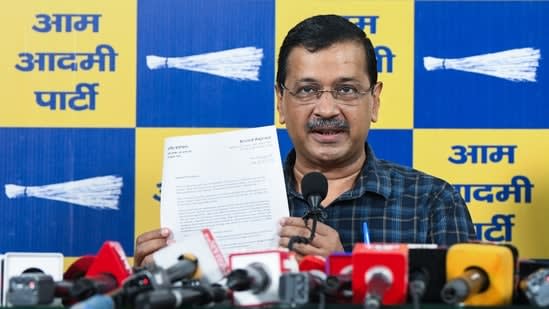
While critics have called AIMIM the ‘B-party’ of the BJP, Kejriwal recently accused the BJP of chanda chori (donation theft) amid the funds row at Ram Temple.
Political Volatility in Delhi: The Intersection of Judicial Verdicts and Party Rivalries
The political landscape of Delhi has once again become a battleground following the conviction of Tahir Hussain in relation to the 2020 Delhi riots. This judicial outcome has not merely served as a legal conclusion but has acted as a catalyst for a renewed war of words between the Aam Aadmi Party (AAP), led by Arvind Kejriwal, and the Bharatiya Janata Party (BJP). The conviction of Hussain, a prominent figure in the riots, has reignited debates over administrative failure and political complicity, leading to a sharp exchange between Kejriwal and BJP spokesperson Malviya.
The Catalyst: Tahir Hussain's Conviction and the Riots Legacy
The conviction of Tahir Hussain is a pivotal moment in the aftermath of the Delhi riots, an event that left a deep scar on the city's social fabric. For the BJP, this verdict is a validation of their narrative that specific political elements fueled the violence. However, for Arvind Kejriwal and the AAP, the focus remains on the failure of the central government and the police to maintain law and order. The spat with Malviya highlights a recurring pattern in Delhi politics: the attempt to weaponize judicial outcomes to assign blame for the riots, with each party attempting to portray the other as either an instigator or an incompetent administrator.
The 'B-Team' Narrative: Targeting Owaisi and AIMIM
A significant dimension of this clash is Kejriwal's decision to include Asaduddin Owaisi's All India Majlis-e-Ittehadul Muslimeen (AIMIM) in his critique. By echoing the sentiment that AIMIM acts as the 'B-party' or 'B-team' of the BJP, Kejriwal is attempting to disrupt the electoral arithmetic of minority votes. This narrative suggests that AIMIM's presence in certain constituencies splits the opposition vote, indirectly benefiting the BJP. By linking the current friction over the riots to the strategic positioning of AIMIM, Kejriwal is attempting to consolidate an anti-BJP front while painting Owaisi as a tactical ally of the saffron party.
Financial Warfare: The 'Chanda Chori' Allegations
Adding a layer of economic controversy to the political spat, Kejriwal has pivoted to accusations of 'chanda chori' (donation theft) against the BJP. Specifically, he has targeted the funding mechanisms surrounding the Ram Temple in Ayodhya. By bringing up the funds row, Kejriwal is attempting to shift the public discourse from the legalities of the Delhi riots to the perceived lack of transparency in the BJP's financial dealings. This strategy is designed to challenge the BJP's moral high ground by suggesting that while they claim to uphold cultural and religious values, their financial practices are opaque.
Broader Implications for the Delhi Power Struggle
This multi-pronged attack—targeting the BJP's administrative record, their financial transparency, and their perceived tactical alliances with AIMIM—indicates a high-stakes strategy by the AAP. As Delhi continues to be a focal point of national politics, these clashes are not merely about a single conviction but about defining the narrative for future electoral cycles. The interplay between the conviction of a riot accused and the allegation of donation theft shows how political parties in India frequently blend legal, social, and financial grievances to create a comprehensive attack on their opponents.
Conclusion: A Cycle of Political Retribution
In summary, the current friction between Arvind Kejriwal and the BJP, with the inclusion of AIMIM, reflects the deeply polarized nature of Delhi's political ecosystem. The transition from discussing the conviction of Tahir Hussain to alleging 'chanda chori' demonstrates a fluid political strategy where any available trigger is used to launch a broader offensive. As the legal fallout from the Delhi riots continues to unfold, it is likely that these parties will continue to use judicial verdicts as springboards for ideological and personal conflicts, ensuring that the city's political atmosphere remains volatile.
Verification Required?