Inside Kerala's Indian Coffee House that looks like a giant red cake: No windows, no stairs, just a cool brick spiral
Source Entity
Latest News: Todays Latest News Headlines from India & World | Hindustan Times | Hindustan Times
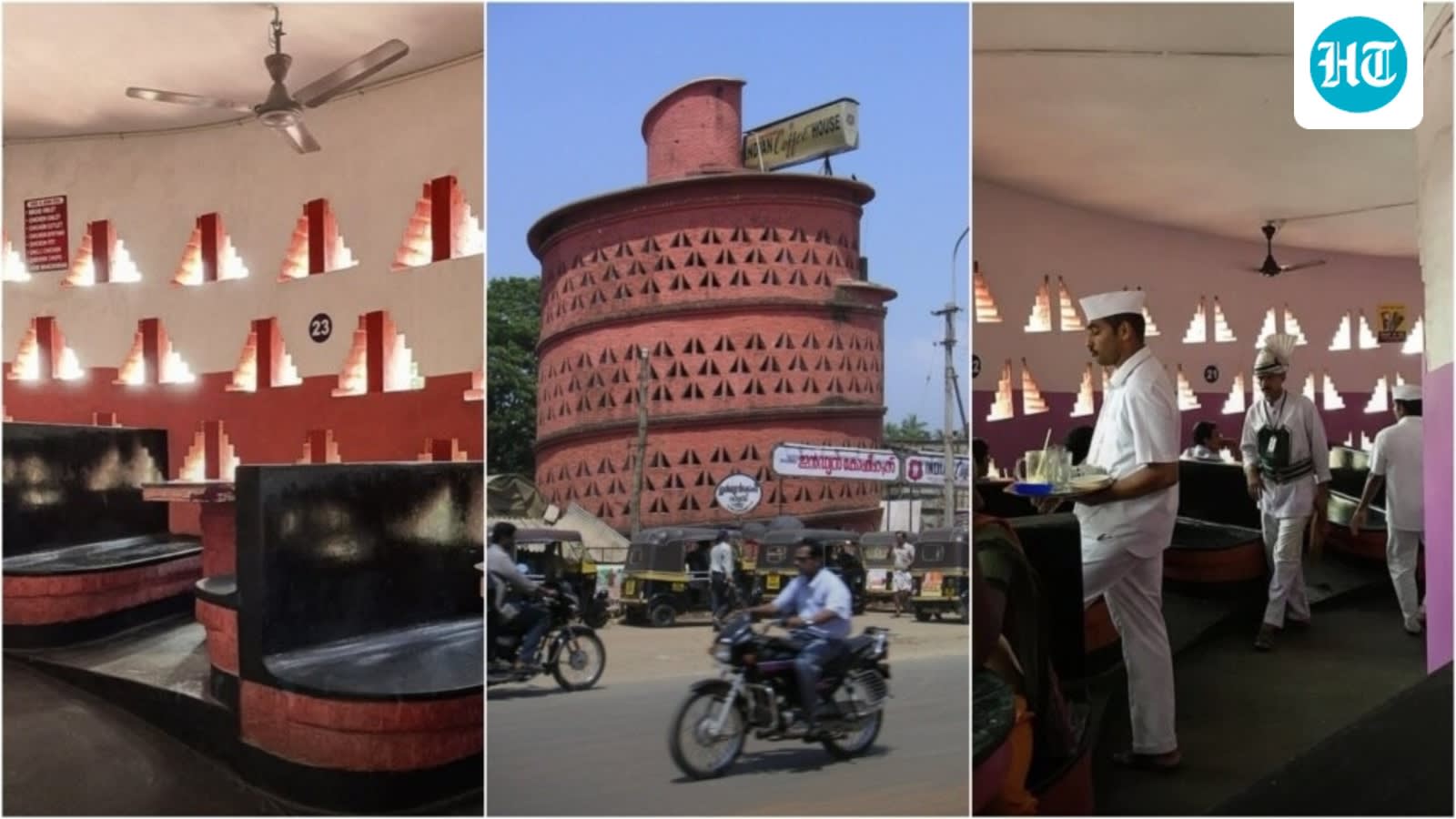
Thiruvananthapuram's iconic Indian Coffee House is celebrated for its unique cylindrical, red-brick spiral architecture designed by Laurie Baker. The structure remains a landmark, offering a natural cooling effect through its innovative design without modern air conditioning.
The Architectural Marvel of Thiruvananthapuram
In the bustling urban landscape of Thiruvananthapuram, the Indian Coffee House (ICH) stands as a testament to the intersection of utility and artistic vision. More than just a place to enjoy a cup of filter coffee, this iconic red-brick cylinder serves as a masterclass in architectural ingenuity. Its recent resurgence in public interest, spurred by viral social media coverage, highlights a growing appreciation for mid-century modern design that prioritizes both form and function in the public sphere.
The Vision of Laurie Baker
Designed by the legendary British-born Indian architect Laurie Baker in the 1950s, the structure reflects his signature philosophy of cost-effective, sustainable, and context-sensitive design. Baker, known for his commitment to 'green' architecture long before it became a global standard, utilized local materials to create a building that feels organic to its environment. By opting for a cylindrical shape, he maximized space on a constrained urban plot, creating a continuous, ascending ramp that replaces traditional stairs.
Engineering Without Modern Comforts
One of the most remarkable aspects of this structure is its ability to maintain a comfortable internal climate without the use of air conditioning. The building employs 'jaali' (lattice) brickwork, which facilitates natural ventilation and air circulation. This design choice highlights how traditional architectural techniques can outperform modern, energy-intensive climate control systems. The absence of traditional windows and stairs creates a fluid, uninterrupted spatial experience that continues to fascinate visitors decades after its construction.
A Cultural and Social Landmark
Beyond its structural merits, the Indian Coffee House serves as a vital social hub. The design forces a communal atmosphere, as the spiral layout integrates built-in booths that encourage interaction among commuters and locals alike. In an era where modern cafes often prioritize sleek, minimalist aesthetics or hyper-commercialized themes—such as the massive temple-themed cafes seen in cities like Bengaluru—the ICH remains a grounded, authentic space that prioritizes the human experience over ornamentation.
Legacy and Future Relevance
As urban planners look for ways to create more sustainable cities, the Indian Coffee House offers a blueprint for the future. Its endurance proves that thoughtful design can withstand the test of time, remaining relevant in a digital age where 'Instagrammability' often dictates the success of a venue. The ICH stands as a historical artifact that continues to function perfectly, reminding us that true innovation in architecture often lies in the clever manipulation of light, air, and geometry rather than expensive technology.
Verification Required?