KGMU Lucknow bans preparation of non-veg items at hostels after UP Governor's directions, ordering-in permitted
Source Entity
Latest News: Today's Latest News Headlines from India & World | Hindustan Times | Hindustan Times
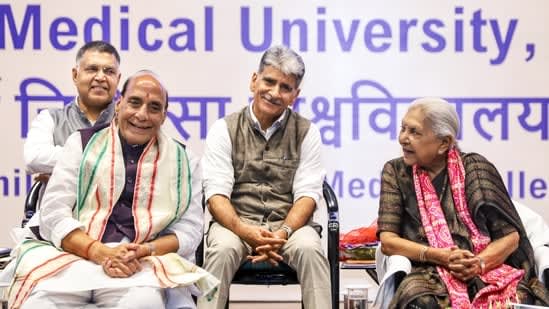
KGMU Lucknow has banned the preparation of non-vegetarian food in its hostel messes following directions from UP Governor Anandiben Patel, although students are still permitted to order non-vegetarian meals from outside sources.
Administrative Shift at KGMU: The Ban on Non-Vegetarian Mess Food
King George's Medical University (KGMU) in Lucknow has implemented a significant change in its residential policy by banning the preparation of non-vegetarian food items within its hostel messes. This directive comes as a direct result of observations and instructions from the Governor of Uttar Pradesh, Anandiben Patel. The core of the issue stems from the Governor questioning the necessity of serving non-vegetarian meals twice a week in the university's mess facilities. While the institutional preparation of such food is now prohibited, the administration has provided a critical concession: students are still permitted to order non-vegetarian food from external vendors.
The Role of the Governor and Institutional Governance
To understand this event, it is essential to recognize the structural relationship between the Governor of a state and its public universities. In India, the Governor typically serves as the Chancellor of state-run universities. This position grants the Governor significant oversight and the authority to influence administrative policies. When Governor Anandiben Patel questioned the frequency of non-vegetarian meals, it was not merely a personal observation but an administrative inquiry that the university leadership felt compelled to act upon. This highlights the top-down nature of governance in state-funded educational institutions, where the Chancellor's preferences can rapidly translate into binding campus regulations.
Socio-Political Context of Dietary Preferences
This move reflects a broader socio-political trend observed in several parts of India, particularly in Uttar Pradesh, where there is an increasing emphasis on promoting vegetarianism within public and government-aligned spaces. Dietary habits in India are often deeply intertwined with cultural, religious, and political identities. By removing non-vegetarian options from the official mess menu, the institution aligns itself with a specific cultural narrative. However, the decision to allow 'ordering-in' serves as a strategic safety valve, ensuring that the university does not impose a total dietary ban on individuals, which could lead to legal challenges or intense student protests regarding personal liberty and the right to food choice.
Impact on Student Life and Logistics
For medical students at KGMU, who often face grueling schedules and high-stress environments, the mess serves as a primary source of nutrition and convenience. The removal of non-vegetarian options from the mess menu shifts the financial and logistical burden onto the students. While they can still consume non-veg food, they must now navigate the additional cost and time associated with third-party delivery services. This creates a disparity in accessibility, as students who rely solely on the subsidized mess for their protein intake may find it more difficult to maintain their preferred diet.
Comparison with Academic Autonomy
This event underscores the tension between institutional autonomy and executive direction. Universities are generally viewed as spaces of intellectual freedom and diversity; however, administrative functions—such as the management of hostels and messes—often fall under strict government control. The swift implementation of the Governor's directions suggests that in matters of campus administration, the directives of the Chancellor often override the existing preferences of the student body or the previous norms of the university administration.
Future Implications and Precedents
Looking forward, this decision may set a precedent for other state-run hostels and universities across Uttar Pradesh. If this model of 'mess-ban but delivery-allowed' is seen as an effective way to satisfy administrative or political goals without triggering widespread unrest, other institutions may follow suit. We may see a gradual shift where public institutions distance themselves from the provision of non-vegetarian food entirely, outsourcing the responsibility of dietary variety to the private market. This could lead to a standardized 'vegetarian-only' public infrastructure in educational housing across the region.
Summary
In conclusion, the ban on non-vegetarian food preparation at KGMU Lucknow is a clear manifestation of the Governor's influence over state university administration. By banning internal preparation while permitting external ordering, the university has attempted to balance executive directives with individual student freedoms. This event reflects larger cultural shifts in the region and highlights the complexities of managing dietary diversity within state-governed academic institutions.
Verification Required?