King visits Guyanan slave rebellion site on Caribbean tour
Source Entity
BBC News
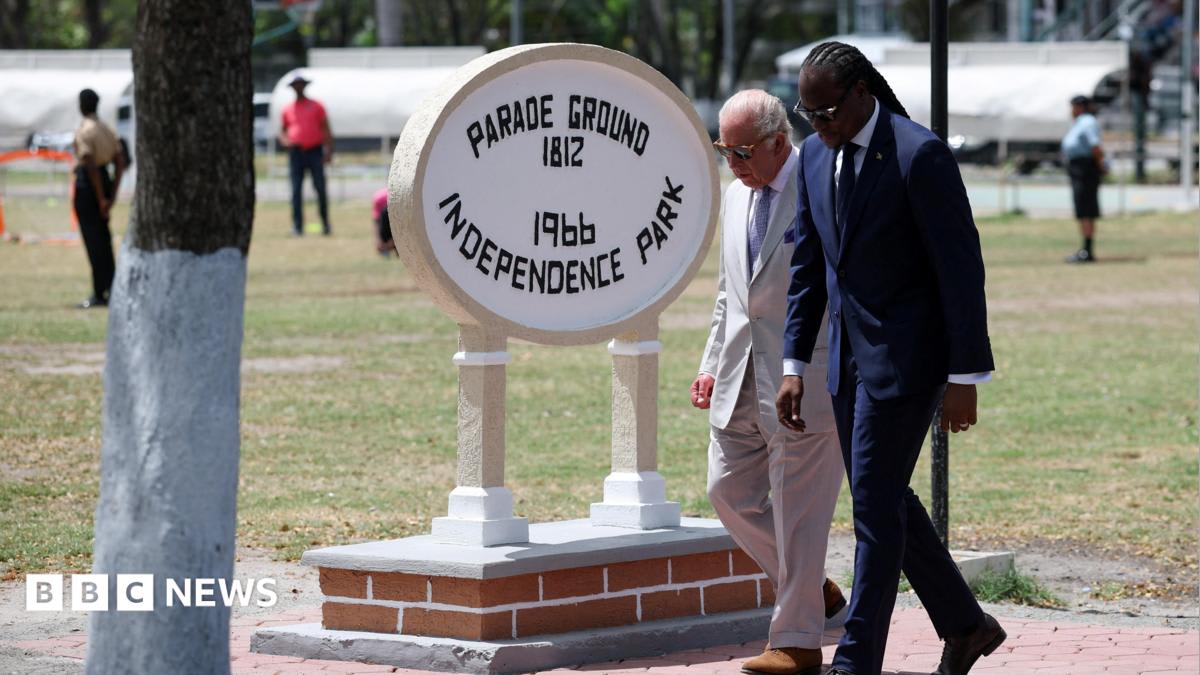
King Charles III visited Independence Park in Guyana to honor the victims of the 1823 Demerera slave rebellion. The visit serves as a significant moment of historical reflection on the violent legacy of British colonial rule in the Caribbean.
A Royal Acknowledgment of Colonial History
King Charles III recently undertook a poignant and significant visit to Independence Park in Georgetown, Guyana, as part of his broader tour of the Caribbean. The visit was dedicated to honoring the memory of the victims of the Demerera Slave Rebellion of 1823, a watershed moment in the history of British colonial occupation. By standing on the very ground where thousands of enslaved individuals once rose up against their oppressors, the King participated in a rare and somber act of historical recognition regarding the brutal suppression of human rights under the British Empire.
The Tragedy of the 1823 Demerera Rebellion
The Demerera rebellion was a massive uprising involving thousands of enslaved people seeking freedom from the dehumanizing conditions of colonial labor. History records that this resistance was met with extreme violence by colonial authorities. According to the records presented during the visit, hundreds of enslaved people were killed in the immediate aftermath of the uprising, while many survivors were subsequently executed. The site at Independence Park served as a grim reminder of this history, as it functioned as a public execution ground where the condemned were put to death by hanging.
Symbolic Significance and Diplomatic Weight
Accompanying the King during this visit was Guyana’s Culture Minister, Steven Jacobs, who provided context regarding the scale of the slaughter. The presence of a high-ranking Guyanese official alongside the British monarch underscores the ongoing efforts to reconcile the legacy of colonialism with modern diplomatic relations. The King’s decision to pause and read the commemorative sign detailing the use of the ground as an execution site suggests a shift toward acknowledging the darker chapters of the Commonwealth’s history, moving beyond ceremonial traditions to address the historical trauma that still resonates in the region.
Historical Context and the Legacy of Empire
The rebellion of 1823 was not an isolated event but rather part of a larger, systemic struggle for emancipation that defined the 19th-century Caribbean. The violent reaction of British authorities to the Demerera uprising highlights the lengths to which colonial powers went to maintain control over their economic interests. By visiting this specific site, the King engages with the reality that the prosperity of the British Empire was often built upon the suffering of those it enslaved, providing a necessary, if uncomfortable, bridge between the monarchy’s past and its present role.
Future Implications and Reconciliation
This visit serves as a barometer for how the British monarchy intends to navigate the complex discourse surrounding reparations, historical apologies, and the future of the Commonwealth. As Caribbean nations continue to re-evaluate their relationship with the Crown, such gestures of acknowledgment are essential. While symbolic actions cannot undo the past, they represent a formal recognition of the historical truth. The impact of this visit will likely be measured by how it influences future dialogues between the United Kingdom and its former colonial territories regarding historical justice and the shared, often painful, history of the Atlantic world.