CITU call for a halt to evictions of street vendors in Vijayawada
Source Entity
India Latest News: Top National Headlines Today & Breaking News | The Hindu
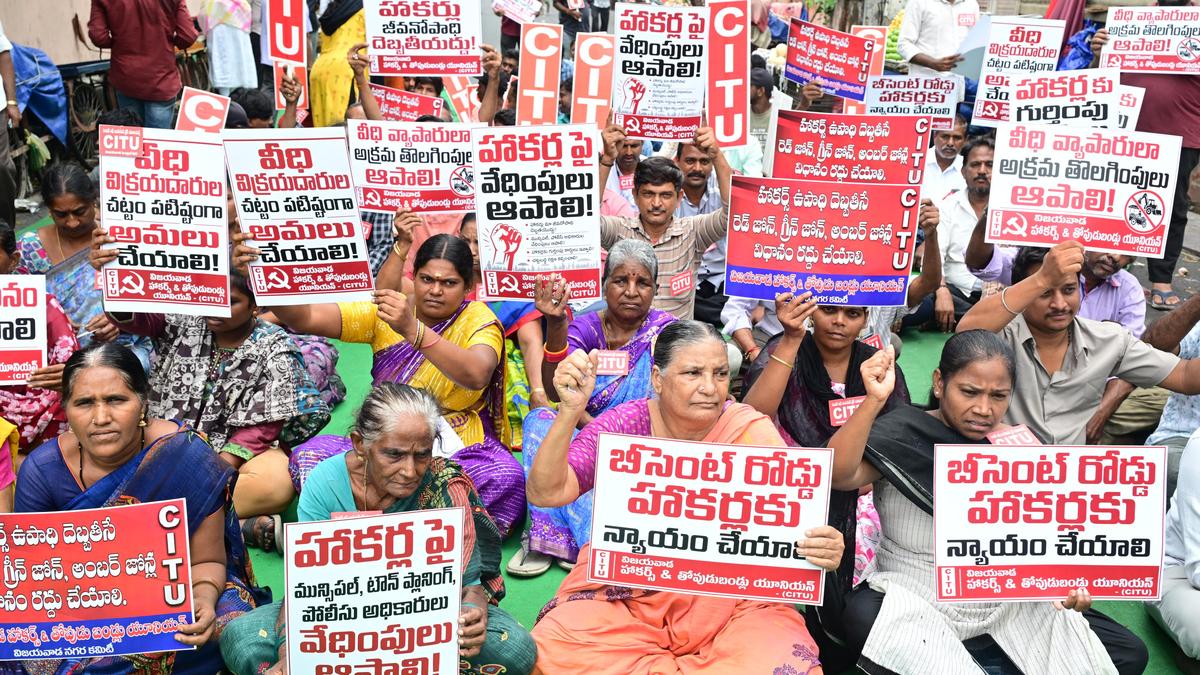
Labor unions in Vijayawada are protesting against the disparate treatment of street vendors and outsourced transport workers. CITU and AITUC are demanding better job security, fair wages, and an end to the harassment of vulnerable workers.
Labor Unrest in Vijayawada: A Demand for Economic Equity
On July 27, 2026, the city of Vijayawada witnessed significant labor activism as unions mobilized to address systemic inequalities. The Centre of Indian Trade Unions (CITU) and the All India Trade Union Congress (AITUC) led separate demonstrations, highlighting the growing frustration among marginalized workers regarding government priorities and labor policies.
The Plight of Street Vendors
CITU district vice president Donepudi Kasinath spearheaded a protest outside the Collectorate to challenge the ongoing eviction of street vendors. The core of the grievance lies in the perceived double standard applied by the government. Kasinath argued that while authorities readily offer land, incentives, and tax exemptions to massive corporations—citing examples like Google and Reliance—they simultaneously criminalize the informal economy. For street vendors, the confiscation of LPG cylinders and constant harassment represent a direct threat to their basic survival, rather than a matter of urban planning.
APSRTC Outsourcing Grievances
Simultaneously, the APSRTC Outsourcing Employees’ Union, supported by the AITUC, organized a 'Chalo Vijayawada' protest at Dharna Chowk. State general secretary S. Venkata Subbayya highlighted the precarious position of approximately 8,000 outsourced employees within the Andhra Pradesh State Road Transport Corporation. The primary demand is for wage parity with other government departments, as current reliance on private contractors has led to widespread irregularities in salary disbursement, Provident Fund (PF) contributions, and overall job security.
The Broader Economic Context
These protests underscore a widening gap in the Indian labor market. The reliance on outsourcing in state-run entities like the APSRTC often creates a 'second-class' tier of workers who perform essential public services without the legal protections or benefits afforded to permanent staff. When combined with the aggressive urban displacement of street vendors, it paints a picture of an economic environment where the informal and contract-based workforce bears the brunt of administrative policies.
Historical and Future Implications
Historically, the tension between rapid industrialization and the protection of local livelihoods has been a recurring theme in Indian urban development. The demands raised in Vijayawada reflect a trend of increasing unionization among non-traditional labor sectors. If these grievances are not addressed through policy reform—such as formalizing vendor spaces and standardizing contractor wages—authorities may face continued civil disobedience and increased political pressure from labor organizations in the coming months.
Conclusion
The protests in Vijayawada serve as a critical reminder of the human cost associated with economic transition. Whether it is the street vendor struggling to keep a business afloat or the outsourced transport worker fighting for basic benefits, the call for dignity and fair treatment remains a central pillar of the ongoing labor discourse in Andhra Pradesh.
Verification Required?