Latest draft notification to notify Western Ghats as ecologically sensitive expires
Source Entity
Latest News: Todays Latest News Headlines from India & World | Hindustan Times | Hindustan Times
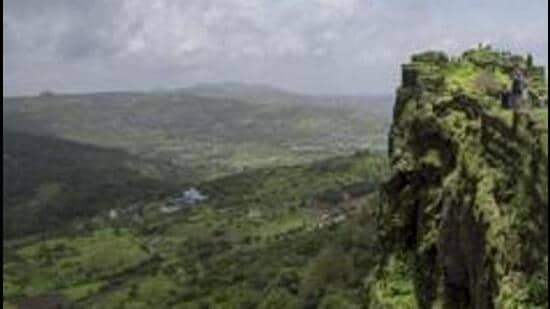
The sixth draft notification to designate 56,000 square kilometers of the Western Ghats as an Ecologically Sensitive Area has expired without state consensus. The Union government is now expected to issue a seventh draft as negotiations with six affected states continue.
The Stalled Protection of the Western Ghats
The recent expiration of the sixth draft notification to designate over 56,000 square kilometers of the Western Ghats as an Ecologically Sensitive Area (ESA) marks a significant moment of stasis in one of India's most complex environmental policy challenges. By failing to reach a consensus by the July 27 deadline, the involved stakeholders—ranging from the Union government to the six states of Gujarat, Maharashtra, Goa, Karnataka, Tamil Nadu, and Kerala—have signaled the deep-seated friction between conservation imperatives and developmental aspirations. This expiration necessitates the issuance of a seventh draft, prolonging a bureaucratic process that has spanned over a decade.
A Decade of Policy Deliberation
The roots of this ongoing impasse trace back to 2010, when the Union government first initiated the formal process to protect this 1,600-kilometer mountain range. The ecological significance of the Western Ghats, widely recognized as a global biodiversity hotspot, served as the primary catalyst for the 2011 recommendation by the Madhav Gadgil-led panel, which advocated for strict ESA designation. This was later followed by a report from a panel led by the late K. Kasturirangan, which sought to balance ecological preservation with the socioeconomic realities of the region's inhabitants.
The Friction Between Development and Conservation
The difficulty in finalizing these notifications lies in the conflicting priorities of the state governments. While the Union government aims to enforce a uniform protective framework, individual states are often wary of the potential restrictions an ESA status might impose on infrastructure projects, mining, and local land use. These states have been engaged in protracted negotiations with an expert committee, but the lack of unified agreement on final demarcation suggests that the economic interests of these regions remain a significant hurdle to federal environmental mandates.
Broader Environmental Implications
The Western Ghats are not merely a collection of forests; they are a critical water tower for peninsular India and a vital regulator of the monsoon climate. The failure to finalize an ESA status leaves vast tracts of this sensitive ecosystem in a legal limbo, potentially vulnerable to unchecked industrial expansion. The delay in notification implies that the regulatory clarity required to protect endemic species and fragile habitats remains elusive, increasing the risk of irreversible ecological degradation.
Future Trends and Outlook
Looking forward, the issuance of a seventh draft appears inevitable. As the climate crisis intensifies, the pressure on the government to finalize these protections will likely mount. However, without a fundamental shift in the collaborative approach between the center and the states, the cycle of draft expirations and re-issuances may continue. The future of the Western Ghats depends on whether the expert committee can facilitate a compromise that satisfies both the urgent need for biodiversity conservation and the developmental requirements of the states involved.
Verification Required?