Lego posts record first-half revenue, CEO touts strong sales at high-end and value pricing
Source Entity
US Top News and Analysis
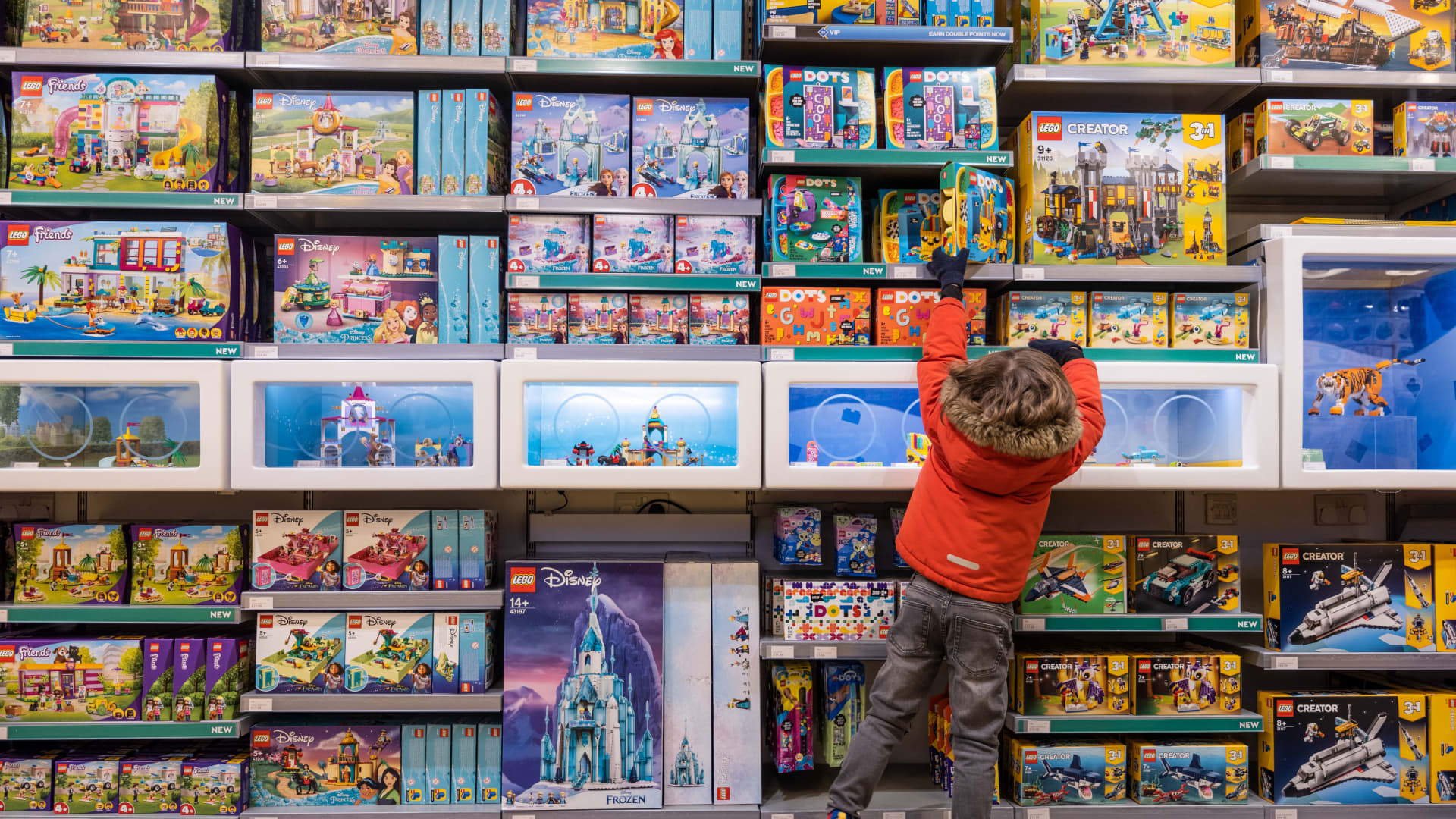
Lego reported record first-half revenue of $6.54 billion, marking a 21% increase driven by popular product lines and new technology. CEO Niels Christiansen noted strong demand across both premium and value-priced sets.
Lego's Record-Breaking Financial Performance
Lego has officially announced a landmark first half of the year, reporting a record-breaking 41.9 billion Danish kroner ($6.54 billion) in revenue. This 21% year-over-year increase underscores the company's resilient business model, which has successfully navigated shifting global retail landscapes. By balancing high-end collectible sets with accessible entry-level products, Lego has managed to capture a broad demographic of consumers, ranging from casual hobbyists to dedicated brick-building enthusiasts.
Diversification and Product Strategy
The core of this growth lies in the brand's ability to maintain 'stalwart' product lines that continue to resonate with the public. Specific collections, such as the botanical bouquets, Formula 1 race cars, and various collectible sets, have acted as primary drivers for this financial surge. By tapping into both pop-culture trends and aesthetic home-decor markets, Lego has effectively evolved from a toy manufacturer into a lifestyle brand, ensuring that their products hold appeal well beyond the traditional childhood demographic.
The Impact of 'Smart Play' Technology
Innovation remains a cornerstone of Lego's long-term strategy, as evidenced by the recent launch of the 'Smart Play' platform. This initiative integrates sensors into physical brick sets, allowing models to react to movement and emit sounds. By bridging the gap between physical construction and digital interactivity, Lego is positioning itself to compete in an increasingly digitized toy market. This technology not only enhances the value proposition for existing fans but also serves as a critical hook for a younger, tech-savvy generation.
Operational Efficiency and Profit Margins
Financial reports indicate that revenue growth is being matched by operational efficiency. An operating profit of 10.9 billion Danish kroner—a 22% increase—demonstrates that the company's scaling efforts are not coming at the expense of profitability. This margin health is vital for a company that must constantly invest in research, development, and global supply chain logistics to maintain its market dominance.
Future Outlook and Market Positioning
Looking ahead, Lego's dual-pronged pricing strategy appears to be a key hedge against economic volatility. CEO Niels Christiansen’s observation that sales are strong at both the high-end and value-priced ends of the spectrum suggests that the brand possesses significant pricing power. As the company continues to expand its catalog and refine its technological offerings, it is well-positioned to maintain its current momentum, provided it can continue to innovate while protecting the core 'brick-building' experience that defines its brand identity.