Why can’t Tamil Nadu police grant permission for route marches by RSS, Dravidar Kazhagam, asks Madras High Court
Source Entity
India Latest News: Top National Headlines Today & Breaking News | The Hindu
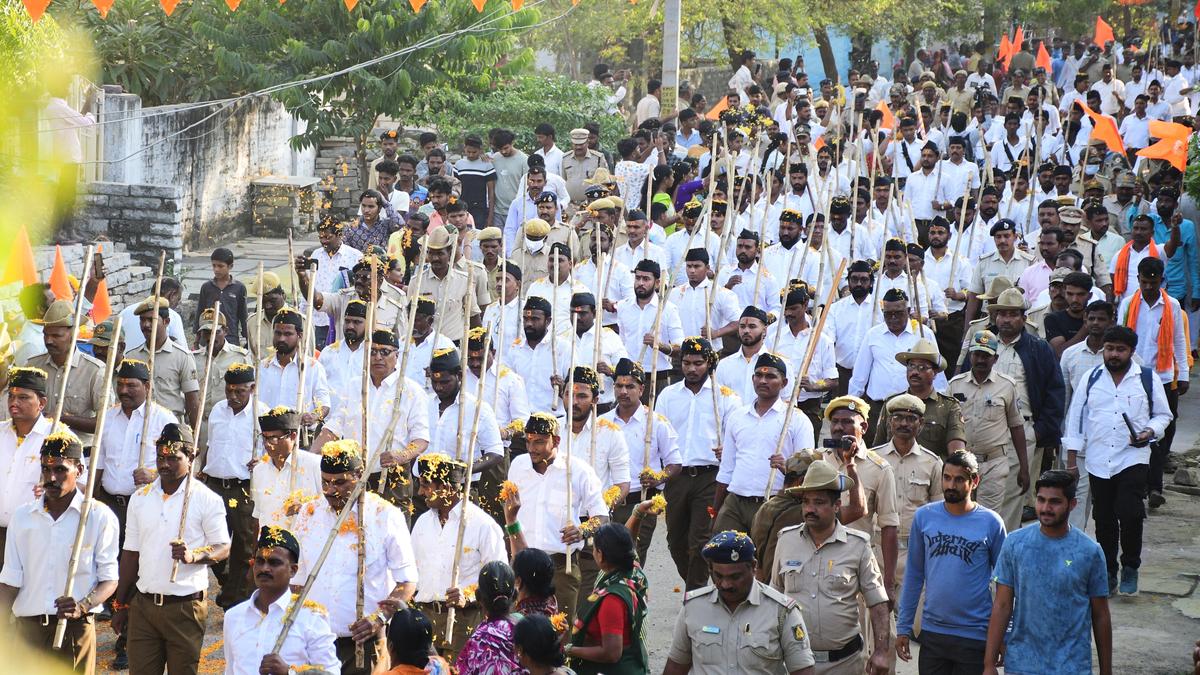
The Madras High Court has questioned the Tamil Nadu police's repeated refusal to grant permission for RSS and other organizations' route marches. Justice V. Lakshminarayanan highlighted the disparity between these restrictions and the freedom of assembly permitted in sensitive regions like Jammu and Kashmir.
Judicial Scrutiny on Public Assemblies in Tamil Nadu
On October 14, 2026, the Madras High Court initiated a significant dialogue regarding the constitutional right to freedom of assembly in Tamil Nadu. Justice V. Lakshminarayanan, while presiding over a writ petition filed by RSS North Tamil Nadu secretary V.G. Jagadeesan, questioned the state police's consistent policy of denying permissions for route marches and public rallies. The court's inquiry centered on why organizations such as the RSS and Dravidar Kazhagam (DK) face systemic hurdles in organizing peaceful processions, regardless of the political party currently holding power in the state.
The Comparison to Sensitive Regions
Central to the court’s observation was a comparative analysis of law and order management. Justice Lakshminarayanan pointedly noted that the Rashtriya Swayamsevak Sangh regularly conducts route marches in regions historically categorized as high-risk, including Jammu and Kashmir. By drawing this parallel, the court challenged the state's narrative that such events inherently pose a threat to public order in Tamil Nadu, suggesting that if security can be managed in volatile territories, the state police's refusal in Tamil Nadu may lack a robust, evidence-based justification.
The Legal Context of the Petition
The petition, filed by V.G. Jagadeesan through legal counsel V. Chandrasekaran and K. Srinivasa Murthy, specifically seeks authorization for events scheduled for October 18, October 25, and November 1, 2026. The request explicitly outlines the standard attire for participants: dark olive brown trousers, white shirts, caps, belts, and black shoes. By bringing this to the High Court, the petitioner is asserting that the repetitive denial of these applications constitutes an infringement on their fundamental rights to associate and express political identity through public display.
Implications for Democratic Expression
This judicial intervention highlights a broader tension between the state’s executive power to regulate public spaces and the fundamental democratic right to peaceful assembly. The court’s questioning suggests that the judiciary is looking to enforce a more uniform application of law that prevents political bias from dictating the ability of specific groups to operate in public spheres. If the court ultimately mandates that permissions be granted, it would set a precedent that could drastically alter how public demonstrations are regulated across the state.
Future Trends in Public Order Management
Looking forward, this case is likely to force the Tamil Nadu police to refine their criteria for granting permissions for public rallies. Should the court maintain its skeptical stance toward the state's denials, it may compel the administration to adopt a more objective 'rights-based' approach rather than a 'discretionary' one. This could lead to a more permissive environment for political and ideological groups, provided they adhere to the standard security guidelines requested by the petitioners, thereby shifting the administrative burden from outright prohibition to proactive security management.
Verification Required?