Mamata Banerjee, CPI(M) bridge decades-old divide over Election Commission concerns
Source Entity
India Latest News: Top National Headlines Today & Breaking News | The Hindu
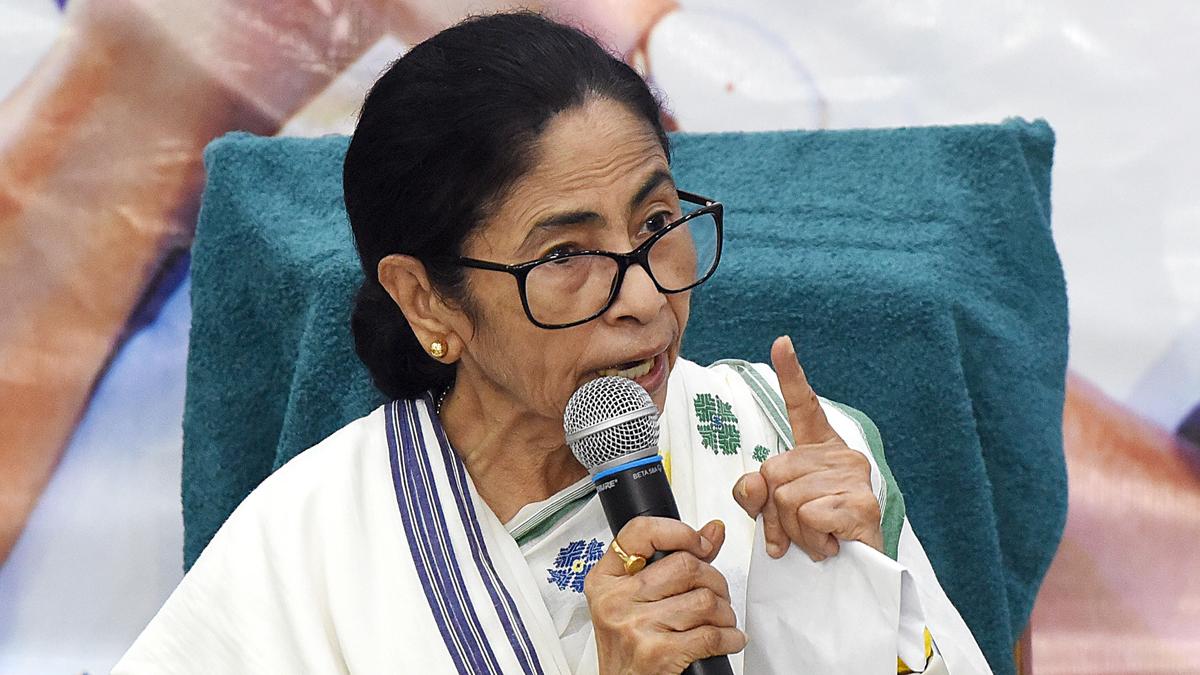
Mamata Banerjee and CPI(M) leader M.A. Baby have initiated a rare dialogue to address concerns over the Election Commission's credibility. This unprecedented communication marks a significant shift in their decades-long rivalry.
A Historic Rapprochement in West Bengal Politics
In a development that has sent ripples through the Indian political landscape, West Bengal Chief Minister Mamata Banerjee and CPI(M) general secretary M.A. Baby have engaged in an unprecedented dialogue. This conversation, centered on the shared concern regarding the 'declining credibility' of the Election Commission (EC), marks a monumental shift in the relationship between the Trinamool Congress (TMC) and the Communist Party of India (Marxist). Historically, these two factions have occupied opposite ends of the political spectrum, with their rivalry defining the state's governance for nearly three decades.
The Roots of a Deep-Seated Rivalry
The animosity between these political entities dates back to 1997, when Mamata Banerjee broke away from the Indian National Congress to establish the Trinamool Congress. Her primary motivation was the perception that the Congress state leadership was insufficiently combative against the then-ruling CPI(M)-led Left Front. This tension culminated in the historic 2011 Assembly elections, where Banerjee successfully dismantled the 34-year-old Left Front government. For the next 15 years, the CPI(M) served as the primary opposition, constantly challenging the TMC's governance until the political tides shifted in the 2026 Assembly elections.
Converging on Institutional Integrity
The recent outreach by M.A. Baby to bridge this divide signifies that the perceived decline in the Election Commission's autonomy has become a rallying point capable of transcending historical bitterness. By setting aside decades of antagonism, both leaders are acknowledging that the integrity of the electoral process is a foundational concern that outweighs individual party rivalries. This shift suggests a strategic re-alignment within the opposition, as they attempt to build a broader consensus on the functioning of constitutional bodies.
Broader Implications for the Opposition
This dialogue represents more than just a momentary thaw; it reflects a potential restructuring of political alliances in West Bengal. When long-standing adversaries prioritize institutional oversight over partisan fighting, it often signals an environment where the political climate is under significant pressure. The collaboration between the TMC and the CPI(M) could serve as a model for other opposition parties across India, who are increasingly concerned about the impartiality of independent institutions.
Future Trends and Political Realignment
Moving forward, the success of this consultation will depend on whether this dialogue can move beyond the issue of the Election Commission and into broader policy coordination. If the TMC and CPI(M) continue to find common ground, it could permanently alter the political topography of West Bengal, potentially diminishing the influence of third-party spoilers or shifting the focus toward a unified opposition front. The long-term durability of this bridge-building effort remains to be seen, but the initial step marks a significant departure from the confrontational politics that have dominated the state for generations.
Verification Required?