Man unexpectedly recovers from a knife wound through his eye and brain
Source Entity
Beth Mole
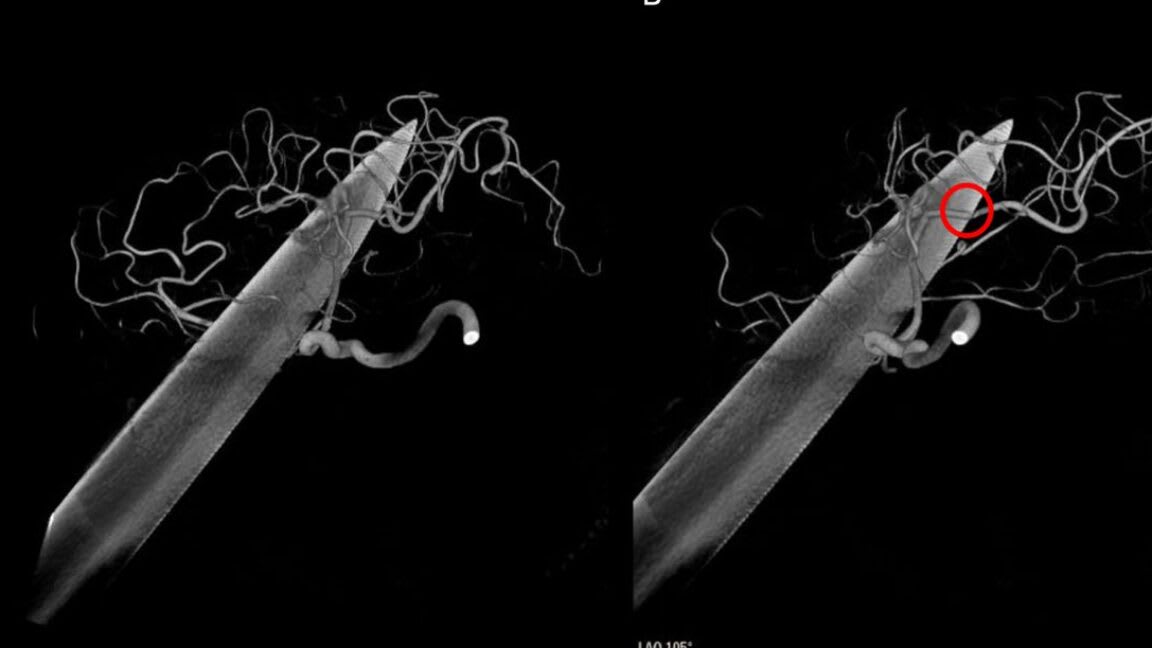
A man in his 20s survived a severe brain injury after a knife blade pierced his eye and skull. Despite the gravity of the trauma, he remained conscious and capable of communication upon hospital arrival.
A Miracle of Anatomy: Analyzing a Rare Survival
In an extraordinary medical case reported in the BMJ, a man in his 20s survived a near-fatal injury after a 15 mm-wide knife blade traveled through his right eye, penetrated deep into his brain, and reached the inner surface of his skull. The patient’s survival, despite the weapon remaining embedded in his cranium upon arrival at the hospital, highlights the complex interplay between trajectory and neurological outcome in penetrating trauma.
The Role of Trajectory in Penetrating Brain Injury
Medical experts emphasize that the severity of brain injuries is often dictated less by the sheer presence of a foreign object and more by the specific anatomical path it follows. In this instance, the blade’s path was narrow enough to avoid critical vascular structures and vital brain centers that would have otherwise resulted in immediate fatality. This case serves as a stark reminder that in neurotrauma, the 'exact path' of a projectile or blade is the primary determinant of a patient's chances of survival.
Clinical Presentation and the Glasgow Coma Scale
Upon admission, the patient’s clinical status was remarkably stable given the circumstances. Scoring a 12 on the Glasgow Coma Scale (GCS)—classified as a moderate brain injury—the patient exhibited signs of agitation but retained the ability to speak and move all four limbs. The GCS breakdown, specifically the E3 (opening eyes to speech), V4 (confused conversation), and M5 (localizing pain) scores, illustrates a patient who, while suffering from significant neurological insult, maintained core cognitive and motor functions.
The Challenge of Emergency Intervention
Managing a patient with an embedded object requires a highly coordinated approach between neurosurgeons, ophthalmologists, and trauma teams. The patient’s agitation, while a symptom of his brain injury, posed a significant challenge for medical staff attempting to stabilize him. The ability of the medical team to keep the patient responsive while preparing for what would likely be a complex extraction procedure underscores the necessity of rapid, specialized trauma care in high-stakes, non-routine scenarios.
Broader Implications for Trauma Medicine
This case adds to the limited but vital body of literature regarding penetrating cranial injuries. It challenges the conventional perception that any object penetrating the brain must result in catastrophic, irreversible damage. By documenting the exact trajectory and the patient's subsequent neurological state, this report provides invaluable data for emergency physicians and surgeons who may encounter similar rare trauma cases in the future.
Conclusion and Future Outlook
While this man's recovery is a testament to both anatomical luck and prompt medical intervention, it remains a rare exception in the field of trauma. The documentation of this case in the BMJ is essential for medical education, reinforcing that clinical assessment must always prioritize the patient's current neurological status over the initial 'ghastly' appearance of the injury. As medical imaging and surgical techniques continue to evolve, the ability to manage such extreme cases will likely improve, potentially leading to more favorable long-term outcomes for survivors of penetrating trauma.