Man claims US Navy past, caught near Nepal border with Chinese passport
Source Entity
The Indian Express
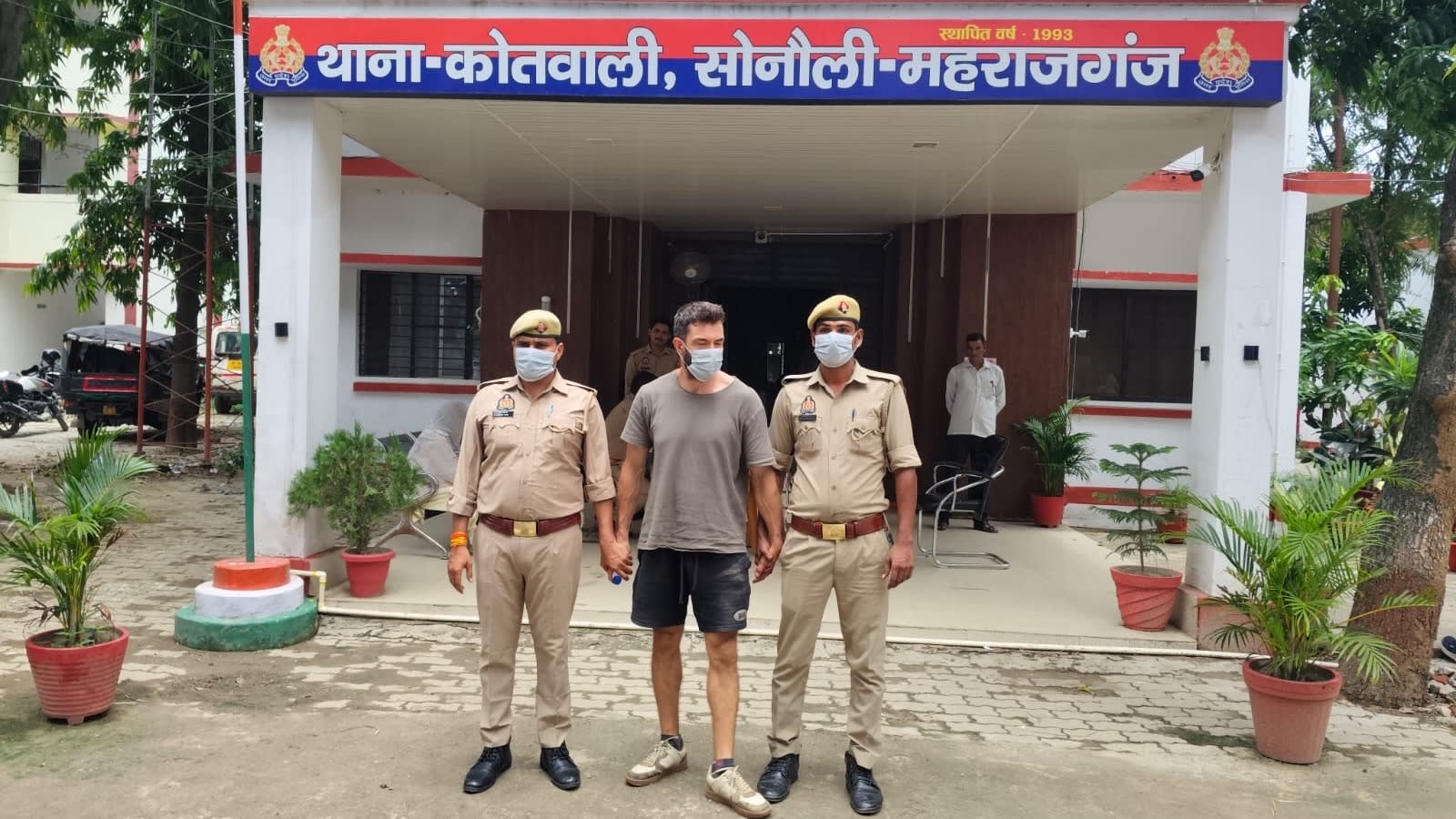
The man, claiming to be a US citizen, at Sonauli police station in Maharajganj district of UP, Sunday. (Express Photo) A 36-year-old man claiming to be a US citizen was arrested by a joint team of Sa...
Security Breach at the Sonauli Border: An Analysis of Identity Fraud and Geopolitical Risk
In a startling security incident, a 36-year-old man was apprehended by a joint police team at the Sonauli border in the Maharajganj district of Uttar Pradesh. The individual presented a complex and contradictory identity, claiming to be a citizen of the United States with a professional background in the US Navy, yet he was found to be traveling with a Chinese passport. This discrepancy immediately raised red flags for security agencies, leading to his detention at the Sonauli police station for further interrogation and verification.
The Strategic Vulnerability of the India-Nepal Border
The location of the arrest, Sonauli, is of critical strategic importance. The border between India and Nepal is characterized by an 'open border' policy, which allows for the free movement of people between the two nations. While this facilitates trade and kinship, it also creates a significant security loophole that can be exploited by foreign nationals or intelligence operatives. The fact that an individual with a Chinese passport was intercepted in this region highlights the persistent challenge Indian security forces face in monitoring porous boundaries where traditional visa requirements are often bypassed by those attempting to enter the country clandestinely.
Analyzing the Identity Contradiction: US Navy vs. Chinese Passport
The core of this investigation lies in the stark contradiction between the suspect's verbal claims and his documentary evidence. Claiming a past in the US Navy is a specific tactical choice; military credentials often grant a level of perceived trust and authority. However, the possession of a Chinese passport suggests a different national allegiance. This pattern—claiming citizenship of a Western power while holding documentation from a geopolitical rival—is a classic hallmark of identity obfuscation. Security experts often view such discrepancies as potential indicators of espionage, illegal immigration, or high-level fraud intended to gain access to sensitive regions.
Geopolitical Implications and Diplomatic Friction
This incident occurs against a backdrop of heightened tensions between India and China, particularly following border skirmishes in the Himalayas. The presence of a Chinese national claiming US affiliation near a sensitive border crossing adds a layer of diplomatic complexity. If the individual is found to be operating on behalf of a foreign intelligence agency, it could further strain bilateral relations. Conversely, if this is a case of individual fraud or a 'passport-for-hire' scheme, it underscores the growing global market for fraudulent identities used to circumvent travel restrictions imposed by national security protocols.
Procedural Challenges in Verification
The process of verifying the suspect's claims will require extensive inter-agency coordination. The Uttar Pradesh police must collaborate with the Ministry of External Affairs (MEA) to communicate with both the US and Chinese embassies. Verifying US Navy service requires access to secure military records, while the authenticity of the Chinese passport must be cross-referenced with Chinese immigration data. This bureaucratic process often takes time, during which the suspect remains in custody, illustrating the slow but necessary grind of international forensic verification in national security cases.
Future Trends in Border Management
Moving forward, this incident serves as a catalyst for the potential implementation of stricter biometric surveillance at the India-Nepal border. As traditional passports become easier to forge or acquire through illicit means, the shift toward digital identity verification and facial recognition technology becomes imperative. We can expect an increase in joint patrols and the deployment of advanced scanning equipment at transit points like Sonauli to ensure that the 'open border' does not become a gateway for foreign operatives or identity thieves.
Conclusion
The arrest of the man claiming US Navy ties while holding a Chinese passport is more than a simple case of illegal entry; it is a reminder of the sophisticated methods used to penetrate national borders. Whether the motive was espionage or personal fraud, the incident exposes the fragility of border security in the face of complex identity manipulation. Vigilance and international cooperation remain the only viable defenses against such multifaceted security threats.