India needs multi-partisan approach for next level of development, says Manish Tewari
Source Entity
India Latest News: Top National Headlines Today & Breaking News | The Hindu
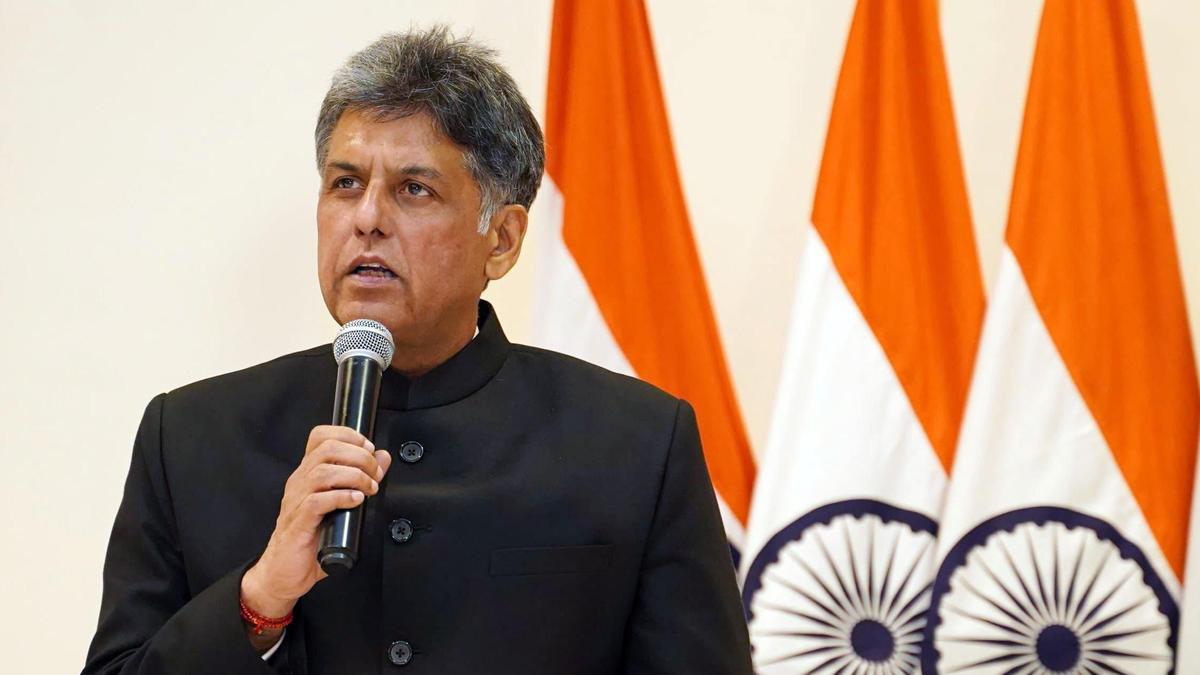
Chandigarh MP Manish Tewari has called for a multi-partisan political consensus to drive India's next phase of development. Citing the 1991 economic reforms as a model, he argued that polarization hinders significant national progress.
The Call for a New Political Consensus in India
Former Union Minister and Chandigarh MP Manish Tewari recently delivered a significant address at the Indian School of Business (ISB) Leadership Summit 2026 in Mohali, emphasizing that India’s path toward becoming a developed nation is currently obstructed by political fragmentation. Tewari’s central thesis is that the country requires a structural shift in how governance and economic policy are approached, moving away from hyper-partisan agendas toward a unified, national vision.
Learning from the 1991 Economic Blueprint
To illustrate his point, Tewari invoked the historical precedent of the 1991 economic reforms. During that period, Prime Minister P.V. Narasimha Rao and Finance Minister Manmohan Singh successfully navigated a precarious political landscape to forge a multi-party consensus. This cooperation was fundamental in pivoting India toward liberalization, effectively dismantling the 'License Raj' and integrating the nation into the global economy. By referencing this era, Tewari highlights that monumental systemic changes are rarely achievable through single-party mandates alone but rather through broad-based political alignment.
The Mirage of Development in Polarized Times
Mr. Tewari warned that in the current climate of intense political polarization, the 'grand project' of taking India to the next level of development risks becoming a mere mirage. He argued that when policy decisions are viewed strictly through the lens of partisan rivalry, long-term strategic planning is sacrificed for short-term political gains. This stagnation, he suggests, is the primary hurdle preventing India from realizing its full potential on the global stage.
Bridging the Divide for National Growth
The urgency of Tewari’s message lies in the practical implementation of policy. He explicitly stated that it is time to 'put our money where our mouth is,' suggesting that financial commitments to infrastructure, education, and technology must be backed by a stable political environment. Without a cross-party agreement on these fundamental pillars of growth, the volatility of electoral cycles will continue to impede the continuity of critical development projects.
Future Implications and Conclusion
As India looks toward the future, the necessity of a multi-partisan approach appears to be a growing topic of debate among policymakers. If India is to sustain high growth rates and address complex challenges like unemployment and industrial competitiveness, the political class may need to revisit the collaborative spirit of the early 1990s. Ultimately, Tewari’s address serves as a call to action for political leaders to prioritize national interest over partisan friction, suggesting that the next phase of India’s economic narrative depends on its ability to build consensus.
Verification Required?