Trump Helicopter Came Too Close To Passenger Plane, Probe Launched: Report
Source Entity
NDTV News Search Records Found 1000
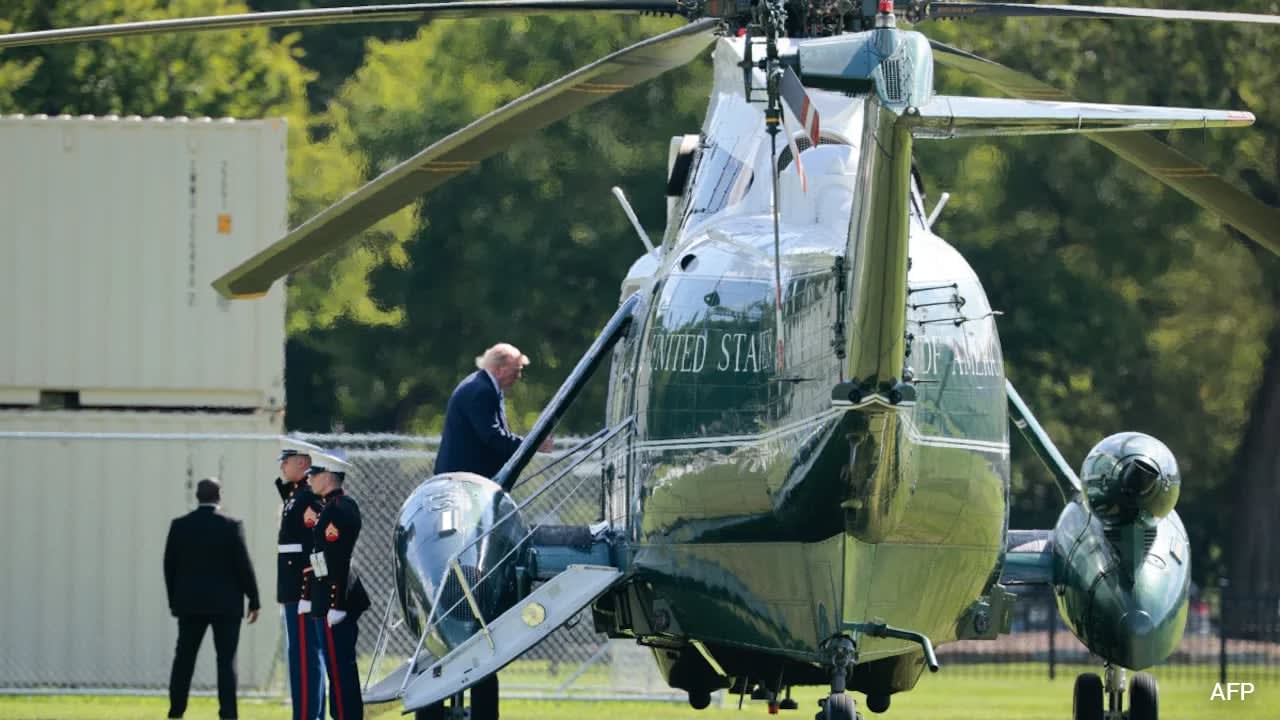
US authorities are investigating a mid-air safety incident where Marine One, carrying President Donald Trump, flew within a mile of a commercial jet. While the White House maintains the President was never in danger, the NTSB has launched an inquiry into the loss of separation.
Investigation Launched into Marine One Proximity Incident
US aviation authorities have officially launched an investigation following a concerning mid-air incident involving Marine One, the military helicopter designated to transport the President of the United States. According to multiple reports, the aircraft, which was carrying President Donald Trump toward Andrews Air Force Base, came within less than a mile of a commercial passenger jet over the Washington D.C. airspace. This event, officially categorized as a "loss of separation," has prompted immediate scrutiny from the National Transportation Safety Board (NTSB).
The Role of Air Traffic Control
Preliminary findings cited by the New York Times suggest that the close proximity encounter was precipitated by garbled communication between the flight crew and air traffic controllers. In the highly congested airspace surrounding the nation's capital, clear and concise communication is the primary safeguard against such incidents. The breakdown in protocol has raised questions regarding the standard operating procedures for presidential flight paths and how they interface with commercial aviation traffic under adverse communication conditions.
White House Response and Safety Protocols
Despite the gravity of a "loss of separation" event, the White House issued a prompt statement on Wednesday asserting that President Trump was never in any actual danger during the flight. This reassurance is common in incidents involving the presidential fleet, where redundant security measures and highly trained military pilots are standard. However, the official insistence on the President's safety does not negate the necessity of the federal investigation into how the two aircraft came into such close proximity.
Understanding 'Loss of Separation'
In aviation terms, a "loss of separation" occurs when aircraft fail to maintain the minimum required distance stipulated by safety regulations. While modern commercial and military aircraft are equipped with sophisticated Collision Avoidance Systems (TCAS), the incident highlights the ongoing challenges of managing complex airspace. The NTSB investigation will focus on determining whether this was a result of human error, technical equipment failure, or a combination of both during the communication lapse.
Broader Implications for Aviation Safety
This incident serves as a stark reminder of the complexities involved in protecting the President while maintaining the flow of commercial air traffic. Washington D.C. possesses some of the most restricted and heavily guarded airspace in the world. Any deviation or breach of safety protocols within this zone is treated with the highest level of urgency. The results of the NTSB inquiry will likely lead to a review of communication protocols to ensure that such risks are mitigated in the future.
Future Trends in Airspace Management
As the volume of air traffic continues to increase, the reliance on automated communication and advanced air traffic management systems becomes more critical. The investigation into the incident involving Marine One will likely provide data that informs future safety training for both military and civilian air traffic controllers. Ensuring that clear, unambiguous communication is maintained at all times remains the cornerstone of aviation safety, regardless of the status of the passengers on board.
Multiple Citing Sources
Verification Required?