"Share Deep And Strong Ties With Italy": Centre On Congress' Meloni Jibe
Source Entity
NDTV News Search Records Found 1000
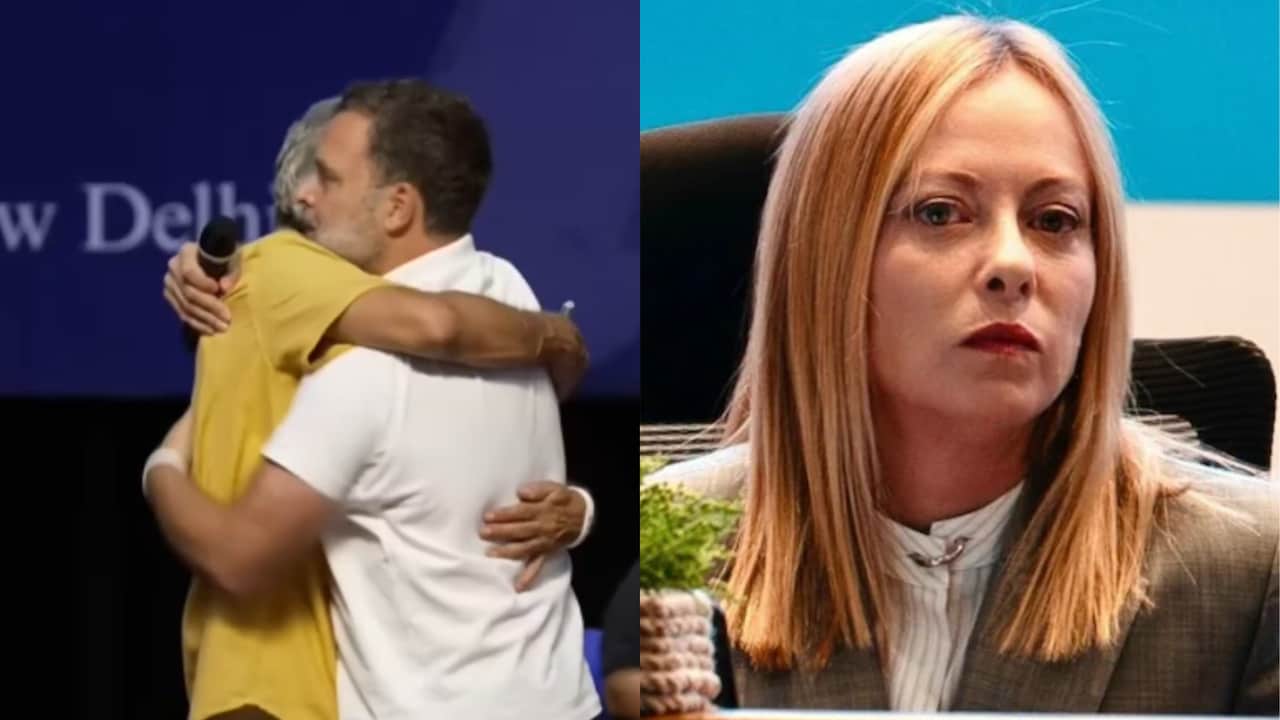
The Ministry of External Affairs has officially responded to comments made by Congress leader Rahul Gandhi regarding Italian Prime Minister Giorgia Meloni. The government emphasized the importance of maintaining respectful diplomatic discourse to preserve strong bilateral ties.
Diplomatic Discourse and Bilateral Relations
Recent political discourse in India has shifted toward the diplomatic arena following comments made by Congress leader Rahul Gandhi regarding Italian Prime Minister Giorgia Meloni. The remarks, which were framed as a swipe by the opposition leader, have drawn a sharp reaction from the Indian government, highlighting the delicate balance required when discussing international figures in a domestic political context.
The Government Response
The Ministry of External Affairs (MEA) has intervened to clarify the official stance of the Indian government. By explicitly stating that India shares "deep and strong ties" with Italy, the MEA underscored that diplomatic etiquette and respect are paramount when referencing leaders of friendly nations. This intervention serves as a reminder that domestic political rhetoric, while often heated, is expected to adhere to certain standards when it involves sovereign international partners.
Contextualizing India-Italy Relations
India and Italy have spent years cultivating a robust strategic partnership, focusing on areas such as defense, energy transition, and infrastructure. Giorgia Meloni’s tenure has seen a consolidation of these ties, with both nations seeking to enhance bilateral trade and security cooperation. The MEA's reaction reflects a broader commitment to ensuring that political grandstanding does not impede or undermine these carefully nurtured diplomatic objectives.
The Impact of Political Rhetoric
In the era of hyper-partisan politics, the intersection of domestic criticism and international relations is increasingly common. However, the government's insistence on being "respectful" points to a concern that casual references to foreign leaders could be misinterpreted abroad. Such comments can potentially complicate state-level negotiations if they are perceived as reflecting a broader national sentiment rather than the views of a single political party.
Historical Precedents and Future Trends
Historically, Indian political leaders have generally maintained a degree of decorum regarding foreign heads of state to ensure continuity in foreign policy. As India continues to assert its role on the global stage through platforms like the G20, the expectation for disciplined political communication will likely rise. Future trends suggest that the government will continue to prioritize the insulation of foreign policy from the daily frictions of domestic parliamentary debates.
Conclusion
Ultimately, the controversy surrounding the remarks directed at Prime Minister Meloni serves as a case study in the complexities of modern political communication. While opposition criticism is a hallmark of a healthy democracy, the MEA's response highlights the boundary between internal political competition and the preservation of national interests. Moving forward, the maintenance of strong ties with Italy remains a priority that the government appears unwilling to jeopardize for the sake of political point-scoring.
Verification Required?