Trump asks Supreme Court to let White House ballroom construction continue
Source Entity
US Top News and Analysis
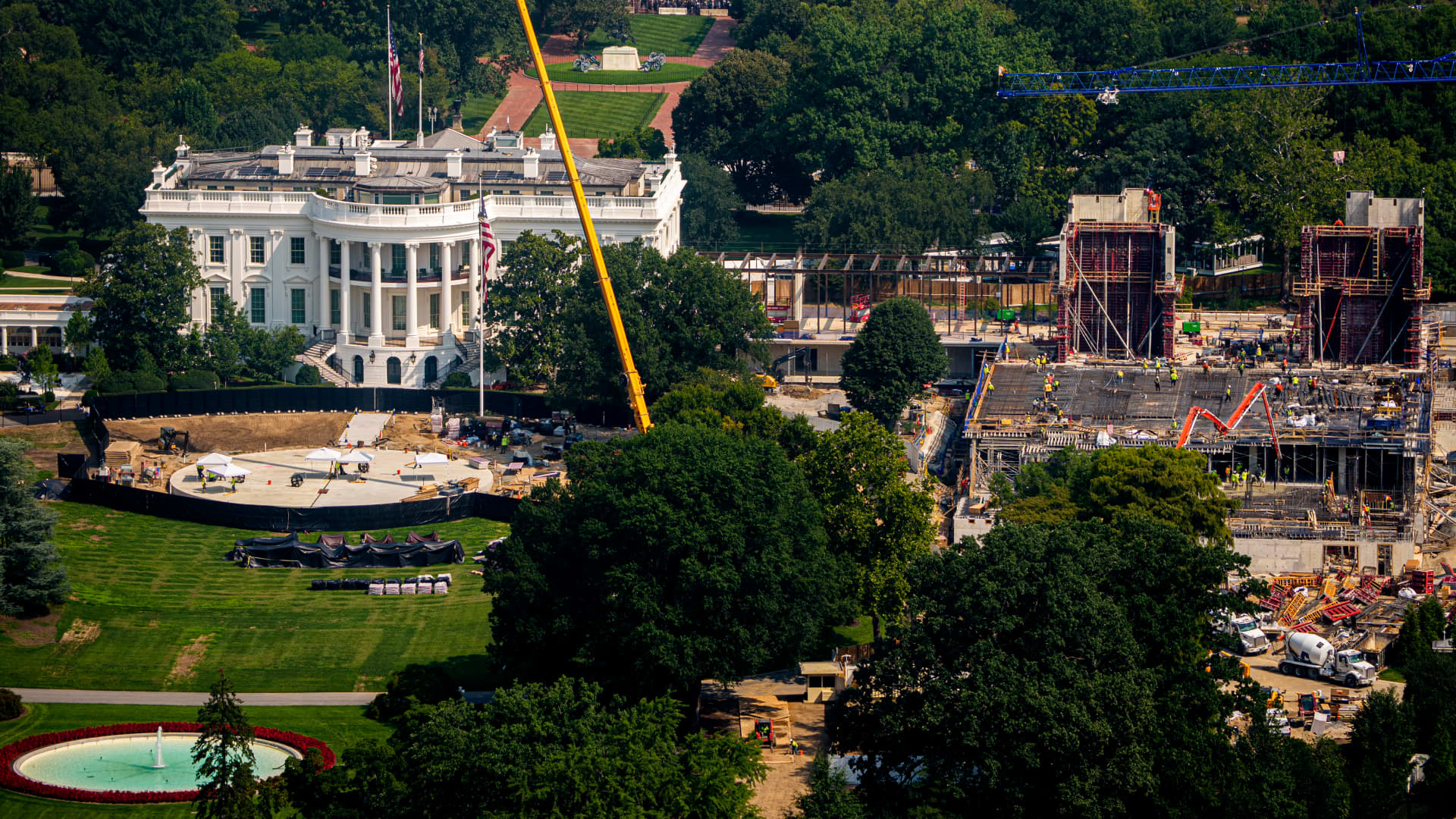
President Donald Trump has petitioned the Supreme Court to resume construction of a controversial $400 million White House ballroom. The project, which involved tearing down the East Wing without congressional approval, remains halted by a federal appeals court injunction.
The Legal Battle Over the White House Ballroom
President Donald Trump has filed an emergency request with the U.S. Supreme Court, seeking to overturn a federal appeals court injunction that has halted construction on a $400 million ballroom at the White House. The project, which has been underway for 10 months, involves the site of the former East Wing, which was demolished last year without prior notification to Congress. This legal maneuver marks a significant escalation in the ongoing dispute between the executive branch and the judiciary regarding the limits of presidential authority over federal property.
The Administrative Conflict
The U.S. Court of Appeals for the District of Columbia Circuit recently upheld a lower court's preliminary injunction, effectively forcing a pause on the development. The administration’s legal team, led by Solicitor General D. John Sauer, argues that requiring the President to seek congressional approval for such projects is a "dangerous" precedent that undermines executive power. The administration maintains that the White House currently lacks a sufficiently large event space and that the ballroom project is essential for national security, framing the construction as a matter of operational necessity rather than a mere aesthetic or convenience upgrade.
Historical Preservation Concerns
The legal challenge was initiated by the National Trust for Historic Preservation, which sued the administration last year, arguing that the demolition of the East Wing and the subsequent construction were conducted without the necessary legislative oversight or historic compliance. The court's intervention underscores the tension between the President's desire for unilateral action and the established protocols governing historic federal landmarks. The injunction is set to take full effect on August 21, creating a narrow window for the Supreme Court to consider the administration's emergency application.
Broader Implications for Executive Power
This case highlights a broader debate regarding the scope of the "unitary executive" theory in the context of physical infrastructure projects. By bypassing Congress to initiate a $400 million project, the administration has prompted questions about the separation of powers and the extent to which the President can utilize federal resources without budgetary appropriation. The outcome of the Supreme Court's deliberations will likely set a significant precedent for how future administrations interact with Congress when modifying iconic state buildings.
Future Trends and Judicial Review
If the Supreme Court denies the request, the administration will be forced to engage in the legislative process, potentially seeking the "hat-in-hand" approval they have characterized as dangerous. Conversely, a stay of the injunction would allow construction to proceed while the case moves through the appellate process, effectively creating a fait accompli on the South Lawn. As the August 21 deadline approaches, the judicial system remains the final arbiter in determining whether the Executive branch has overstepped its constitutional authority in its pursuit of this major architectural expansion.
Multiple Citing Sources